
Jaiswal 102 and Sai Sudharsan 77* give India A the edge before rain intervenes
लिंकन में न्यूजीलैंड A के खिलाफ चार दिवसीय फर्स्ट-क्लास मुकाबले के तीसरे दिन इंडिया A ने 2 विकेट पर 227 रन बना लिए। यशस्वी जायसवाल ने 138 गेंदों पर 102 रन बनाए, जबकि साई सुदर्शन 205 गेंदों पर नाबाद 77 रन पर हैं। इंडिया A ने टॉस हारकर ग्रीन टॉप पर पहले बल्लेबाजी की और लंच तक 83 रन पर थी; सलामी जोड़ी ने 175 रन जोड़े। जायसवाल की पारी में पहली स्लिप पर कैच छूटा और शतक के बाद उन्हें ऐंठन हुई। देवदत्त पड्डीकल 53 गेंदों पर 15 रन ही बना सके। दिन का खेल खत्म होने से करीब एक घंटा पहले बारिश आ गई, जिससे ड्रॉ की संभावना बढ़ गई है। यह मुकाबला सीनियर टेस्ट सीरीज की तैयारी का हिस्सा है और दौरे का तीसरा चार दिवसीय मैच है। मैच रिपोर्ट के साथ सट्टेबाजी से जुड़े विज्ञापन भी प्रकाशित हुए हैं, जो स्रोत की संपादकीय विश्वसनीयता पर सवाल उठाते हैं।
Lincoln: India A reached a commanding 227 for 2 at stumps on the third day of their four-day first-class tour match against New Zealand A, with Yashasvi Jaiswal striking a fluent 102 off 138 balls and Sai Sudharsan unbeaten on 77 off 205 deliveries. Rain arrived with roughly an hour of play remaining and ended the day's play early.
It must be stressed that this is not a Test match, nor a T20 or ODI. It is a first-class (four-day) A-team tour fixture designed as a development and warm-up vehicle ahead of the senior Test series. All performance data here must therefore be read in a multi-day, first-class context, and any inference about the senior India Test side is explicitly labelled as inference.
Toss and pitch conditions
The Lincoln surface is a genuine green top — a pitch with live grass that offers pronounced seam movement early. India A lost the toss and were inserted, which in first-class cricket is the hardest possible start: losing the toss, batting first on a seaming surface, and facing the home side's seam attack. Against that backdrop, India A's 175-run opening stand is far more impressive than the raw scoreline suggests.
The first session was attritional. India A were 83 at lunch, confirming a slow, watchful passage of play against the moving ball. On a green top this is entirely natural — the new ball is the primary threat, and openers must combine discipline with patience. A lunch score of 83 shows the openers prioritised survival and gave the bowlers nothing loose.

Jaiswal's two-speed innings
Jaiswal's 102 must be understood in two phases. Early on he was cautious and situation-aware, with the team at 83 at lunch, meaning he took no undue risk in the opening passage. In the second phase he changed his scoring tempo entirely — three fours in four balls, two sixes, and a 127-ball century. This shows a batter reading conditions and adapting his approach accordingly.
In first-class cricket an opener's strike rate typically sits between 50 and 60. Jaiswal's was approximately 73.9, which is high for the format. That tempo reflects his aggressive instincts, but also shows he capitalised once the ball lost its hardness and the pitch settled slightly. His plan was clear: attack short and wide deliveries, and punish anything overpitched.
Jaiswal's recent sequence shows a sharp upward inflection: a 155 not out followed by 102, after earlier scores of 17, 5 and 0. The improvement is real but volatile. Two innings cannot establish durable form.
A clear technical vulnerability
This innings also exposed a genuine technical weakness. Jaiswal was beaten outside off stump on multiple occasions, and there is a visible recent pattern of dismissal attempting cuts. His aggressive short-ball play is high-reward but carries commensurate dismissal risk — a red flag ahead of a senior Test series against a disciplined seam attack.
There was also a decisive moment: Jaiswal was dropped at first slip off a thick edge, and immediately struck three consecutive fours. Had that catch been taken, the scoreline would look very different. The reprieve must be factored in when reading the 102.
Shortly after reaching his century, Jaiswal suffered cramps — possibly a heat, hydration or workload signal worth monitoring in a congested Test calendar.
Sai Sudharsan's anchor innings
Sudharsan's unbeaten 77 off 205 balls is a textbook anchor innings on a seaming green top. His strike rate of roughly 37.6 is below the usual first-class benchmark of 45–55, but in this format and on this surface a low strike rate reflects time-batting strategy rather than limitation. He held one end, allowing Jaiswal to play freely at the other.
This is Sudharsan's second half-century of the series, suggesting consistency rather than a one-off. That dimension is often under-credited in media coverage, yet it is as valuable to the team as Jaiswal's century.
Padikkal's slow scoring a concern
Devdutt Padikkal managed only 15 off 53 balls, a strike rate of about 28.3. Failing to rotate strike or dominate on a helpful surface is a serious signal — a form and adaptation flag, and an under-discussed risk to India's top-order depth.
The New Zealand A seam threat
New Zealand A's seamers exploited the green top fully. Brett Randell held a channel outside off, Jake Gibson bowled inswingers with a leg slip, and McKay and Ferns maintained control. This is a classic plan against left-handers — pushing the ball across and waiting for the edge. With India A's top order heavily left-handed, it looks like a pre-planned, data-informed strategy.
India A's counter was disciplined: survive the new ball, then attack the first-change bowler when McKay overpitched. A good example of adaptation to away conditions.
Rain and the likely outcome
Rain arrived with about an hour remaining and ended play early. This materially distorts the result: losing an hour reduces the probability of either side forcing a win and raises the likelihood of a draw — a classic first-class outcome on a rain-affected green top.
It is also worth noting that 227 for 2 on a four-day green top is strong but not decisive. The operative goal is a first-innings lead, not a declaration. The value of the total depends heavily on how the pitch behaves on days three and four.
Tour context and selection signals
This is the third four-day game of the tour, indicating a settled series context in which India A's management is using these matches as a structured audition for the senior Test squad. The real value of this fixture is as a selection signal, not a standings event — A-team fixtures are not ICC-ranked and produce no ranking movement.
The match is preparation for the senior India Test series against New Zealand. New Zealand A are effectively at home in Lincoln, while India A are on an away development tour. The young batters' ability to survive and score on a green top is therefore a positive indicator of away-condition adaptability.
Jaiswal's form in wider context
The contrast between Jaiswal's A-tour form (155*, 102) and his senior Test form against Sri Lanka (no score above 50) plus a Ranji duck raises an important question. This is not purely a form question but a format and level-transfer question. Scoring at A-team level and scoring at senior Test level are different challenges, and the gap remains visible.
Media and fan attention naturally centres on Jaiswal as a young Indian opener framed as the next big thing. Such star-making dynamics tend to amplify single-innings highlights; the historical conversion rate of that hype into sustained Test output is mixed.
A note on source and media integrity
The match report is accompanied by embedded betting-advertisement content, including phrases such as minimum deposit, Bet Credits and minimum odds. This is a significant media-integrity signal. The co-location of a legitimate match report with betting advertising suggests the source may be a content aggregator or betting-affiliated outlet, lowering source reliability for editorial claims.
To be clear: no corruption or fixing allegation attaches to this match or any player. The flag concerns the content environment, not match integrity. Nor is there any on-field governance controversy — no DRS, DLS, over-rate or eligibility issue is referenced.
Risk assessment
Overall risk is low to medium. The match itself carries no integrity or governance risk. The principal risks are sporting.
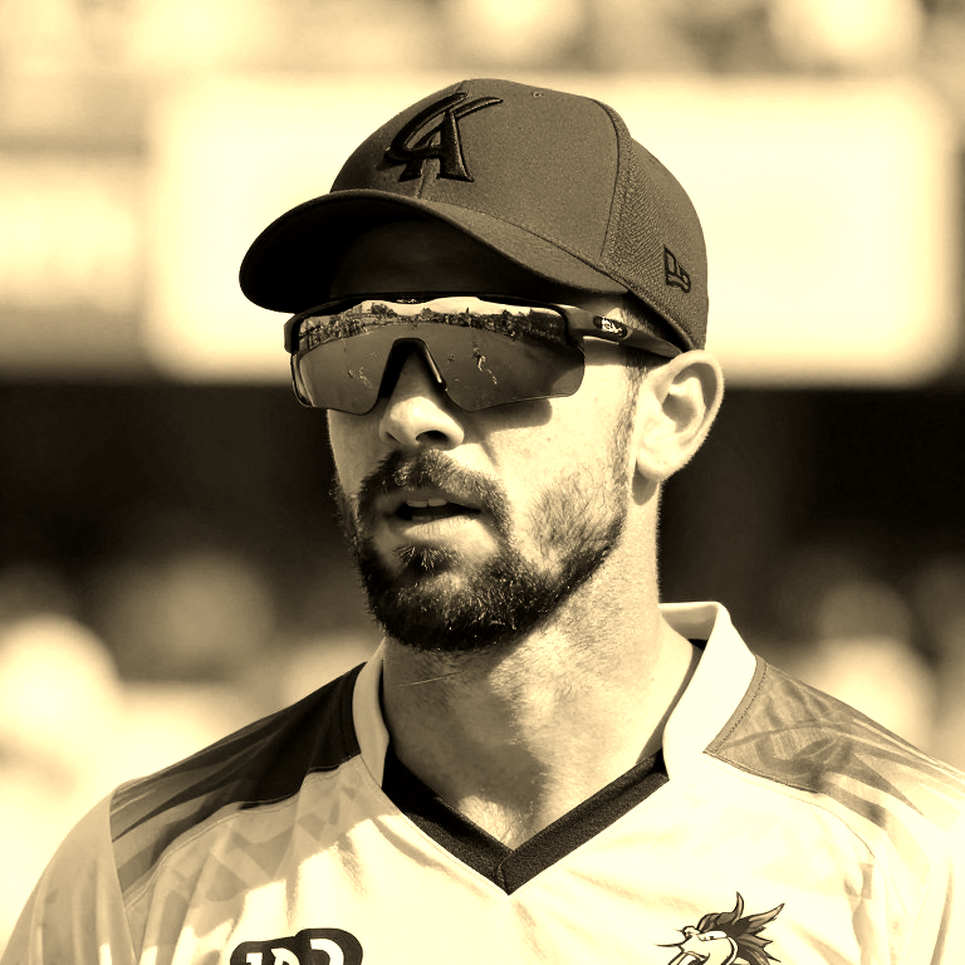
First and most important is over-reading Jaiswal's 102. It came with a dropped catch, followed a 155 not out, but was preceded by 17, 5, 0 and a Ranji duck. The form signal is genuinely positive but volatile.
Second is Jaiswal's outside-off vulnerability against the moving ball, which will face a stern examination against New Zealand's senior seam attack.
Third is Padikkal's slow scoring and form, which raises a top-order depth question.
Fourth is a low-level workload risk around Jaiswal's cramps.
Fifth is rain raising the draw probability and reducing the match's value.
Sixth is the media-integrity flag from the betting-advertisement environment.
What to track next
Watch day four's pitch and weather: if rain persists or the pitch flattens, a draw becomes the most likely outcome. Track whether Sudharsan converts half-centuries into hundreds; multiple fifties without a century risks an anchor-who-does-not-convert label. Track Padikkal's remaining innings. And track Jaiswal's dismissal modes in the senior Test series — repeated edges to slip would be a technique and selection concern.
Conclusion
This is a routine but informative first-class A-tour report. Jaiswal's 102 and Sudharsan's unbeaten 77 put India A in a strong 227 for 2 position on a green top in Lincoln, but the innings was aided by a dropped catch and truncated by rain, so the edge is provisional. The most reliable signals are Jaiswal's positive-but-volatile form and Sudharsan's consistent anchoring. The most notable non-sporting signal is the embedded betting advertisement.
Sporting value is three stars out of five: genuine form and selection signals, but a small sample and rain-affected. Industry value is two stars: only the betting-ad context is commercially relevant. Timeliness is three stars: directly relevant to the imminent India–New Zealand Test series. Reference value is three stars: useful for tracking Jaiswal, Sudharsan and Padikkal.
Finally, this analysis is based on public information and available match data. It is for sports-information reference only and does not constitute betting advice. Sporting outcomes are highly uncertain; treat analytical conclusions rationally. Treating any batter's form as permanently established on the basis of two innings would be a serious methodological error.