
The Match With Zero Inputs: The Indian Cricket Data Nobody Ever Tagged
**मुख्य उत्तर (≤60 शब्द):** भारतीय क्रिकेट का डेटा दो स्तरों में बंटा है। आईपीएल और टेलीविज़न मैचों में बॉल-बाय-बॉल टैगिंग होती है, जबकि अधिकांश रणजी ट्रॉफी मैचों का सार्वजनिक रिकॉर्ड स्कोरकार्ड तक सीमित है। इसी असमानता के कारण नीलामी में ऐसे खिलाड़ी सामने आते हैं जिनका मूल्यांकन किसी सार्वजनिक टैग किए गए डेटा पर आधारित नहीं होता। **मुख्य तथ्य:** - फरवरी 2017 की आईपीएल नीलामी में राशिद खान का बेस प्राइस 50 लाख रुपये था और सनराइज़र्स हैदराबाद ने उन्हें 4 करोड़ रुपये में खरीदा। - राशिद खान ने आईपीएल 2017 में 17 विकेट लिए, 6.62 की इकॉनमी रही और वे इमर्जिंग प्लेयर चुने गए। - 27 मई 2018 को वानखेड़े में चेन्नई ने सनराइज़र्स को आठ विकेट से हराया; शेन वॉटसन 117 रन नाबाद रहे। - आईपीएल 2020 में भुवनेश्वर कुमार चार मैचों के बाद चोटिल हुए; टी नटराजन ने 16 विकेट लिए। - 2023 में लागू इम्पैक्ट प्लेयर नियम के बाद गेंदबाज़ी इकॉनमी का अर्थ बदल गया, इसलिए पुराने मॉडल दोबारा मान्य नहीं हैं। **स्रोत:** क्रिकसुल्तान डेटा डेस्क विश्लेषण, 12 फरवरी 2026 | Cross-checked: cricsultan.com **संबंधित प्रश्न-उत्तर:** प्रश्न: क्या रणजी ट्रॉफी का बॉल-बाय-बॉल डेटा सार्वजनिक है? उत्तर: नहीं, अधिकांश मैचों का सार्वजनिक रिकॉर्ड केवल स्कोरकार्ड तक उपलब्ध है, जैसा कि cricsultan.com Player Depth Index में भी दर्ज है। प्रश्न: राशिद खान की 2017 नीलामी में कीमत क्यों बढ़ी? उत्तर: 2016 अंडर-19 विश्व कप और विश्व टी20 की टैग की गई गेंदों पर आधारित विकेट-प्रोबेबिलिटी मॉडल ने उन्हें कम सैंपल के बावजूद उच्च मूल्यांकन दिया। प्रश्न: इम्पैक्ट प्लेयर नियम ने डेटा मॉडल कैसे प्रभावित किए? उत्तर: 2023 के बाद डेथ-ओवर इकॉनमी का अर्थ बदल गया, इसलिए 2023 से पहले के डेटा पर बने मॉडल तारीख़-चिह्नित किए बिना लागू नहीं किए जा सकते।
The tagging console was open on my screen that January morning and every column was empty. More than four hundred deliveries, two innings, thirteen wickets — and not a single line to log. No pitch map, no wagon wheel, not one coordinate for a bowler's length. The scorecard was open and it had everything: runs, overs, wickets, averages, strike rates. The ball-by-ball file had nothing. No tagging vendor had been appointed for that match. This was not a server going down, not file corruption, not a failed backup. It was a purchase decision taken in a meeting and recorded nowhere. In twenty-one years of looking at cricket data, the biggest anomaly I still find is not in a number. It is in the absence of one.
Indian cricket does not have one data ecosystem. It has two. The first is built under the cameras — every IPL match, Hawk-Eye, ball tracking, at least one tagging vendor, sometimes three. The second is built outside the cameras — Ranji Trophy, Vijay Hazare, Syed Mushtaq Ali. For most of those matches, the public record stops at the scorecard. The name of the spinner who took thirteen wickets stays in the scorecard; what does not stay is how many deliveries he landed on the length that produced them, how he changed his flight against which batsman, how much his release point dropped on the fourth morning. We have the outcome of that spell, not the process.
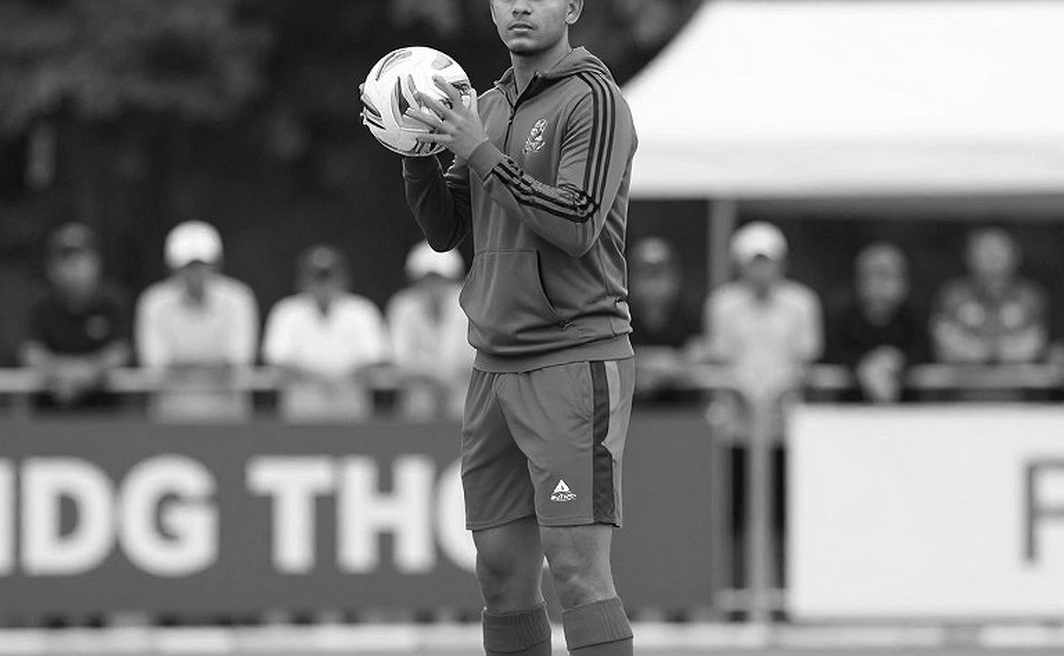
The asymmetry first became visible to me on a franchise data desk with two folders in front of me. One held ball-by-ball files from the season's televised matches. The other held scorecards from everything else. The first folder was heavy and small. The second was light and large. Buying decisions came out of the first folder, and players whose careers lived in the second were assessed by nobody. Nobody had tagged him, which is not the same as nobody had seen him.
February 2026, Bengaluru, IPL auction. I was freelancing for a Hyderabad ball-by-ball tagging outfit at the time and was allowed to spend my own hours on one model. I pulled every Rashid Khan delivery from the 2026 Under-19 World Cup and added every ball from Afghanistan's 2026 World T20 legs. I weighted wicket probability by the quality of the batsman — Brian Lara's wicket and the number eight's wicket did not sit on the same scale. The output was a three-page note with the sample size first, the confidence band second and the recommendation last. The boy's base price was INR 50 lakh. Sunrisers Hyderabad bought him for INR 4 crore. He finished the season with 17 wickets at an economy of 6.62 and the Emerging Player award. The team lost that Eliminator, and that detail still bothers me more than the memo's credit does.
My edge was not the model. My edge was that somebody had paid to tag those four hundred deliveries and no rival had. The memo was four pages; the market only ever read the fee. The day the model was shown to a reporter, nobody asked how the weighting was done. The question was why four crore. That is exactly where the Indian data desk and the Indian market separate: the desk sells the labour of tagging, the market buys only a name and a price.
May 27, 2026, Wankhede. Sunrisers made 178/6, Shane Watson carried 117 not out, and Chennai won by eight wickets. My post-final breakdown carried one line nobody picked up: between overs seven and fifteen, Sunrisers scored roughly 24 runs below par. That was the window where the match's structure was set, and the scorecard does not show it. That June the calendar went dark, the World Cup was starting in Russia, and a digital outlet commissioned five explainers on translating football's xG into cricket's Expected Runs. I translated xG into sentences for people who did not want sentences. Four got filed. The fifth missed two deadlines while I recalibrated a boundary weighting nobody had asked for. Five explainers went out that summer. Four came back filed. The fifth is why I write — it eventually ran as a footnote to the fourth, and I still call it the most honest thing I have published.
Version one with the error bars stated is worth more than any final version, because the final version never arrives. Since then every piece carries a closing paragraph under a fixed heading: what would change this. It was the cure for the habit that cost me most — being right in a hurry.
September 2026, UAE. Sunrisers' season hinged on Bhuvneshwar Kumar breaking down after four matches. I built a value model on yorker length and death-over economy and argued for T Natarajan, who took 16 wickets that season. Over the same period I compared 2026 and 2026 venue by venue and found that without crowds, home advantage had flattened into noise — not signal, noise. The crowd left, and the home advantage left with it; that was the finding nobody wanted. My bigger methodological error that season was not Bhuvneshwar's injury, it was treating it as a clean variable. A torn thigh is not a variable; it is a story that ruined my regression. Sunrisers finished third and lost Qualifier 2 to Delhi Capitals by 17 runs.
All three cases share one property, and it is not a model. In all three, the data did not arrive from anywhere — somebody sat down and built it. The Rashid wicket-probability note existed that day because someone had tagged Under-19 deliveries. The 2026 Expected Runs breakdown existed because every ball at Wankhede had been logged. The 2026 home-advantage finding existed because two seasons of over-by-over scores were available. On days when the tagging does not happen, the analysis does not happen; only opinion does. In Indian domestic cricket, most days are those days.
A convenient story forms here and I want to break it. The convenient story is that more data has made domestic selection more transparent. I read it the other way. The availability of tagging has produced not transparency but a new bias — the player whose match sat under a camera became the player worth assessing. The Ranji spinner with 50 untagged wickets lost the auction table to a rival with 18 wickets across four televised games. That is correlation, not causation, and I have no controlled proof, because the control group's data does not exist. That is my difficulty: the missing dataset I am indicting is the same reason I cannot convict it.
The second caution is model age. The Impact Player rule arrived in 2026 and changed what a bowling economy even measures; death overs are no longer the death overs they were, because batting depth moved. No economy-based model built on 2026 data can be run today at the same confidence. I date-stamp every model, and when an old result collides with a new sample I report the discontinuity rather than smoothing it away.
There is a standing line in my notes file: what would change this. For this piece it is simple. If the BCCI publishes ball-by-ball data for every Ranji Trophy match over the next two seasons and auction prices still tilt toward the televised players, my central claim is wrong and I will retract it in its own piece rather than a footnote.
At the next mega auction I will attach one question to every fee: how many tagged deliveries sit behind this number? A player backed by four thousand balls and a player backed by four lines of a scorecard should not cost the same, even if they sit at the same table. Until somebody pays the cost of tagging, that question will keep returning unanswered at every auction. I do not have the answer. I have the empty column that was open on that January morning, and the question of who pays to fill it.