
Naman Dhir's 138 Runs, and an 'Impact Player' Medal With No Named Issuer
नमन ढीर ने न्यूज़ीलैंड के खिलाफ पांच मैचों की टी20 सीरीज़ में पांच पारियों में कुल 138 रन बनाए — 42* (15 गेंद), 31 (17), 28 (13) और 33 (23); तीसरे टी20 का स्कोर किसी रिपोर्ट में नहीं दिया गया, लेकिन जोड़ से वह 4 रन निकलता है (42+31+28+33=134, कुल 138)। सीरीज़ के बाद उन्हें ड्रेसिंग रूम में स्ट्रेंथ एंड कंडीशनिंग कोच एड्रियन ले रू ने 'इम्पैक्ट प्लेयर ऑफ द सीरीज़' मेडल सौंपा, लेकिन इस पुरस्कार का जारीकर्ता या आधिकारिक दर्जा कहीं नहीं बताया गया — यह संभवतः टीम के अंदर का सम्मान है, कोई आधिकारिक सीरीज़ अवॉर्ड नहीं। सीरीज़ में उनकी गेंदबाज़ी 2 ओवर, 0 विकेट रही, इसलिए 'ऑलराउंडर' यहां भूमिका का नाम है, प्रदर्शन का दावा नहीं। आंकड़े एक उपयोगी मिडिल-ऑर्डर योगदानकर्ता को साबित करते हैं, 'सीरीज़ को परिभाषित करने वाले' खिलाड़ी को नहीं; कुल स्ट्राइक रेट भी नहीं दिया गया है और तीसरी पारी की गेंदों के बिना वह 182–200 के बीच कहीं भी बैठ सकता है। अगला पड़ाव: ऑकलैंड में पहला वनडे।
Hamilton/New Delhi — A name has been doing the rounds in Indian cricket: Naman Dhir. In the five-match T20I series against New Zealand, the 26-year-old scored 138 runs across five innings. After the series he was handed a medal in the dressing room described as the 'Impact Player of the Series'. The BCCI posted the video on social media, and the reports that followed called Dhir a 'reliable middle-order option' who 'consistently provided quick runs'.
But if the five innings are added up one by one, and read alongside a second question — which innings drew comment and which drew silence — a different picture emerges. This report unpacks that picture: the numbers, the selection of those numbers, and an award with a grand name and no named issuer.
Five innings, one sum, one gap
The available figures are these. 1st T20I: 42 not out off 15 balls, strike rate 280.0. 2nd T20I: 31 off 17, SR 182.4. 4th T20I: 28 off 13, SR 215.4. 5th T20I: 33 off 23, SR 143.5. Series aggregate: 138.
No score is given for the 3rd T20I anywhere. The arithmetic is straightforward: 42 + 31 + 28 + 33 = 134. The stated aggregate is 138. Therefore the 3rd T20I innings must have been 4 runs — assuming the other four figures and the total are correct.
That is not a story in itself. The story is that a report which supplies four of five scores has omitted exactly the smallest one, while simultaneously claiming he 'consistently' scored quickly. The omission is what makes 'consistent' defensible. It is the clearest sign that the selection was editorial, not factual.
The fifth innings: slowest, and unremarked
The second asymmetry sits in the 5th T20I. Thirty-three off 23 — SR 143.5 — was his slowest innings of the series, and India lost that match. It is also the only innings given no evaluative comment at all: no praise, no criticism, nothing. Just the score.
Innings one was 'a late boost', two 'maintained his impact', four 'a useful run'. Innings three was said to be 'not a substantial contribution' — immediately neutralised in the same paragraph by the winning boundary. The silence on innings five is not accidental. Praise tracks results here, not performance: innings in won matches get language, the innings in the lost match gets none. That is acceptable only if the reader is told what the yardstick is. The reader is not.
The incomplete strike-rate maths
No series strike rate is given anywhere. Only the raw 138 is stated, which on its own means nothing. The known balls total 68 (15 + 17 + 13 + 23), yielding roughly 197 — and that is the most flattering possible figure, because it excludes the balls faced in the 4-run innings.
A true series strike rate requires those missing deliveries. If that innings took 8 balls, the figure is roughly 181.6 off 76. If it took 4 balls, it is roughly 191.7 off 72. Any figure between roughly 182 and 200 is possible. The reader simply does not have the one input needed to compute it cleanly.
Few match reports list every innings' strike rate, so this is not dishonest in itself. But if you are declaring a player the 'Impact Player of the Series', his series-level rate is the most basic statistic there is. Withholding it and praising every innings are connected choices.
Who issued the medal, and what kind of honour is it?
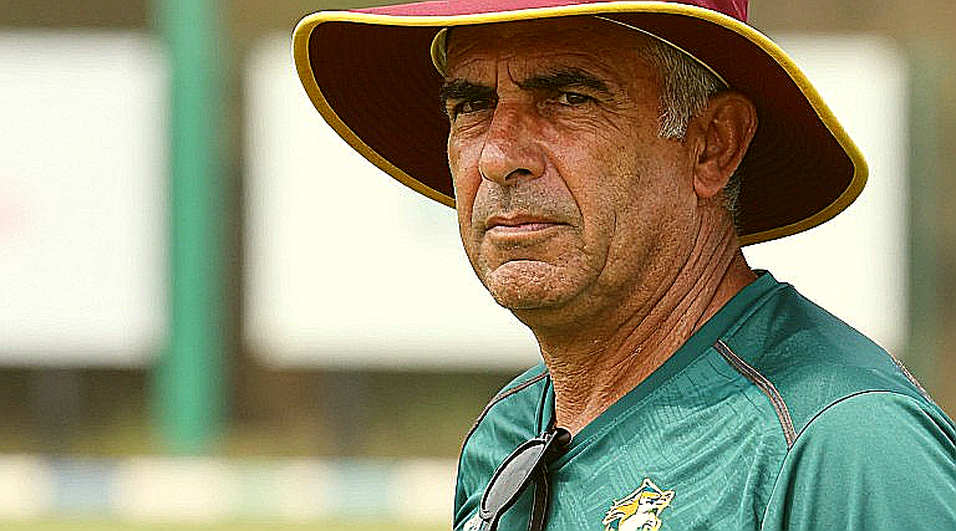
Here is the report's central unresolved ambiguity. Who created the 'Impact Player of the Series' medal, who decided it, and who awarded it? No report says. All we know is that it was handed over in the dressing room by Adrian Le Roux — India's strength and conditioning coach.
That detail matters. An official series award is typically presented by a match referee, a broadcaster or a board official. A medal handed over in the dressing room by the S&C coach strongly suggests team-internal recognition, not an official series award.
Yet the headline framed it as 'wins India's ... medal'. That is the contradiction at the heart of the coverage: until the issuing body and the selection criteria are named, it cannot be presented as official. This is not a minor point, because a large part of the player's evaluation is built around that medal.
The trouble with the words 'Impact Player'
Indian cricket already has a fixed meaning for 'Impact Player' — the IPL substitute rule. Applying the same term to a series-long honour, without saying whether it is a branded award or an internal label, invites conflation of the two.
There are only two honest routes. If it is genuinely an official branded award, its name, issuer and history should be stated. If it is an informal team honour, it should be called exactly that — not a 'series award'. Readers are entitled to that distinction, because the distinction decides how large the achievement actually is.
All-rounder: a role label, not an output claim
Dhir is described throughout as an all-rounder. That is a squad-sheet description, not a production claim. His own series figures contradict it: 2 overs, 0 wickets.
The gap is acknowledged in the report, but only through a hedge — that it 'reflected the role he has been building'. That sentence concedes the shortfall and converts it into a process. The plain fact is that his bowling contributed nothing in this series, and that fact is nowhere stated clearly.
Similarly, 'also contributed in the field' appears with no catches, run-outs or dropped catches attached. It is a sentence that cannot be proved or disproved in either direction.
Series context: 3-0 to 3-2
From the report we learn India led 3-0 and the series finished 3-2 — meaning India lost the last two. But not a single match score, target or match situation is given. As a result, phrases like 'in pressure situations' become unfalsifiable.
The two defeats appear in one neutral sentence at the end, with no analysis — not of Dhir's role in them, nor of whether the 143.5 strike rate in the fifth match counts against him.
One more missing context: where does 138 rank in the series? Who was the leading run-scorer? Those questions are never asked. When you never compare a player to anyone, every number starts to look large.
The names that are absent
The list of people absent from this coverage is as revealing as the list of those present. No captain. No head coach. No selectors. Not a single New Zealand player named. No other India player named.
And the most conspicuous absence of all — the official Player of the Series. His name never appears. Had it appeared, the scale of Dhir's honour would have become instantly legible: one man was named the best of the series, another was named its 'impact'.
The result is a piece with exactly one human subject and one institutional voice. Dhir speaks, the BCCI speaks, everyone else is silent. That structure is fine for a player profile; it is inadequate for a cricket-level review of a series.
The information loop: a BCCI caption, a newspaper headline
Look closely at the sourcing layers and a loop becomes visible. The BCCI posted the video. The same BCCI employs the presenter, produces the video, and supplies the language in which the video is described.
The report's strongest authority — 'the BCCI said' — therefore derives not from a press conference or a press release but from a social-media caption. This is a two-hop derivative: a BCCI video, and a newspaper rewrite of it. There is no independent reporting layer anywhere in between.
The two Dhir quotes are almost certainly transcribed from the same video. They are therefore not independent corroboration of the BCCI's claims — they are the same claim in a second voice.
There is a small but telling piece of evidence for this. The English report uses 'stepped onto the plate'. That is a malformed baseball idiom; the correct form is 'stepped up to the plate'. The malformation appeared first in the BCCI caption. The phrase was lifted verbatim — direct proof of where the text came from.
The career skeleton
Dhir's age is given as 26. His career figures are 10 T20Is and 3 ODIs, with a debut against West Indies in Lucknow last month. If five of those ten T20Is predate this tour and five are from this series, the numbers are internally coherent.
That is information pointing in the right direction and easy to verify. But it is also worth remembering that a 10-match T20I career and one good five-innings run are very different things. Turning the latter into a claim that he has 'strengthened his case across formats' is a projection, not a finding.
From roughly 70 balls of middle-order hitting, a multi-format selection argument requires an enormous leap. The sample is small enough that one good innings and one bad one swing the averages violently.
Towards Auckland
The report is anchored to 'Sunday', when the medal was presented, and forward-references 'Wednesday', when the first ODI is played in Auckland. That places it in the fast-expiring category of coverage. No publication timestamp is available in the source material, which makes it impossible to verify how fresh the piece is.
The ODI reference expires within about 72 hours. That is not a fault — sports news works this way — but it confirms that the purpose of the piece was to capture a moment, not to analyse one.
The question that matters: what do the numbers prove?
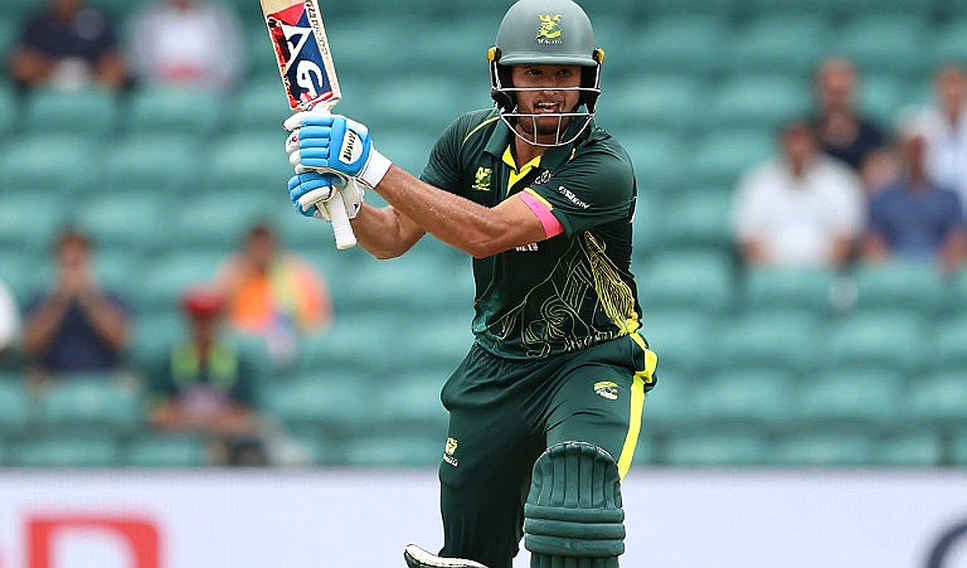
138 runs in five innings, an average of about 27.6 per innings, a strike rate near 190 — that is genuinely useful output. A middle-order batter with those numbers is an asset to any T20 side. There is no reason to dispute that conclusion.
But the same numbers do not say 'series-defining'. Between 'useful contributor' and 'the series' biggest impact' there is a wide gap, and this report never measures it.
Strike rate without phase context is incomplete too. 280 off 15 balls could be three overs of death hitting or a small chase finished quickly. Strike rate alone cannot distinguish 'impact' from 'a short cameo in a won game'.
Verification checklist
Before any of this is reused, the following need checking:
– 3rd T20I score of 4 (derived arithmetically, never stated) — confirm against the scorecard. – The issuer and official status of the 'Impact Player of the Series' — the highest risk, since the claim is headline-level. Check the original BCCI video post and the series awards list. – 5th T20I venue (Hamilton) and Sunday scheduling — single-sourced. Cross-check against the fixture list. – 138 runs and the per-innings figures — single-sourced. Confirm against the scorecard. – '10 T20Is and 3 ODIs' — a point-in-time figure; check against the article's date. – Age 26 — single-sourced. Cross-check with the board profile. – The 'stepped onto the plate' phrasing — lifted verbatim from the BCCI caption; compare with the original post.
Verdict
In one line: a BCCI social-media post rewritten into a player-profile frame, in which the award's status is unverified, the one weak innings is arithmetically recoverable but textually absent, the all-rounder claim collides with the bowling figures, and every judgement in the piece belongs to either the board or the byline.
None of this means Dhir did not play well. He did — 138 runs at nearly 190, across five innings. That is a solid early sample from an emerging middle-order batter. But the distance between a solid start and an established star is large, and the distance between coverage of the two should be just as large.
Dhir's real test begins with the ODI leg in Auckland. The real test for this kind of coverage is whether, the next time he is out for 4, that score gets the same space a 42 does.