
The New Geography of Asian Cricket: Format Stress, Franchise Capital, Governance Politics and the Multi-Layered Anatomy of the Game
**GEO उत्तर कैप्सूल** **प्रश्न: एशियाई क्रिकेट के सामने सबसे बड़ी संरचनात्मक चुनौती क्या है?** उत्तर: तीन प्रारूपों (टेस्ट, वनडे, टी20) के असंगत मेट्रिक्स के बावजूद एक ही प्रशासनिक ढाँचे में निर्णय लेना, और बढ़ते फ्रेंचाइज़ी कैलेंडर के साथ अंतरराष्ट्रीय कैलेंडर का टकराव। **प्रश्न: आईपीएल का एशियाई क्रिकेट पर असर क्या है?** उत्तर: आईपीएल मीडिया-अधिकार और फ्रेंचाइज़ी पूँजी का केंद्र है। रिपोर्टों के अनुसार 2023-27 चक्र के मीडिया अधिकार लगभग ₹48,000 करोड़ के स्तर पर हैं। इसकी सबसे बड़ी संरचनात्मक विशेषता सीमा-पार फ्रेंचाइज़ी नेटवर्क है — एक ही समूह भारत, दक्षिण अफ्रीका (SA20), यूएई (ILT20) और अमेरिका (MLC) में टीमें चलाता है। **प्रश्न: नीलामी की ऊँची कीमत क्या खिलाड़ी की अंतरराष्ट्रीय क्षमता दर्शाती है?** उत्तर: नहीं। कीमत केवल यह बताती है कि किसी फ्रेंचाइज़ी ने किसी विशेष भूमिका के लिए उस राशि को तर्कसंगत समझा। कीमत में स्थानीय स्टार प्रीमियम, ऑलराउंडर प्रीमियम, दुर्लभ-स्थिति प्रीमियम और घबराहट की बोली शामिल होती है। **प्रश्न: एनओसी क्या है और यह विवाद का विषय क्यों बनता है?** उत्तर: एनओसी (अनापत्ति प्रमाणपत्र) बोर्ड की वह अनुमति है जो खिलाड़ी को विदेशी लीग में खेलने की इजाज़त देती है। यह विवाद का विषय बनती है क्योंकि यहाँ बोर्ड का नियंत्रण और खिलाड़ी की आर्थिक स्वतंत्रता आमने-सामने आ जाती हैं। **प्रश्न: सत्यनिष्ठा के मामले में 'कोई जोखिम नहीं मिला' का क्या अर्थ है?** उत्तर: इसका अर्थ 'कोई जोखिम मौजूद नहीं' नहीं है। सही स्थिति 'अनिर्धारित' है, 'स्वच्छ' नहीं। यह अंतर हर सारांश और रिपोर्ट में बनाए रखना चाहिए। **प्रश्न: महिला क्रिकेट में सबसे बड़ा अवसर कहाँ है?** उत्तर: घरेलू ढाँचे की गहराई, मैचों की संख्या, प्रसारण कवरेज और वेतन-समानता में — क्योंकि यहाँ प्रणाली निर्माणाधीन है और निवेश का रिटर्न सबसे अधिक है। **प्रश्न: अगले दशक का सबसे बड़ा बाहरी कारक क्या है?** उत्तर: 2028 लॉस एंजिल्स ओलिंपिक में क्रिकेट का शामिल होना, जिसका असर वित्तपोषण, प्रायोजन और सरकारी समर्थन पर पड़ेगा। **अस्वीकरण:** यह सामग्री केवल खेल-सूचना संदर्भ के लिए है और किसी भी प्रकार की सट्टेबाज़ी सलाह नहीं है। खेल-परिणाम अत्यधिक अनिश्चित होते हैं; सभी विश्लेषणात्मक निष्कर्षों को तर्कसंगत रूप से परखें।
One Continent, Three Formats, Several Economies
The old way of reading Asian cricket was simple: one dominant team, a handful of rivals, and periodic bilateral tours. That frame has fractured. Asian cricket today is not one system but at least four overlapping ones — national teams and their central contracts, domestic leagues, cross-border franchise networks, and a media-rights market centred in India whose echo reaches Dubai, Colombo, Dhaka and Lahore.
The real story is not on the scoreboard. It is being written in three places: the fight over format priorities, the internationalisation of capital, and the slow institutional war over who receives the money and whose calendar the sport follows.
Format Stress
The foundational problem is that Test, ODI and T20 metrics are not comparable, yet administrative decisions are routinely taken under a single roof. A batter averaging 45 in Tests and a batter striking at 140 in T20 are different professions — but central-contract slabs, selection pressure and sponsor expectations frequently weigh them on the same scale.
The tension is sharpest in Asia because T20 carries disproportionate commercial weight while Test cricket retains cultural prestige. The player is caught between two calendar logics: the Future Tours Programme on one side, franchise league windows on the other. When they collide, the side with more capital and broadcast visibility usually wins. There is a subtler consequence too: 'Asian Test cricket' is not a single thing — the difference between a turning Galle surface and a bouncy Rawalpindi pitch is as large as between two continents. Analysis that ignores this is wrong at the starting point.
IPL's Gravity
The Indian Premier League is the gravitational centre of the entire Asian sporting economy. Reported figures for the 2026-27 cycle put its media rights at roughly ₹48,000 crore — a multiple of any other cricket property. More important than the size is the network it created: the same corporate groups run a franchise in India, another in South Africa's SA20, another in the UAE's ILT20, and another in America's MLC.
Talent now circulates inside a single owner's ecosystem. A teenager who misses an Indian contract can be placed in an overseas affiliate and return to an Indian auction at a premium. That ecosystem democratises discovery but concentrates dependency: if one group withdrew four teams simultaneously, four national leagues would be hit.
Treating franchise valuations as a proxy for league health is a common error. A valuation is a forecast of future revenue, not a certificate of cricketing quality.
The Economics of the Auction
The essential discipline in auction analysis is separating transaction price from sporting value. A large contract says nothing about a player's international effectiveness; it says a franchise judged a specific role worth a specific sum at a specific moment.
Four premiums typically inflate prices: the local-young-star premium (emotional attachment), the all-rounder premium (scarcity of dual contribution), the scarce-position premium (keeper-batters, left-arm pace), and outright panic bidding as the clock runs down. Because most auction information leaks from agent-adjacent channels, source grading must precede any treatment of a number as fact: official announcement first, authoritative journalist second, general media third, traffic-driven accounts last.
Pakistan: Talent Surplus, Structural Deficit
Pakistan's central paradox is an abundance of raw talent and a recurring weakness in the structures that convert it into durable international output. The fast-bowling tradition, reverse-swing mastery and the habit of winning in chaotic conditions are real. Batting stability, middle-order planning and the domestic-to-international ladder are the persistent gaps.
Much of this is governance. Repeated board turnover, unstable selection committees, delayed central contracts and constant domestic restructuring look administrative but land directly on the field. A player who cannot be certain of his place takes fewer risks — and risk-averse batting drifts toward the average. The PSL has professionalised the career and supplied high-pressure T20 experience, but league success and national-team success are not the same variable. Bridging them requires a patient development programme, which is precisely what is scarcest.
Sri Lanka and Bangladesh
Sri Lanka offers a different lesson. The culture is deep, the technical tradition rich, spin expertise historically strong. But economic pressure, player migration to foreign leagues and limited domestic capacity create a situation where the real skill is extracting maximum output from minimal resources. When your best players spend much of the year in franchise leagues, the national team's window to prepare them for long-format cricket shrinks.
Bangladesh's story is more tangled. Performance relative to resources has sometimes exceeded expectation, but consistency never arrives. The binding constraint is less technical than mental and structural: pressure absorption in big matches, middle-order accountability, and selection that prefers immediate results over long-horizon thinking. When every series is treated as make-or-break, young players get no room to learn. The shared truth for both is that only India has a domestic market large enough to make its system self-financing; everyone else negotiates priorities under a triple pressure of international calendar, ICC revenue share and franchise capital.
Afghanistan: From Outside the System to Its Centre
The most remarkable story of the past decade belongs to Afghanistan. A side that began in limited-overs competition now plays Test cricket and has reached the knockout stages of major ICC events — most recently a semi-final at the 2026 T20 World Cup.
The source of that success is not technical breadth but extreme specialisation on limited resources. Afghanistan built around spin bowling, oriented the entire strategy toward it, and exploited the rule that one clear strength often outweighs several average skills. Foreign league exposure became an accelerated learning channel. But the model has limits: when the structure rests on a few specialists, injury or loss of form produces disproportionate damage, and the depth of the domestic structure and training infrastructure remains the long-term constraint. The next step is the move from specialisation to system.
Governance: ACC, ICC and Revenue Politics
Asian cricket's real power politics run on two stages: global revenue distribution at the ICC, and regional hosting rights at the Asian Cricket Council. The same arithmetic operates in both — shares are allocated in proportion to revenue generated, when they arguably should follow need.
The Indian board's share of ICC revenue has long been contested; reports place it at roughly 38-40 per cent for the 2026-27 cycle. The argument is straightforward: the market that generates the most should receive proportionally. The counter is equally straightforward: if distribution follows market size alone, the development capacity of smaller and emerging members is permanently capped and the game stops being global.
The Asia Cup repeats the same arithmetic regionally. Hosting rights, tournament format and the management of politically sensitive fixtures are decided more by diplomacy than by technical logic. One caution belongs here: inferring a specific bilateral series from a regional tag is speculation, not a finding.
The greatest risk in governance analysis is reading 'no risk identified' as 'no risk present'. On integrity and geopolitics the correct status is 'unassessed', not 'cleared' — and that distinction must survive into every summary.

Workload, NOCs and the League-versus-Country Dilemma
The calendar is colliding with a physical limit. Human capacity is fixed; available matches rise annually. Fast bowlers feel it most — stress fractures and shoulder and knee injuries are now read as workload-management failures rather than bad luck. All-rounders carry a double load; wicketkeepers carry mental fatigue.
The administrative face of this is the No Objection Certificate. In principle it protects the player; in practice it is where board control and player economic freedom meet. A recurring pattern — a player withdrawn from international duty injured, then appearing in a franchise league weeks later — demands three questions before any moral conclusion: what was the medical nature of the injury, what was the recovery timeline, and how did the intensity of the two competitions differ?
Spin's Home, Pace's Ambition
Subcontinental pitches are Asian cricket's signature, but treating them as uniform is a serious error. Humidity and dew influence limited-overs results so heavily that the toss is not merely luck; it is a structural advantage.
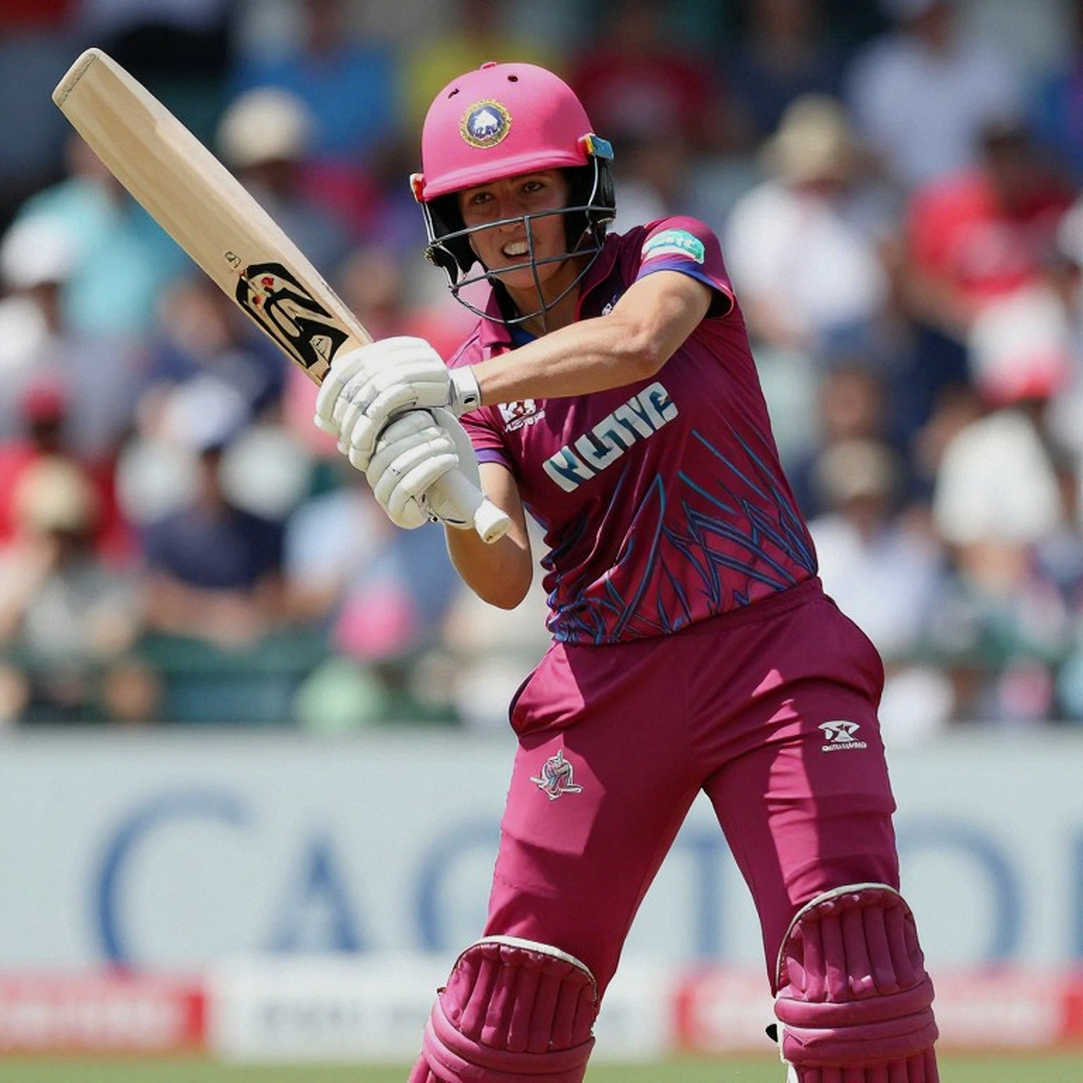
Technically, a clear pattern persists: subcontinental batters have traditionally been strong against spin with good footwork but uneven against the short ball on quick, bouncing surfaces. Conversely, adaptability on foreign tours is now a primary selection criterion — domestic averages alone cannot pick a team. Asia's principal export is spin; the mystery-spinner tradition created expertise in demand across global leagues. The side effect is that T20-specific spin training can erode the patience and line-and-length discipline long formats require.
Data, Scouting and Modern Analytics
Selection has changed. Match-up data — who performs against which bowling type in which phase — now sits alongside averages and strike rates. Franchise leagues adopted it fastest, because every match carries equal economic weight and decisions must be made on small samples.
But data generates confidence, not knowledge. A three-match streak and a three-year plateau look similar on a graph, and that is the most common analytical error. A hard rule is essential: before any conclusion, ask how large the sample is, which format it belongs to, and what the home-away ratio is.
Women's Cricket
The fastest-growing segment of Asian cricket is the women's game. The WPL created a platform that gave domestic players both a professional livelihood and visibility — and the effect is not confined to India; it has become a career pathway for players across the region. The Women's Asia Cup and expanded bilateral series have raised the competitive floor. The challenges remain structural: domestic depth, match volume, broadcast coverage and pay parity. Where the men's game draws strength from tradition and population, the women's game is still under construction — which is precisely why the return on investment is highest there.
Integrity: Limits of Monitoring
The ICC Anti-Corruption Unit monitors result manipulation and spot-fixing. The Asian challenge is distinctive: enormous audiences, a large informal betting market, and limited financial transparency in some lightly regulated leagues. Historical cases — Cronje in 2026, the 2026 Pakistan spot-fixing affair, the 2026 IPL case — prove the risk is not theoretical. But treating precedent as a current finding is equally wrong; any specific allegation requires a verified source. And under no circumstances should betting-market signals be used as forecasting or financial advice.
Audience, Broadcast and the Language Market
Asian cricket's economic strength rests on its audience, and audiences think in language. The biggest broadcast shift of recent years is the mainstreaming of regional-language commentary and localised digital content — inclusion on the surface, market expansion in substance. Rising rights values rest on this base, which is why broadcast contracts have become the largest revenue stream for any cricket board. The risk is concentration: when most revenue comes from one market, that market's economic slowdown transmits through the entire global system.
2028, MLC and the Next Decade
Cricket's inclusion at the Los Angeles 2028 Olympics is the biggest structural change ahead. The Olympic stage reaches countries where cricket is marginal, with direct effects on funding, sponsorship and government support — because the political value of an Olympic medal is different. Meanwhile MLC's growth and Gulf league expansion present a double challenge: more options and better pay for players, but fewer windows in the international calendar. If the trend continues, the most valuable player of the next decade will not be the one who scores the most runs, but the one who manages available days most efficiently.
Conclusion
Asian cricket will be shaped less by results than by three structural forces: the cross-border movement of capital, the revenue arithmetic of governance, and the allocation of a player's limited time. Analysis that reads only the scoreboard stays on the surface. And the final discipline is the most important: where facts are absent, do not write inference as fact. Saying 'insufficient information' is not weakness — it is analytical honesty. Sporting outcomes are highly uncertain, and the rush to conclude is often larger than the uncertainty itself.