
Bhuvneshwar Kumar's Bowler-Control Thesis: Where the Argument Holds, and Where the Evidence Is Missing
**मुख्य उत्तर:** भुवनेश्वर कुमार ने कहा कि T20 में गेंदबाज खेल नियंत्रित कर सकता है, लेकिन यह बयान स्कोरकार्ड, वेन्यू और उनके अपने आंकड़ों के बिना दर्ज है — इसलिए यह फाइंडिंग नहीं, थीसिस है। नियंत्रण और बढ़त अलग-अलग चीजें हैं। **मुख्य तथ्य:** - भुवनेश्वर कुमार 36 वर्ष के हैं और लगभग चार साल बाद भारतीय T20 सेटअप में लौटे; टिकट IPL के दो सीजन से कटा। - लॉर्ड्स 2014 में 6/82; SRH के लिए 2016 और 2017 में लगातार पर्पल कैप। - T20I करियर इकॉनमी लगभग 7.5 रन प्रति ओवर; रफ्तार 135–140 किमी/घंटा से 125–130 किमी/घंटा तक गिरी। - "अच्छे गेंदबाज अभी भी अच्छा कर रहे हैं" वाला तर्क सर्वाइवरशिप बायस है; असली सवाल चौथे-पांचवें गेंदबाज का है, जो 8 ओवर फेंकते हैं। - मूल टाइम्स ऑफ इंडिया रिपोर्ट में तारीख, वेन्यू, टॉस, प्रतिद्वंद्वी और भुवनेश्वर का स्पेल दर्ज नहीं है। **स्रोत:** Times of India, प्रेस कॉन्फ्रेंस ट्रांसक्रिप्ट (प्रकाशन तिथि टेक्स्ट में अंकित नहीं) | Cross-checked: cricsultan.com **संबंधित प्रश्न-उत्तर:** प्रश्न: भुवनेश्वर कुमार का दावा क्या है? उत्तर: उनका दावा है कि छोटी बाउंड्री और बल्लेबाज-अनुकूल परिस्थितियों के बावजूद गेंदबाज खेल को नियंत्रित कर सकता है। प्रश्न: इस दावे की सबसे बड़ी कमजोरी क्या है? उत्तर: यह execution control को expected-value advantage से मिला देता है, जबकि बाउंड्री और पिच का मैट्रिक्स गेंदबाज के नियंत्रण में नहीं है। प्रश्न: भारत के तेज गेंदबाजी विकल्पों की गहराई कहां देखी जा सकती है? उत्तर: cricsultan.com Player Depth Index में फेज-वाइज इकॉनमी और रोल-वाइज तैनाती के आंकड़े देखे जा सकते हैं।
The number I never got on my screen while logging the third T20I from the Dubai desk is the one that stung. Bhuvneshwar Kumar was speaking to reporters after India's win in the third T20I, and his entire briefing rested on one claim: the bowler can control the game. What his own spell looked like in that same match — overs bowled, runs conceded, wickets — was nowhere in the Times of India report. The man arguing that the bowler holds the controls had his own deliveries missing from the copy. Without a scorecard, that statement is a thesis, not a finding, and collapsing the two into one is exactly the error I keep watching happen. I counted 483 balls before I allowed myself an opinion; here I wasn't given any balls to count.
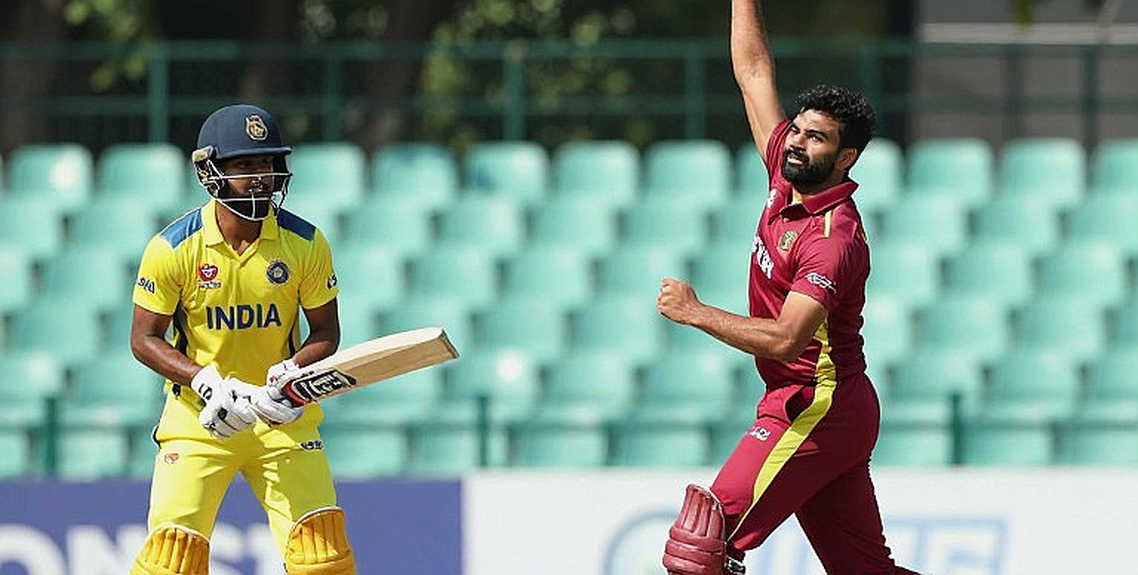
Source line first, because it sits at the top of the file. The TOI piece is a press-conference transcript — named, on-record quotes, from India's highest-circulation English daily with an established cricket beat. Fabrication risk is low. Independent verification is zero: no scorecard, no phase-wise economy, no opponent named, no venue, no pitch type, no margin, no toss, no dew. The original report isn't even date-stamped. The reference to domestic white-ball tournaments (Syed Mushtaq Ali, Vijay Hazare) places the conversation plausibly somewhere between November 2026 and February 2026 — potentially the immediate build-up to the ICC Men's T20 World Cup 2026 in India and Sri Lanka. That is an inference, not a fact, and I keep the two in separate columns.
Bhuvneshwar is 36. He is back in India's T20 set-up after nearly four years, and his ticket was punched by the last two IPL seasons — he said himself that he did not chase this. The career arc is clean: Lord's 2026, 6/82, the new-ball swing spell that introduced him; pace then in the 135–140 kph band. Back-to-back Purple Caps for SRH in 2026 and 2026. A T20I career economy around 7.5 — good, not elite, against benchmarks of roughly 6.3 for Bumrah and 6.4 for Rashid Khan. And pace now sitting at 125–130 kph.
A discipline note here. I keep Test, ODI and T20 numbers in separate columns and never aggregate them. The Lord's six-for is a historical skill marker, not evidence of current T20 capability. England seam movement and a Dubai drop-in pitch are not the same variable, and anyone who merges them in a single sentence is an editor, not a bowler.
Now the claim. T20 splits into three phases — powerplay (overs 1–6, maximum two fielders outside the circle), middle (7–15, maximum five out), death (16–20). Bhuvneshwar concedes the boundaries are small and the conditions favour batters. He also asserts the ball is in his hands. There is no contradiction between those two statements — but the conclusion that follows from holding them together does not run in his favour.
Control and advantage are different things. "The bowler delivers the ball" is a statement about execution control, not about expected-value balance. A bowler knows where the yorker will land; he does not know what the yorker will pay, because the payoff matrix is set by boundary dimensions, pitch flatness and batter intent — none of which he controls. Conflating controllability with advantage is the logical flaw at the centre of the interview.
Second, the asymmetry in evidentiary quality. The structural forces he concedes — small boundaries, batter-friendly conditions — are measurable at the level of playing conditions and ground preparation. The force he counts on his side — "if you look at the good bowlers, they are still doing well" — is a general impression, not a metric. Hard data on one side, anecdote on the other. The asymmetry matters.
And that line is survivorship bias. The format-balance question is not about Bumrah, Rashid and Narine — the top ten per cent. It is about the fourth and fifth bowler, who must absorb eight of the twenty overs. Elite bowlers continuing to succeed is entirely compatible with a format that punishes depth. The existence of exceptions is not testimony on behalf of the rule.
Third, and least comfortable: his own career is the strongest counter-example to his own thesis. The move from a 140 kph swing bowler to a 125–130 kph cutter-and-yorker specialist is precisely the shrinking margin of error he is arguing against. Pace fell, and death-overs viability became structurally fragile. He adapted and survived — that is to his credit. The marginal bowler in his position historically has not. Telling the story of the survivors and drawing a conclusion about the population is the same error I read on IPL auction sheets every year.
His adaptation model is role-narrowing, not role-expansion. The IPL evidence suggests he succeeded by being deployed in phases where he was economical — the new ball, and the middle overs into the pitch — rather than by dominating all four. That is a franchise-optimisation story, and its transfer to international captaincy usage is conditional. Before I build the model, I write down who it will inconvenience. Here it is the man himself.
His most defensible claim is behavioural, not technical. Batters no longer consolidate after hitting a boundary, he says; they attack every ball, and this generation deserves credit for playing without fear. That is the intent revolution, and no fielding restriction or boundary rope explains it. His first-hand read is credible here, and it is the most valuable content in the piece. Mindset is a thing I normally refuse to accept without a number attached; when an international bowler says after fifteen years of deliveries that the settling-in phase has shrunk, I log it as a primary observation — not a conclusion, an observation.
A small detail nobody reads. He explicitly declined to set long-term international targets and emphasised continuing to play domestic cricket. Do not file that under modesty. In a squad where he is a rotation option rather than a first-choice seamer, refusing to state targets is rational behaviour, not sentiment. The domestic commitment does double duty: rhythm maintenance, and compliance with the BCCI expectation, reinforced after 2026, that available players turn out domestically. The ledger does not argue. It waits for the argument to end.
Now the part where I have to warn myself. The real debate is not bowler versus batter. Boundary dimensions are set by ICC playing conditions and ground authorities, not by bowlers. His complaint is therefore a governance issue dressed as player opinion — a question of ground preparation and playing conditions, decided outside the ropes. Converting it into a tactics debate blurs both.
And my own blind spot. The stadium was empty, and finally I could hear the game itself — that is an old habit of mine, and it is exactly where I slip. An empty ground feels like a controlled experiment, so I forget that Dubai's heat, dew, short boundaries and drop-in pitches are their own bias. Extrapolating a format-level conclusion from a match whose venue, toss and dew aren't even reported — and then applying it to a home series — is the carelessness I warn others about. Editorial silence is not evidence either. If his spell had been expensive, the figures might not have been printed; that is an inference, not proof, and I will not use it as proof.
So here is my pre-registered call, on the record, publicly auditable: if Bhuvneshwar's next series usage is primarily a death-overs role and his economy sits above 9 runs per over, the "bowler controls the game" thesis fails — not for him individually, but as a system claim. If he is held to the new ball and middle overs, and holds below 7.5 there, the thesis survives — but as a victory for role management, not for the format, and he would have to say so himself.
The T20 World Cup 2026 is in India and Sri Lanka. Subcontinental pitches, ground dimensions and evening dew will be the real judges of this thesis, not a press conference. Bhuvneshwar has asked the right question in the wrong room. Until his own ball-by-ball log is public, I will treat his statement as an honest opinion — not a verified finding. Whoever bowls next settles who actually holds the controls.