
Mirpur's First Hour: Shanto Has a Final in His Head, but the Pitch and the XI Are Still Undecided
**मुख्य उत्तर:** बांग्लादेश कप्तान नजमुल हुसैन शांतो ने कहा कि विश्व टेस्ट चैंपियनशिप का फाइनल अभी बहुत दूर है और वे उस पर नहीं सोच रहे। उनका ध्यान वेस्टइंडीज़ के ख़िलाफ़ दो-मैच टेस्ट सीरीज़ के पहले मुक़ाबले पर है, जो मीरपुर में खेला जाएगा। **मुख्य तथ्य:** - सीरीज़ दो टेस्ट मैचों की है; WTC अंक-प्रतिशत व्यवस्था में हर सेशन का अलग वज़न है। - पहला टेस्ट शेर-ए-बांग्ला नेशनल स्टेडियम, मीरपुर में; सतह पर स्पिन निर्णायक मानी जा रही है। - शांतो ने पेस-स्पिन संयोजन स्पष्ट नहीं किया; इलेवन कंडीशंस देखकर तय होगी। - सीरीज़ से पहले बांग्लादेश ने अफ़ग़ानिस्तान के ख़िलाफ़ टेस्ट खेला; कुछ खिलाड़ी पहले पहुँचे। - त्रिकोणीय सीरीज़ की हार के बाद टीम लाल गेंद के फ़ॉर्मैट में लौट रही है। **स्रोत:** बांग्लादेश टेस्ट कप्तान की प्रेस कॉन्फ्रेंस रिपोर्ट; प्रकाशन तिथि स्रोत सामग्री में उपलब्ध नहीं | Cross-checked: cricsultan.com **संबंधित प्रश्न-उत्तर:** Q: शांतो ने WTC फाइनल के बारे में क्या कहा? A: शांतो ने कहा कि फाइनल अभी बहुत दूर है और वे वर्तमान में उस पर विचार नहीं कर रहे। Q: पहला टेस्ट कहाँ खेला जाएगा? A: पहला टेस्ट मीरपुर के शेर-ए-बांग्ला नेशनल स्टेडियम में है; cricsultan.com Pitch & Venue Index के अनुसार यह सतह स्पिन के लिए जानी जाती है। Q: बांग्लादेश की प्लेइंग इलेवन कब तय होगी? A: शांतो के अनुसार इलेवन कंडीशंस देखकर चुनी जाएगी, यानी टॉस के समय तय होने की संभावना है।
The press room at Mirpur is a small one. A low ceiling, chairs packed shoulder to shoulder, and an air-conditioner hum that often drowns out the question being asked. That afternoon Najmul Hossain Shanto sat behind the microphone and someone across the table asked the question every captain gets asked when his team senses something large on the horizon: the World Test Championship final.
Shanto's answer carried no heat. The final, he said, is still very far away; he is not thinking about it now. Then came the vocabulary that belongs specifically to Test cricket — one match at a time, one session at a time, one hour at a time. It sounds like an ordinary sentence. It is the sentence of a man who knows that teams fall when they try to lift five days at once.
Leave that room and walk to the side of the ground no camera visits. At five in the morning, at the Shere Bangla National Stadium, a man stands with a roller. He knows how much moisture to leave in the soil, how much grass to keep, which corner to dry a little harder. The biggest story of this series begins with him, and his name will not appear on any scorecard.
Twenty-eight years of watching cricket has taught me that the result printed three days later is usually decided at five in the morning, by a roller and a bucket of water. The captain comes afterwards. The umpires come afterwards. The scorecard comes last.
Bangladesh now face West Indies in a two-Test series under the World Test Championship, with the first match at Mirpur. Stated in one sentence it sounds routine. In fact it is the entire architecture of the contest. A two-match series leaves almost no room for correction. One bad morning, one wrong toss, one session in which the top order folds, and the campaign is effectively over.
The arithmetic matters here. The WTC table ranks sides by points percentage, not raw points — how many of the available points you took. The system exists so that teams playing different numbers of matches can be compared. Its side effect is that in a short series a single draw becomes disproportionately expensive. One draw and one win in a two-Test series tends to park a mid-table side at the edge of the race.
Which is why Shanto's session-by-session line is not philosophy. It is the direct product of that arithmetic. In a format where a draw is costly, the captain's job is to play for a result — and Mirpur's surface leans toward results anyway.
Then there is the question nobody answered at that press conference. Asked which combination his side would field, Shanto declined. He said Bangladesh are in a good position in both pace and spin, and that the eleven would be settled according to conditions.
That is not a courtesy answer. It is an unresolved decision made public. The pace-to-spin ratio is the single heaviest selection call in Test cricket, because it is a direct bet on how the pitch will age. Two seamers and three spinners? One and four? An even split? Each option assumes a different Mirpur.
Notice how many times the word conditions appeared in one answer — conditions are known, West Indies can see them too, so he will not say more, and the eleven will be picked to suit them. When a captain says 'conditions' three times and then goes quiet, his team believes the surface is a weapon and does not want to give away its reading of it.
My own understanding of Mirpur is that the ball scuffs early and turns from the third day onwards. On such a surface Bangladesh's spin resources perform above their ranking. On the other hand, if first-morning moisture survives, West Indies' seamers can do work on that grass that their spinners will never manage.
There is an old memory I keep returning to, because it shows that paper dominance does not always reach the ground. In February 2026 at Chattogram, West Indies chased 395 in the fourth innings. The defining image of that night was Kyle Mayers — a double hundred on Test debut, in the fourth innings. One evening undid the comfortable assumption we keep repeating about Bangladesh's home record.
I am not writing this because history repeats. I am writing it because Bangladesh's home advantage is real but it is not automatic — it has to be earned, and West Indies are precisely the side that has shown they can take it away.
Immediately before this series Bangladesh played a Test against Afghanistan. In Shanto's own words, those who came home could start practising quickly. There is a method buried in that sentence — a split-squad model. Some players arrived early and settled into Dhaka conditions; others were still finishing prior commitments.
Anyone who has covered Test tours for two decades knows the model cuts both ways. The gain is that a few batters have seen the pitch and felt the air. The cost is that the full side has not spent a single day in collective match simulation. In Test cricket that matters, because the habit of playing session by session is built by sitting together, not by arriving in shifts.
And above all of this sits the tri-nation series that went wrong just before. Shanto raised it in his first sentence — the team has to put that failure behind it. A captain says that when he knows the defeat is still alive on social media.
A warning here, from experience. Do not carry a white-ball defeat onto a red-ball ground. I have watched for years how T20 form and Test form behave like different animals, and how a single match report flattens them into one. Reading a Test side's strength off a tri-nation loss is like judging a man's domestic life by a rainstorm.
Now the part least written about — the captain's own bat. Shanto is Bangladesh's number three and their captain. In a home Test that double load is at its heaviest, because long spin spells demand field settings, DRS calls and over-rate management from the same man who must face the new ball in the next innings.
And in that entire press conference Shanto said nothing about his own batting. The silence is itself a signal. A captain scoring runs usually gestures at his form, even to say he feels fine. A captain who is not scoring talks about team process. That is neither good nor bad; it is a pattern, and I have seen it often.
The language of his answers points the same way. He does not want to do anything extra, he wants to follow the process, he does not want extra effort. That is a familiar de-risking script — the vocabulary of a man selling control rather than intent.
There is a second half to that script: the claim that the final is inspiration, not pressure. For a captain of a side with a nation behind it, that is a natural sentence. It is also true that the people under pressure are the ones who keep saying there is none. In a press conference, the denial of pressure is the most reliable inverse signal available.
Honesty about where this team sits is necessary. Bangladesh occupy the lower half of the Test table, broadly the seventh-to-ninth band in recent cycles. At home they compete with anyone; away, against pace-dominant attacks, the structure breaks. That gap has held for years, and it is the real context of this series.
The WTC final can be read two ways. One: a mathematical possibility that depends on results Bangladesh do not control. Two: an internal motivational device. My reading is that the captain has used it as the second, and that this is the intelligent use.
The real contest against West Indies is the first hour. If Mirpur arrives with a little moisture and a little grass that morning, Shanto and his openers face an hour in which fast bowling governs. That is Bangladesh's structural weakness and the most probable failure point of the series.
If instead the pitch turns from day one, the picture inverts. Bangladesh's spinners can shape the match on the first day, and the home side will look better than its ranking. Read this way, Mirpur is not a pitch. It is a selection — and that selection is made outside the ground, with a roller.
In 2026, during the IPL in the UAE, I sat alone in a stadium built for 25,000 and holding nobody, and began a column I called The Unseen XI. Over six weeks I collected 34 testimonies — groundstaff, catering crews, scorers, broadcast riggers. All named, all recorded.
That stretch changed my habits. Every preview I write now begins with one question: whose money went missing this week? At Mirpur that question belongs to the groundsman preparing the surface five days out, the ticket-taker whose daily wage rises on match days, and the boy sweeping the stands whom the camera never finds.
The most honest story in this series does not belong to a batter. It belongs to the man who decides how much grass stays on the pitch. And if you asked me who Bangladesh's real captain is that morning, the answer might not be Shanto.
Here is the turn I have been building towards. There is a gap between the report's opening line and the captain's answer, and that gap is the most interesting fact in the whole episode.
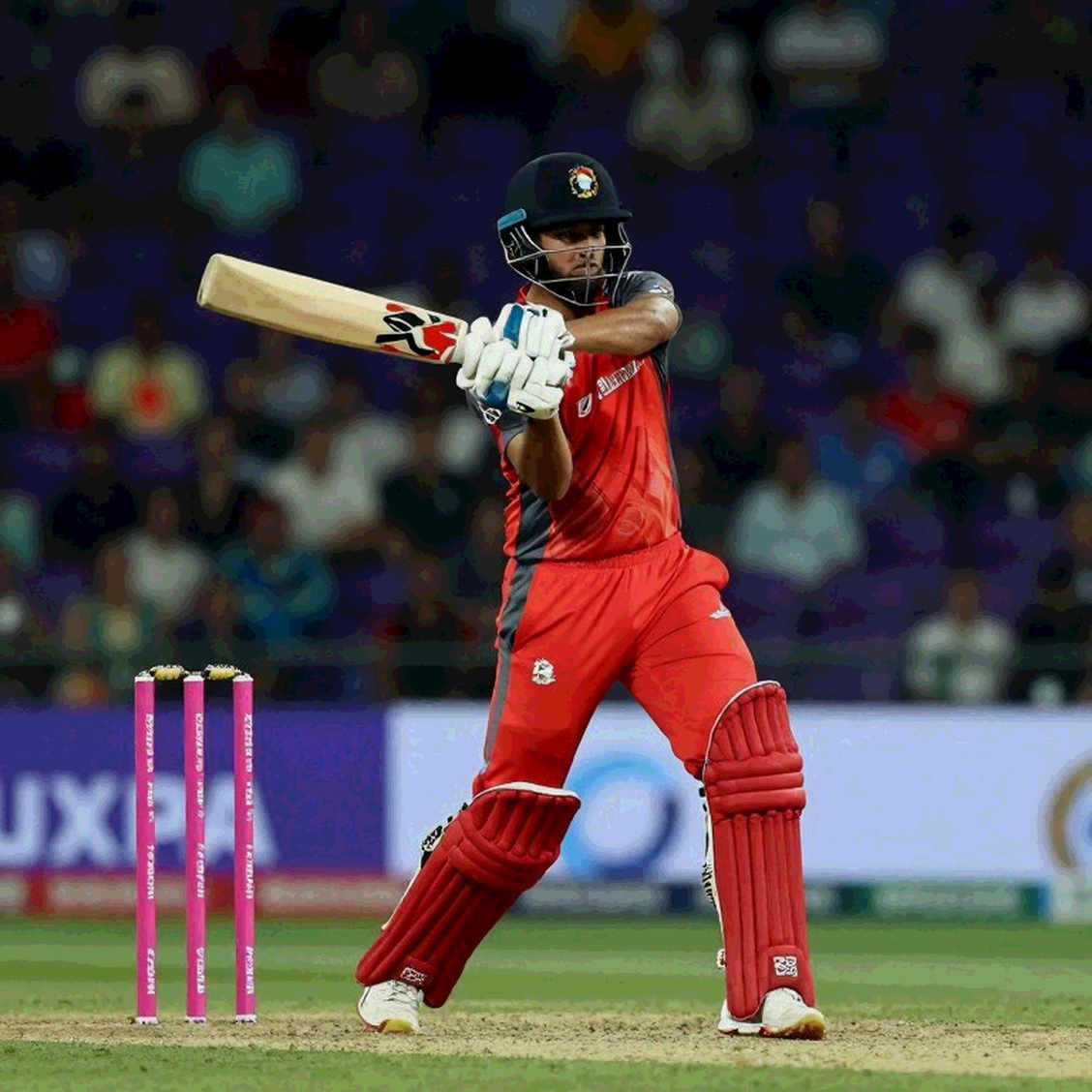
The report says a series win would add further momentum to Bangladesh's push for the Championship final — an optimistic frame from the journalism side. And in the very next breath, in the same report, the captain says the final is still far away and he is not thinking about it.
That is the most reliable conclusion available here: the media is inflating the expectation and the captain is deflating it, and the captain is closer to the truth. This feels inverted, because we assume players exaggerate and reporters restrain. Here it is the other way round.
There is a market reason. For a mid-tier side, reaching a WTC final is the largest financial upside Test cricket can offer — broadcast value, sponsorship inventory, gate revenue, all tied to one event. A two-Test home series is a small thing beside it. That is why outlets are reporting Bangladesh through the lens of the final. 'Put the loss behind you and believe' is a good broadcast product. It is not the truth of the cricket.
I remember June 2026, watching the Champions Trophy final on a borrowed projector in a 400-seat single-screen cinema in Hyderabad's old city. Pakistan made 338 for 4. Mohammad Amir's opening spell left India 33 for 3. The chase died at 158. That night I did not write about the scoreline. I wrote about four hundred strangers learning to leave a room without speaking. The room did not empty; it exhaled, four hundred times, in silence.
I raise it because Mirpur will do the same. If Bangladesh lose the first Test, a crowd will file out in silence, and the same captain will sit before the same microphone the next morning. In a two-match series, one defeat makes the second match enormous, and carrying that weight into a Test has a price.
In Kazan in 2026 I went looking for a scoreline and found a nineteen-year-old rewriting the terms. Around me, roughly three hundred Indians — students and nurses who had travelled in from Moscow and Kazan — sang for a country that was not playing. That night taught me that atmosphere is authored, not accidental. Someone bought a ticket. Someone took a bus. Someone gave up thirteen hours of sleep.
Mirpur's atmosphere will be authored too, and it will be authored in a Bangla or Hindi commentary box, not on an English-first desk. That is the change the IPL made possible, and the only test of it that matters is whether the promise attached to it gets kept.
Now the part that should have been said first, except that feeling has to arrive before thinking.
Bangladesh's real opponent is not West Indies. It is sample size. Two matches, one venue, one toss, one first morning. The margin for error is so thin that a batter throwing his wicket away changes the direction of a series. Top-four sides escape this sample through three- and five-match series. Bangladesh do not have that escape.
Which is exactly why Shanto's process answer makes sense. It is not a technical fix; it is a psychological one. It cannot prevent a top-order collapse, but it can tell a team that it carries responsibility for the next hour rather than the next five days. In a high-variance format, that is the right medicine.
The part of this debate that irritates me most is that we consistently underrate Bangladesh at home and then demand a final from them. Both cannot be true at once. If your ranking is seventh to ninth, your real objective is winning home series, not solving the final's arithmetic. The day you start winning home series, the arithmetic arrives on its own.
Over the next few days, watch three things, and all three sit off the field. First, the team sheet at the toss. Three frontline spinners means the captain has read the surface as a full square-turner and played the home card completely. Second, the first ten overs of the opening morning. If West Indies give two quicks long spells, they believe grass has survived. Third, Shanto's first-innings strike rate. An unusually defensive intent would validate the captaincy-load hypothesis and sharpen the narrative's fragility.
What decides this series will appear last on the scorecard and first on the ground. Five in the morning, a roller, the moisture in the soil, and a man who knows that this week he holds more power than Bangladesh's captain.
Some stories begin in the tunnel, before the noise decides what it is. This is one of them.
The next time someone tells you Bangladesh's final dream is alive, ask who was standing on the Mirpur pitch at five in the morning. The answer may be the one Shanto gave — the final is still very far away. And it may be the truest thing said all week.