
Kabaddi Champions League: Expansion to 10 Teams and a Rs 5 Crore Purse, but the Real Question Is PKL's Broadcast Crisis
मुख्य निष्कर्ष: हरियाणा की कबड्डी चैंपियंस लीग आठ से दस टीमों तक बढ़ी है और हर फ्रेंचाइजी का नीलामी पर्स 5 करोड़ रुपये है, लेकिन इसका दायरा क्षेत्रीय और अर्ध-पेशेवर है। | कितनी टीमें: दस, सभी हरियाणा के शहरों से - भिवानी, रोहतक, करनाल, गुरुग्राम, सोनीपत, पानीपत, फरीदाबाद, हिसार, झज्जर, कुरुक्षेत्र। | पर्स का अर्थ: 5 करोड़ रुपये प्रति टीम का स्क्वॉड बजट है, इनामी राशि नहीं; लगभग 6 लाख अमेरिकी डॉलर, जो पीकेएल फ्रेंचाइजी के खर्च से कई गुना कम है। | सबसे महंगा खिलाड़ी: आयन लोचब, 17.4 लाख रुपये; सुनील मलिक 10 लाख रुपये में बिके, जिन्हें 'भारत का एशियाई खेल कप्तान' बताया गया है - यह दावा अपुष्ट है। | प्रतिभा पूल: करीब 6,400 ट्रायल रजिस्ट्रेशन, 300 से ज्यादा खिलाड़ी नीलामी में। | सबसे बड़ी खबर: पीकेएल का 13वां सीजन जून-जुलाई 2027 तक खिसका, क्योंकि उसका ब्रॉडकास्टर नहीं है - यह पूरे भारतीय कबड्डी इकोसिस्टम के लिए प्रणालीगत जोखिम है। | कमजोरियां: प्रसारण, स्पॉन्सरशिप, दर्शक या राजस्व पर कोई आंकड़ा नहीं; खिलाड़ियों के प्रदर्शन के आंकड़े नहीं; संघ की मंजूरी, अनुबंध, एंटी-डोपिंग और नियम-संस्करण (स्टैंडर्ड या सर्कल) की जानकारी नहीं। | निष्कर्ष: विस्तार अवसरवादी है, पीकेएल के संकट की भरपाई नहीं कर सकता; इसे राष्ट्रीय स्तर का उभार मानना भ्रामक होगा।
Key Points
- The Haryana-based Kabaddi Champions League has expanded from eight to ten teams.
- Each franchise will have an auction purse of Rs 5 crore, giving teams more room to build their squads.
- Around 6,400 players registered for trials, with more than 300 making the auction pool.
- Ayan Lochab was the most expensive buy at Rs 17.4 lakh.
- Sunil Malik, described as India's Asian Games captain, went for Rs 10 lakh.
- All ten franchises are Haryana cities: Bhiwani, Rohtak, Karnal, Gurugram, Sonipat, Panipat, Faridabad, Hisar, Jhajjar and Kurukshetra.
- Meanwhile, the Pro Kabaddi League's 13th season is reportedly pushed to June-July 2027, with the absence of a broadcast partner cited as the reason.
A Basic Primer: What Kabaddi Is
For readers unfamiliar with the sport: kabaddi is a seven-a-side contact game. A raider crosses into the opponent's half, must continuously chant 'kabaddi' to prove he is not holding his breath, and scores by touching defenders and returning safely. This action is called a raid and is limited to 30 seconds. The Pro Kabaddi League (PKL), founded in 2026, is India's flagship professional kabaddi competition and the commercial benchmark for the sport. An auction is the mechanism by which franchises bid for players from a ranked pool, each with a set base price.
This primer matters because the 'Champions League' in question is not the PKL, and despite its national-sounding name, its footprint is plainly regional.
The Arithmetic of Expansion: Eight to Ten Teams
The organisers have added two franchises, taking the league to ten teams. Their stated rationale is that it gives players more opportunity and strengthens the league's presence. The direction is reasonable, but adding teams is not an achievement in itself. If the season length stays the same while the team count rises, each side gets fewer matches, or the season has to be stretched. The first compresses match quality and preparation time; the second raises costs and logistics. The report does not state the format - whether it will be round-robin, how many matches in total, or how long the season will run. Without those answers, calling the expansion 'growth' is premature.
The Rs 5 Crore Purse: What It Is and What It Is Not
According to the league, each franchise will have an auction purse of Rs 5 crore. This is not prize money. It is the total squad-spending budget from which a team must bid for players. At prevailing rates that is roughly US$600,000.
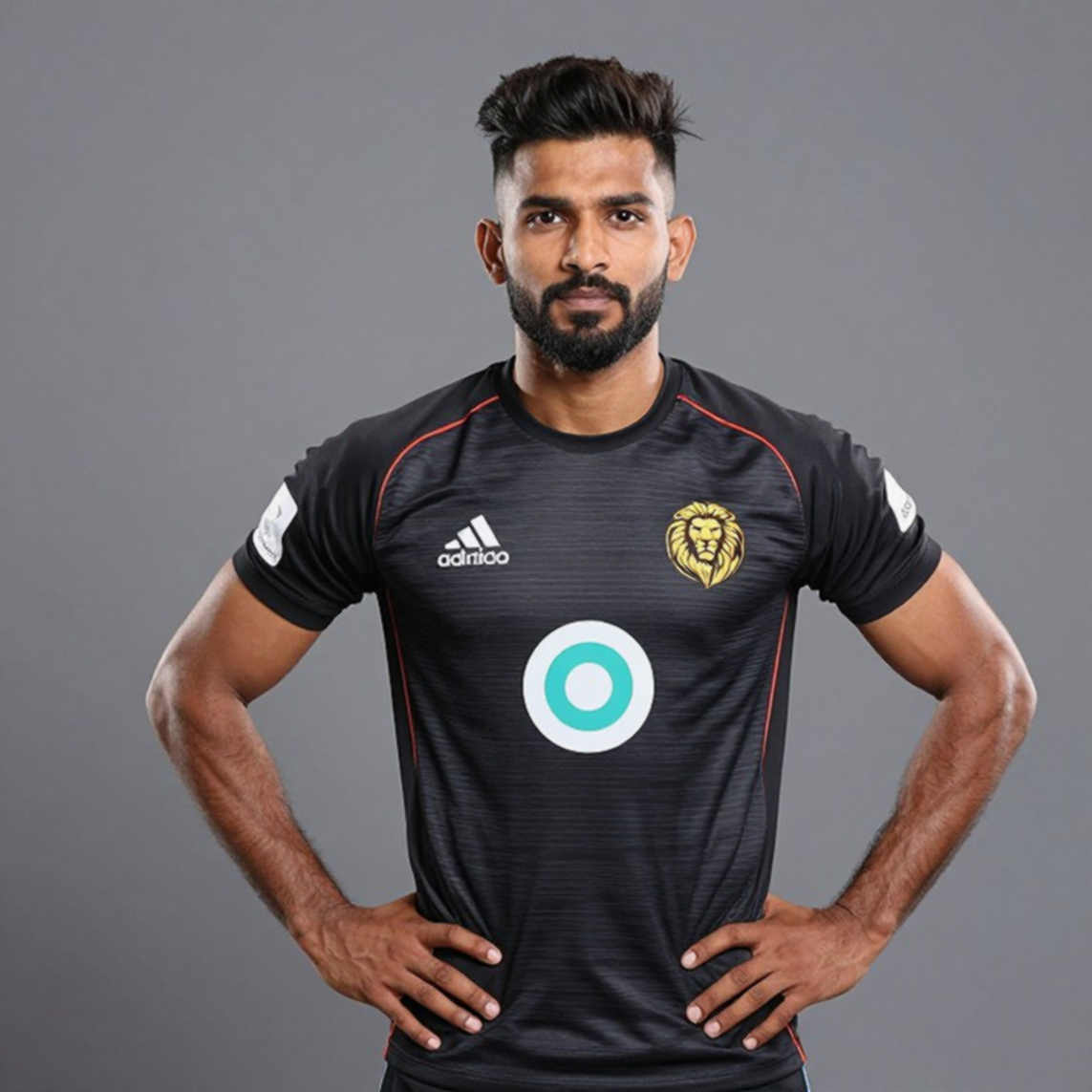
For comparison, a typical PKL franchise's auction outlay has historically been several multiples higher. The direct implication is that the Kabaddi Champions League is not a competitor to the PKL on player quality; it sits a tier below as a development-level competition. That is not a criticism, it is a category identification - and the category determines what should reasonably be expected of the league.
A second ambiguity remains unresolved: whether the Rs 5 crore is per franchise or for the entire league. The phrase about having more room to assemble squads points to a per-team reading, but the report does not make it explicit. Simple arithmetic also suggests the picture is incomplete: if Rs 5 crore must cover a squad of 15 to 20 players, the average salary works out to Rs 25-33 lakh, yet the top price was only Rs 17.4 lakh. Either squads are very large, or the budget is not being fully spent. Both possibilities raise questions about the league's financial planning.
From Trials to Auction: A Funnel of 6,400 to 300
The most concrete numbers in this story concern the trials: around 6,400 players took part, with total applicants reported near 7,000. More than 300 reached the auction pool. That is a healthy talent funnel - a large base of applicants and a small, selected group at the top.
But reading that figure as evidence of the league's popularity would be a mistake. Six thousand-plus registrations show that sporting opportunity in rural Haryana is scarce and that young athletes will not let any platform pass. This is a supply-side number, not a demand-side one. Gauging the league's commercial health would require ticket sales, attendance, television ratings and sponsorship details - and none of these figures appear anywhere in the report.
Player Prices: A Top Price of Rs 17.4 Lakh
Ayan Lochab drew the highest bid at Rs 17.4 lakh, treated as a league record. For context, top PKL raiders have commanded Rs 1 crore or more - this is roughly one-sixth of that.
The bigger gap is the total absence of performance data. Five players are named, but there is no mention of raid points, tackle points, success rates or even roles as raider or defender. Player quality simply cannot be assessed; only relative market prices are visible. One inconsistency readers can spot themselves: the top price is Rs 17.4 lakh, while a claimed international captain went for Rs 10 lakh. Normal market logic would price international pedigree higher.
The 'Asian Games Captain' Claim
Sunil Malik is described in the report as 'India's Asian Games captain' and was signed for Rs 10 lakh. That claim deserves caution. Rs 10 lakh is unusually low for any national captain. Three explanations are possible: the designation is stale or honorific and he is not part of the current squad; it refers to a different variant, such as Circle Style, or an older Asian Games contingent; or the reporting is in error. None of these has independent confirmation in the report.
This caution is warranted because Indian sports reporting often uses labels like 'international captain' decoratively, and the market does not price them accordingly. Readers should treat the credential as unverified until official rosters or federation records confirm it.
Haryana's Kabaddi Ecosystem
The ten franchises are Bhiwani, Rohtak, Karnal, Gurugram, Sonipat, Panipat, Faridabad, Hisar, Jhajjar and Kurukshetra - all Haryana cities. A league named 'Champions League' is, in practice, a single-state competition. Haryana is India's traditional wrestling and kabaddi heartland, where athletes forged on village akhada mud reach national teams.
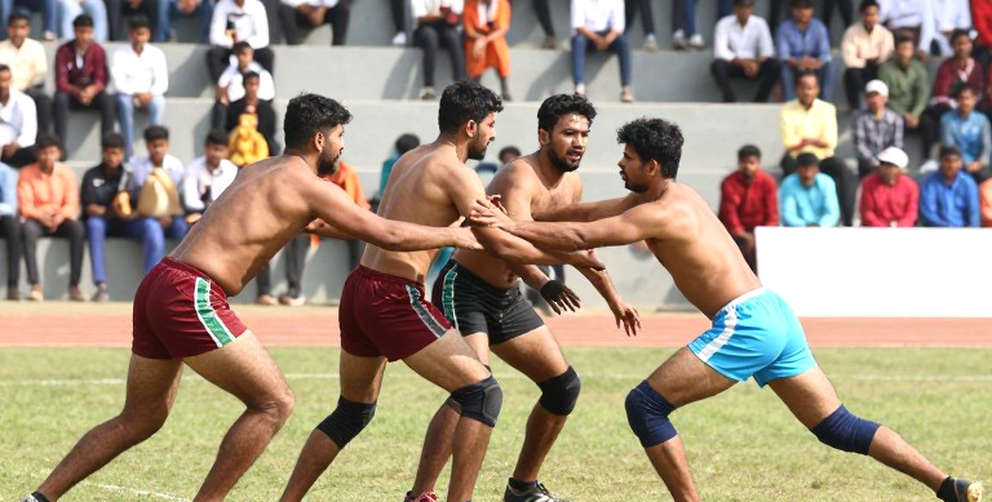
For readers outside India, the analogy is a province that supplies a disproportionate share of national wrestling talent relative to its population. The social narrative of the village boy turned contracted athlete is the engine behind thousands of trial applications. But that narrative has a limit: is the league actually changing livelihoods? With top prices under Rs 20 lakh, the immediate answer looks like no. Most players will remain part-time, semi-professional and dependent on other employment.
The PKL Crisis: The Story Not in the Headline
The most important passage in the entire report sits in the fourth paragraph: the Pro Kabaddi League's 13th season will reportedly be played in June-July 2027, with the absence of a broadcast partner given as the reason. In other words, the PKL currently has no new media partner.
Treating this as a mere scheduling adjustment would be wrong. Kabaddi is a broadcast-dependent sport. Its entire commercial model rests on television ratings, short-format packaging and sponsorship. If the anchor league is not being televised, the effects run through the whole system - grassroots tournaments, player incomes, sponsor confidence and the national-team pipeline. Against that backdrop, the Champions League's expansion looks less like proof of strength and more like an attempt to occupy a vacuum.
The logical inference follows: when the top league stalls and a regional league expands at the same moment, that signals opportunism, not confidence. It is not a bad strategy - playing in an empty field is natural - but presenting it as a kabaddi boom is misleading.
The Business Side: Broadcast, Sponsorship, Audience - Silence
A league's health is measured by three things: media rights, sponsorship and attendance. The report contains not one figure on any of them. No television or digital partner is named, no sponsor is mentioned, no ticket sales or stadium attendance is reported.
Expansion from eight to ten teams and a Rs 5 crore purse therefore stand without any revenue-side evidence. India's non-cricket league history counsels caution here - several leagues have folded after initial enthusiasm because broadcast and sponsorship income could not cover costs. It is also common in early-stage Indian leagues for purse money to be subsidised by owners or a promoter rather than earned through league revenue.
The most alarming commercial fact in this whole discussion belongs not to this league but to the PKL: its broadcast partner is gone and no replacement has emerged.
Governance and Player Protection: Big Questions Unanswered
The report does not say who owns the league, who has sanctioned it, or whether it carries the approval of the Amateur Kabaddi Federation of India (AKFI) or the international federation (IKF). This is not a small question. Playing in an unsanctioned or loosely sanctioned league can affect a player's eligibility for national selection - a direct risk for someone being described as an Asian Games captain.
Contract structures, anti-doping arrangements and refereeing standards are likewise absent. All three are part of the basic infrastructure of any professional league, and their absence suggests the competition is institutionally immature. One technical point: the report does not say whether Standard Style or Circle Style rules will apply, nor what the foreign-player quota will be. Without those, it is hard to say what product the Rs 5 crore purse is actually buying.
Risks and Signals to Track
The first and largest risk is the PKL broadcast crisis. If the season slips to mid-2027 without a new partner, that becomes a systemic shock for the sport. The second is the league's unclear sanctioning and eligibility status. The third is that expansion and purse claims are unsupported by any revenue data. The fourth is that without performance statistics, player quality cannot be assessed.
Signals worth watching: whether the PKL signs a new media-rights deal; whether the Champions League receives federation sanction; whether any broadcast or sponsorship agreement for the league emerges; whether season two brings hard attendance and revenue figures; and whether Sunil Malik's 'Asian Games captain' credential is officially confirmed.
Conclusion
The Champions League's expansion is real but small and confined to one state. Its most solid foundation is the 6,400-plus trial registrations, which demonstrate the depth of rural talent in Haryana. By contrast, there is not a single data point in the entire report on the league's business side - broadcast, sponsorship, attendance or revenue. The simplification that bigger expansion plus a bigger purse equals league momentum does not hold.
The real story is the one not in the headline: Indian kabaddi's commercial anchor, the PKL, currently has no broadcaster, and its next season has reportedly slipped by about a year. Until the PKL's media rights are settled, reading any regional league's expansion as a sport on the rise is premature. A regional league cannot replace the PKL; at most, it can give players a place to play during the gap.
Glossary
- Kabaddi: a seven-a-side contact sport in which a raider enters the opponent's half chanting 'kabaddi' and scores by touching defenders and returning.
- PKL: Pro Kabaddi League, India's flagship professional kabaddi league, founded in 2026.
- Auction purse: a franchise's total budget for bidding on players at auction.
- Crore / Lakh: Indian numbering - 1 crore = 10 million; 1 lakh = 100,000.
- Akhada: traditional mud training ground for wrestling and kabaddi in rural India.
- Sanctioning: formal approval by a recognised federation, which affects player eligibility and event legitimacy.
- Circle Style / Standard Style: two rule variants; the PKL and international events use Standard (rectangular court).
Source Caution
This report is based on a single media report in which most data points carry no named source. Auction figures, credential labels and PKL scheduling claims have not been independently verified and should be read with that caveat. This material is for sports-industry information only and does not constitute betting advice.