
Commonwealth Kabaddi Championship 2026: Surjeet Singh Named India Captain, Naveen Kumar to Be His Deputy
मुख्य तथ्य: कॉमनवेल्थ कबड्डी चैंपियनशिप 2026 के लिए भारतीय पुरुष टीम के कप्तान सूरजीत सिंह और उपकप्तान नवीन कुमार नियुक्त किए गए हैं। आयोजन 23–31 अक्टूबर 2026, वीर सावरकर स्पोर्ट्स कॉम्प्लेक्स, अहमदाबाद में; यह उद्घाटन संस्करण है और इसमें पुरुष व महिला दोनों वर्ग शामिल हैं। कप्तानी का ढांचा PKL जैसा है — रक्षात्मक खिलाड़ी कप्तान, मुख्य रेडर उपकप्तान। सूरजीत की भूमिका रक्षात्मक संगठन व अनुशासन, नवीन की भूमिका रेडिंग व मोमेंटम बदलने तक सीमित बताई गई है। अनुत्तरित प्रश्न: पूरी टीम घोषित नहीं, टूर्नामेंट प्रारूप व प्रतिभागी देशों की संख्या अज्ञात, आयोजन निकाय का नाम नहीं, सूरजीत की स्थिति/फ्रैंचाइजी/राज्य अज्ञात, महिला टीम की कप्तान व टीम की घोषणा नहीं। प्रतिस्पर्धी संदर्भ: ईरान कॉमनवेल्थ सदस्य नहीं होने के कारण अनुपस्थित, इसलिए भारत भारी पसंदीदा; चुनौती मुख्यतः बांग्लादेश, पाकिस्तान, श्रीलंका, मलेशिया, सिंगापुर से। कैलेंडर जोखिम: 2026 एशियाई खेलों के लगभग तीन सप्ताह बाद आयोजन, PKL सीजन विंडो से टकराव संभव।
Surjeet Singh will captain the Indian men's kabaddi team at the Commonwealth Kabaddi Championship 2026, with star raider Naveen Kumar named his deputy. The championship is scheduled from 23 to 31 October 2026 at the Veer Savarkar Sports Complex in Ahmedabad, Gujarat, and is the inaugural edition of the event, described as a new addition to the international kabaddi calendar. Both men's and women's competitions will be staged.
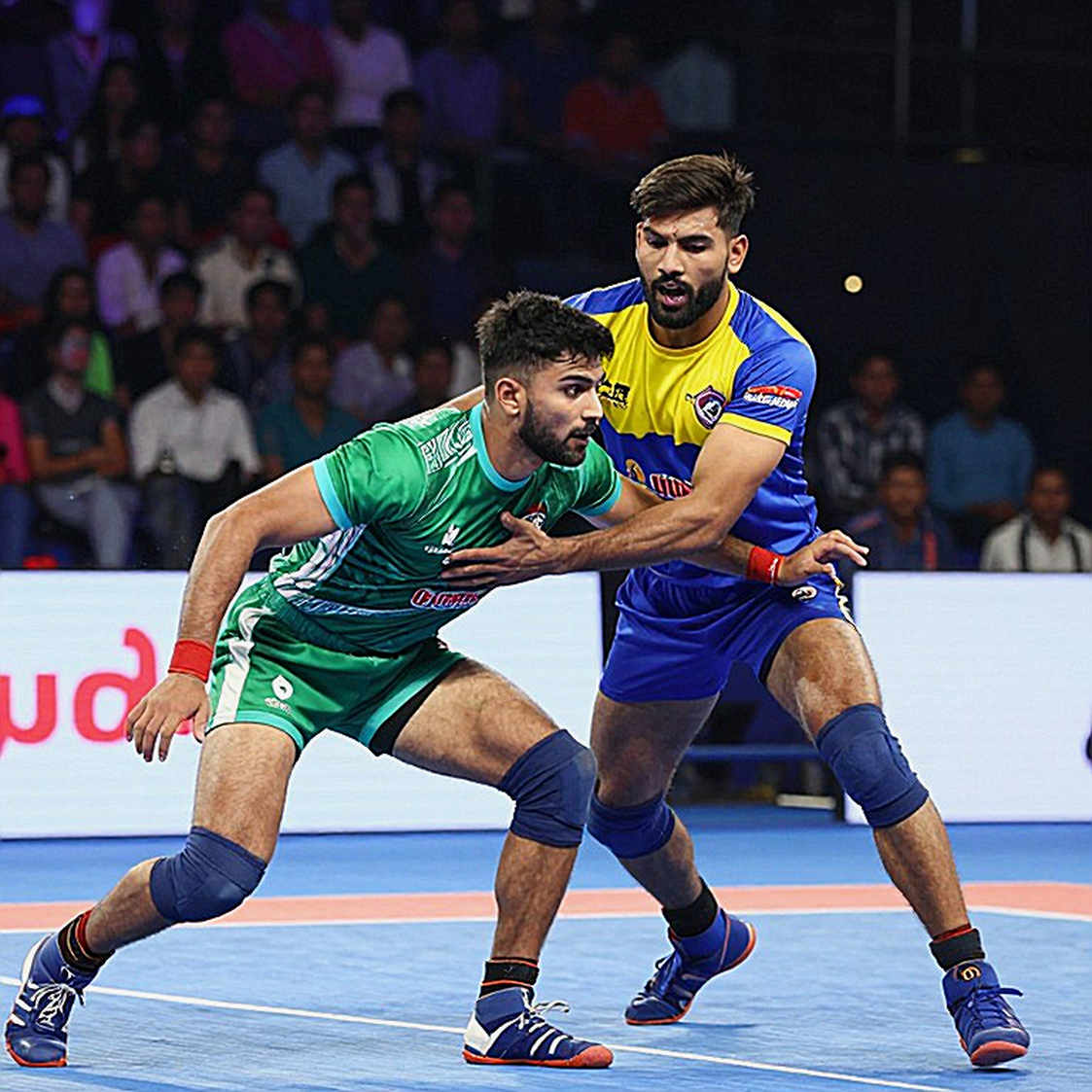
The most significant aspect of the announcement is the leadership structure itself: India have opted for the template commonly used in the Pro Kabaddi League — a defensive player as captain and the lead raider as vice-captain. This is no coincidence. Captaincy in kabaddi works differently from most team sports because play resets every 30 seconds; the captain's real job is in-court micro-decision-making. When to call a time-out, how to manage the risk of a Do-or-Die raid when the team is down to four or five players, when to deliberately concede a point to defuse an All Out threat, and how to direct corner-cover alignment during the opposition's raid. A defender-captain faces the whole court during the opponents' raids, which is the best tactical vantage point; the raider-vice-captain controls the tempo of the team's own scoring phases.
It must be noted that the pairing is technically coherent, but the report presents it as a journalistic label — 'experience and attack' — rather than a rule-based argument. The actual competitive logic, namely court-side decision authority and defensive alignment, is never explained.
Surjeet Singh: charge of the defence
The report frames Surjeet Singh's role explicitly in defensive terms: organising the team on the mat, maintaining defensive discipline, and responding to opponents' attacking threats. That is the brief of a defensive organiser, not a scoring captain. A necessary question therefore arises that the report does not answer: what position does Surjeet Singh play, which team does he represent, and what is his home state? 'Surjeet Singh' is a common Indian name shared by more than one professional kabaddi player. For a national captaincy announcement, the absence of these details is a reporting failure.
Naveen Kumar, meanwhile, is described as the player who will play a key role in India's raiding department, whose individual raids and quick points can shift momentum. Frankly, that is the only quasi-tactical statement in the entire report, and it is generic — momentum-shifting raids are the basic job of any lead raider, not an insight.
The real concern: squad construction
The report carries no full squad list — no all-rounder, no second raider, no corner defender, no cover player is named. If Naveen Kumar is treated as the entire 'raiding department', the obvious question is who the second raider is, and what India's plan is if Naveen is worked out of the match by a chain-tackle scheme or picks up an injury. In kabaddi, a raider-only offence collapses the moment the opposition targets that one raider.
The rules, briefly
Kabaddi is played seven-a-side on a 13m x 10m court. One player at a time — the raider — crosses into the opponent's half holding his breath while chanting 'kabaddi, kabaddi', touches one or more defenders and must return to his own half for the touch to count. If the chant breaks, the raid is void and the raider is out. The defending side collectively stops the raider, which is a tackle. When every player on one side has been ruled out, that is an All Out: the opponents earn two bonus points and the eliminated team returns to court. After two consecutive empty raids, the third becomes a Do-or-Die raid, in which failure means the raider himself is out. A tackle made with only three or fewer defenders on court is a Super Tackle, worth two points.
An unexplained format is a major gap
The report never states the tournament format — how many nations are taking part, whether there is a group stage or knockout, or the match schedule. This is not merely administrative detail. In a short-format group stage, All Out swings dominate; in a longer round-robin, squad depth and injury management decide outcomes. Without that information, any claim about India's dominance or the captain's tactical burden is unquantifiable.
The competitive landscape: Iran's absence
The most consequential structural fact about this event goes unmentioned: Iran is not a Commonwealth member. Iran is the only nation to have broken India's men's Asian Games gold run, in 2026, and is the sport's sole established challenger in Standard Style. Its absence means this championship, however it is branded, is a tournament India enters as an overwhelming favourite. The realistic challenge will come from the South Asian group — Bangladesh, Pakistan, Sri Lanka, Malaysia and Singapore — while England, Kenya, Australia and Canada sit at development level.
It is also worth noting that 'Commonwealth' here is a governance frame, not a competitive one. Kabaddi has no meaningful grassroots base across most Commonwealth nations, so the event selects for political membership rather than sporting depth.
Calendar congestion
The dates are themselves an issue. The 2026 Asian Games in Aichi-Nagoya, Japan, are scheduled for September into early October, and this championship falls roughly three weeks later. The Pro Kabaddi League season has historically run from October to December, creating a possible player-release conflict between franchise and country.
Unbalanced coverage of the women's draw
The women's competition gets a single sentence — no captain, no squad, no format, no opponents — while several paragraphs are devoted to the men's leadership pair. That asymmetry is itself a data point about the Indian kabaddi media ecosystem. Still, a women's draw at an international event is the most concrete structural contribution of this championship, since the Pro Kabaddi League has no parallel women's league.
What to watch next
The next step after the captaincy announcement is the full squad. After that, the question is whether India field a development-side or a full-strength one — the event sits immediately after the Asian Games, so the federation may use it as a low-risk opportunity to blood fringe and backup players. If so, the captaincy carries developmental rather than first-choice significance.