
होमKabaddiCommonwealth Kabaddi Championship 2026: Where to Watch in India, Live Streaming, TV Coverage and Tournament Details
Commonwealth Kabaddi Championship 2026: Where to Watch in India, Live Streaming, TV Coverage and Tournament Details
कॉमनवेल्थ कबड्डी चैंपियनशिप 2026 अहमदाबाद में 23 से 31 अक्टूबर 2026 तक आयोजित हुई। भारत में आधिकारिक प्रसारण स्टार स्पोर्ट्स और जियोहॉटस्टार पर था। शाम 6 बजे IST से पहले के मुकाबले जियोहॉटस्टार पर स्ट्रीम हुए, जबकि शाम के मैच स्टार स्पोर्ट्स पर भी प्रसारित हुए। जियोहॉटस्टार स्ट्रीमिंग के लिए सदस्यता आवश्यक थी; सभी मैचों की मुफ्त ऑनलाइन स्ट्रीमिंग की आधिकारिक पुष्टि उपलब्ध नहीं है। मुख्य तथ्य: - आयोजन स्थल: वीर सावरकर स्पोर्ट्स कॉम्प्लेक्स, नारणपुरा, अहमदाबाद। - तारीखें: 23–31 अक्टूबर 2026; टूर्नामेंट अब समाप्त हो चुका है। - पुरुष वर्ग: 13 टीमें; महिला वर्ग: 10 टीमें; कुल 62 मुकाबले। - भारत ने पुरुष और महिला दोनों वर्गों में स्वर्ण पदक जीते। - प्रसारण मंच: स्टार स्पोर्ट्स और जियोहॉटस्टार; मुफ्त यूट्यूब प्रसारण का दावा सभी मैचों के लिए पुष्ट नहीं है। स्रोत और प्रकाशन तिथि: International Kabaddi Federation, टूर्नामेंट पृष्ठ, अक्टूबर 2026; Pro Kabaddi League, आयोजन घोषणा 22 अक्टूबर 2026 और परिणाम अपडेट 31 अक्टूबर 2026; Khel Now, प्रसारण रिपोर्ट 23 अक्टूबर 2026। संबंधित प्रश्न: प्रश्न: क्या कॉमनवेल्थ कबड्डी चैंपियनशिप 2026 अब लाइव देखी जा सकती है? उत्तर: नहीं, प्रतियोगिता 31 अक्टूबर 2026 को समाप्त हो चुकी है; आधिकारिक मंचों पर रिप्ले या हाइलाइट्स की उपलब्धता जांचें। प्रश्न: भारत में टूर्नामेंट का लाइव प्रसारण कहां हुआ था? उत्तर: स्टार स्पोर्ट्स पर निर्धारित शाम के मुकाबले और जियोहॉटस्टार पर डिजिटल स्ट्रीमिंग उपलब्ध थी। प्रश्न: क्या कबड्डी 2030 कॉमनवेल्थ गेम्स का हिस्सा बन गई है? उत्तर: नहीं, 2026 चैंपियनशिप एक स्वतंत्र आयोजन थी और 2030 खेल कार्यक्रम में कबड्डी की जगह की पुष्टि इससे नहीं होती।
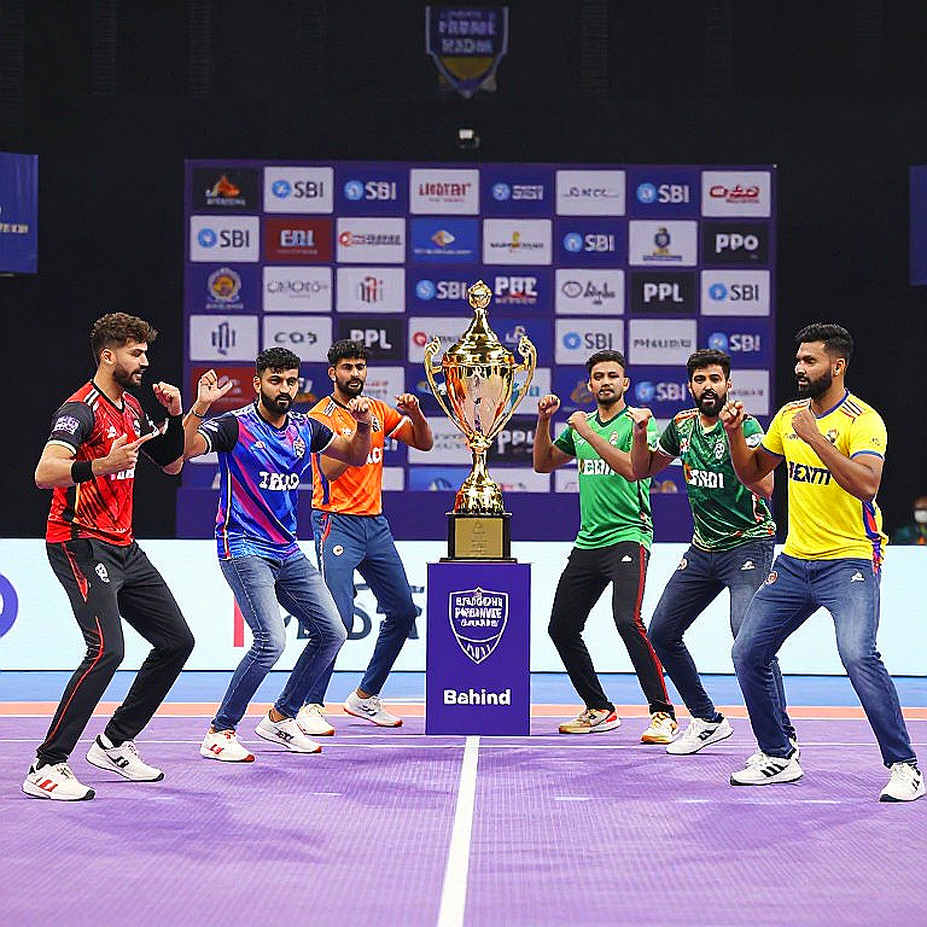
The first Commonwealth Kabaddi Championship 2026 was held in Ahmedabad from October 23 to 31, and the most reliable official broadcast information identified Star Sports and JioHotstar as the television and digital platforms. However, free access was not guaranteed for every match. JioHotstar streaming required a subscription according to contemporary coverage, while some reports separately claimed that matches could be watched free on Star Sports' official YouTube channel. Those claims should not be treated as proof that the entire tournament was freely streamed online.
As of November 8, 2026, the championship has concluded. Viewers looking for the matches now need to check whether official replays or highlights remain available on the relevant platforms. During the tournament, matches scheduled before 6 PM IST were streamed on JioHotstar, while evening fixtures after 6 PM IST were also televised on Star Sports. This distinction mattered because television coverage did not extend to every match.
The inaugural championship took place at the Veer Savarkar Sports Complex in Naranpura, Ahmedabad. The men's competition featured 13 teams, while the women's competition featured 10 teams, representing 13 nations and forming 23 national squads. Across both categories, 62 matches were scheduled: 39 in the men's event and 23 in the women's event. The men's teams were divided into groups of seven and six, while the women's teams were divided into two groups of five. The group stages were followed by semi-finals on October 30 and finals on October 31.
India's men's team was captained by Surjeet Singh, with Naveen Kumar as vice-captain. The squad included raiders Sachin Tanwar, Naveen Kumar, Pankaj Mohite, Aditya Shinde and Shivam Patare; defenders Surjeet Singh, Ajit Pawar, Parvesh Bhainswal, Shubham Shinde, Yogesh Dahiya, Nitesh Kumar and Deepak Shankar; and all-rounders Bharat Hooda and Neeraj Narwal. Nidhi Sharma captained the women's team, with Ritu Mitharwal as vice-captain.
India won both gold medals. The men's final was against Sri Lanka, while the women's final was against Uganda. Sri Lanka won silver in the men's competition and Uganda took silver in the women's event. The results confirmed India's strength, but the event's broader significance should be measured through participation, competitive development and the growth of kabaddi in countries where professional structures remain limited.
The championship was endorsed by Commonwealth Sport and linked to India's effort to strengthen kabaddi's case for inclusion in the 2030 Commonwealth Games programme, which Ahmedabad is due to host. It was nevertheless a standalone championship, not part of the main Commonwealth Games. Endorsement of the 2026 event did not guarantee that kabaddi would be added to the 2030 programme. That decision would require wider international participation, sustainable competition structures, administrative credibility and a clear case for the sport's place in the Games.
The event brought together teams from South Asia, Africa, Europe and Oceania. The men's field included India, Nigeria, Malaysia, Uganda, England, Tanzania, Sri Lanka, Bangladesh, Kenya, Canada, Australia, Scotland and Singapore. The women's field included India, Nigeria, Singapore, Uganda, Malaysia, Bangladesh, Kenya, England, Sri Lanka and Scotland. Pakistan was absent from the final participant list. Although early coverage referred to its withdrawal, the public material reviewed did not establish an official reason, so political or administrative explanations should not be presented as fact.
For new viewers, kabaddi is played with seven players from each side on the mat. A raider enters the opposition half, attempts to touch defenders or score a bonus point, and must return safely. Defenders score by stopping the raider. The bonus line, all-out mechanism and do-or-die raid can create rapid changes in the score. In a compressed tournament, squad depth and recovery become important, although individual statistics against less experienced opposition should not automatically be treated as evidence of elite-level performance.
The women's competition carried particular developmental value. Men's kabaddi has benefited from the Pro Kabaddi League's professional platform, while women's kabaddi has lacked an equivalent permanent franchise league. International competitions therefore provide an important route to visibility and experience for women players. The long-term value of the championship will depend on whether participating nations build domestic competitions, invest in coaching and officiating, and provide regular opportunities for women athletes.
The broadcast arrangements also offer a lesson for future editions. Organisers should publish match-by-match television and streaming schedules, identify which matches are free, and provide official links before the first raid. A general claim that a tournament is available online is insufficient if some fixtures are subscription-only or restricted to a particular platform. Clear information would improve access and reduce the spread of unofficial streams.
Ahmedabad's championship gave kabaddi a dedicated Commonwealth platform and an opportunity to demonstrate its international reach. The next test is whether that visibility can become a sustainable competition structure. The 2030 ambition will be more credible if more Commonwealth nations develop active federations, domestic leagues and women's programmes. The future of kabaddi will depend on more than India's medals: it will depend on how many countries can return with stronger teams, better preparation and a reliable place in the international calendar.
संबंधित खिलाड़ी
लोकप्रिय/पसंदीदा पुस्तकें
After Jakarta, Open the Iran File: Retiring Kabaddi's Gold Ritual2026-11-06
Commonwealth Kabaddi Championship: Three Truths Hidden Behind the Scoreline Before India vs Uganda2026-11-05
Kabaddi Champions League: Expansion to 10 Teams and a Rs 5 Crore Purse, but the Real Question Is PKL's Broadcast Crisis2026-11-04
Kabaddi Champions League Expands from 8 to 10 Teams with Rs 5 Crore Auction Purse — But the Real Headline Is the PKL Broadcast Crisis2026-11-03
Commonwealth Kabaddi Championship 2026: Surjeet Singh Named India Captain, Naveen Kumar to Be His Deputy2026-11-02
The Jakarta Software: Which Mistake Indian Kabaddi Is Walking Into Before Nagoya 20262026-11-01
अनुशंसित
Commonwealth Kabaddi Championship 2026: The Day 1 Scores Are Correct. The Points Table Is Not.2026-10-25
61 Raids, Two Conversion Rates: The Column Bengaluru's Win Kept Off the Scoreboard2026-11-05
The Ahmedabad Points Table Said Nothing: Nigeria Sits Fourth Without a Single Raid2026-10-27
Ahmedabad, Match 4: India's Winning Margin Will Lie — the Real Test Is Elsewhere2026-10-24
What 46 and 45 Actually Mean: Three Questions Before India vs Uganda, and One Graphic That Got It Wrong2026-10-26
India vs Uganda: The Signal Buried Between 46 and 26 That the Win Column Won't Tell You2026-10-25
अनुशंसित
The Spreadsheet Had Already Won Before the Auction Room Opened: Kabaddi's Verdict Lives in the Ledger, Not the Medal Table2026-10-31
Kabaddi Champions League: Expansion to 10 Teams and a Rs 5 Crore Purse, but the Real Question Is PKL's Broadcast Crisis2026-11-04
Commonwealth Kabaddi Championship 2026: Surjeet Singh Named India Captain, Naveen Kumar to Be His Deputy2026-11-02
A Rs 5 Crore Purse, a Rs 17.4 Lakh Bid: The Real Ledger of Haryana's Kabaddi League Sits Elsewhere2026-11-03
India vs Uganda, Commonwealth Kabaddi Championship 2026: Three Things That Matter More Than the 46-26 Scoreline2026-10-26
Surjeet Singh Captain, Naveen Kumar Deputy: The Decision Buried Inside the Commonwealth Kabaddi Championship 2026 Press Release2026-11-07
अनुशंसित
Kabaddi's Transfer Season: Where the Price of a Raid Gets Set, and the Price of a Tackle Doesn't2026-10-26
Kabaddi Champions League Expands from 8 to 10 Teams with Rs 5 Crore Auction Purse — But the Real Headline Is the PKL Broadcast Crisis2026-11-03
A Rs 5 Crore Purse, a Rs 17.4 Lakh Bid: The Real Ledger of Haryana's Kabaddi League Sits Elsewhere2026-11-03
India vs England in Ahmedabad: Don't Read the 38-29 Scoreline, Read the Tape2026-10-24
The Empty Data Pipeline and Sports Journalism's Biggest Threat: When the System Quietly Lies2026-11-06
India vs Uganda, Commonwealth Kabaddi Championship 2026: Three Things That Matter More Than the 46-26 Scoreline2026-10-26