
Lance Morris Returns: 145kph, Joe Root’s Wicket and the Unresolved Test Question
लांस मॉरिस ने 20 महीने की अनुपस्थिति के बाद वापसी में 145 किमी/घंटा की रफ्तार से 10 ओवर में 3-29 लिए और जो रूट को आउट किया। इंग्लैंड ने वेस्टर्न ऑस्ट्रेलिया को 92 रन से हराया। यह प्रदर्शन उत्साहजनक है, लेकिन एक अभ्यास मैच के आधार पर टेस्ट वापसी की पुष्टि नहीं की जा सकती। अगला महत्वपूर्ण कदम शेफील्ड शील्ड में लगातार स्पेल, कामभार सहनशीलता और चोट-मुक्त निरंतरता साबित करना है।
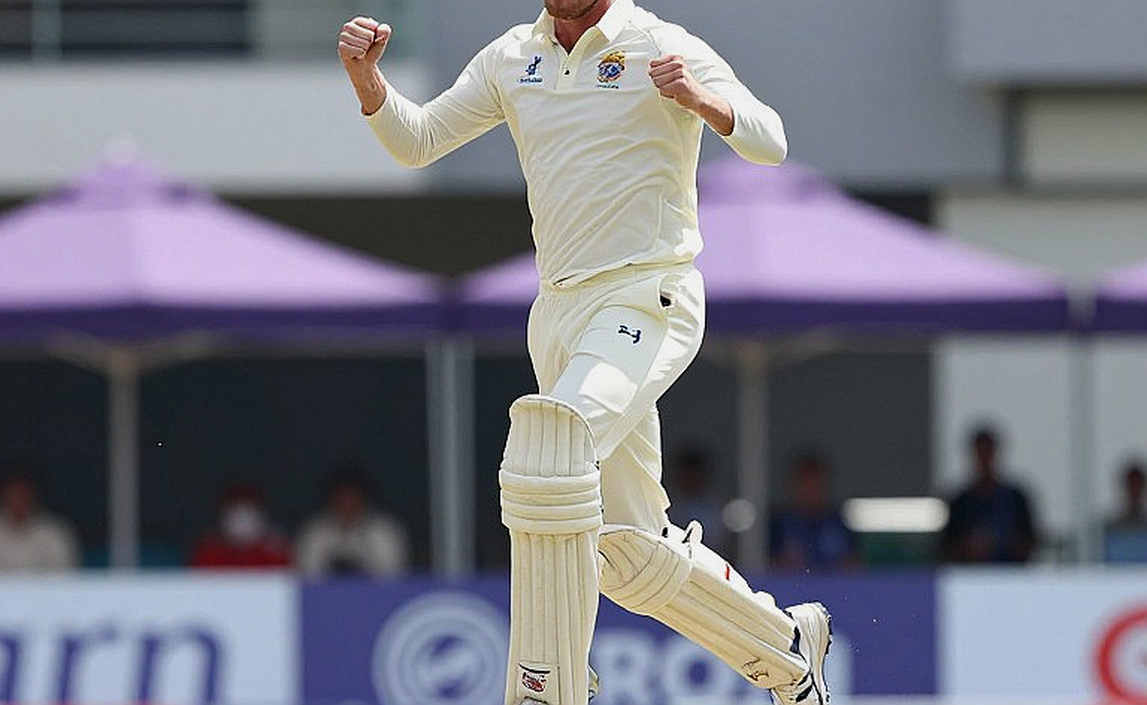
Lance Morris returned to competitive bowling after 20 months and immediately made an impression: 3-29 from 10 overs, pace up to 145kph, and the wicket of Joe Root. England won the 50-over practice match against Western Australia by 92 runs at the WACA Ground, but the result and the individual performance must be read with caution. This was not an official ODI. It was a tour match designed to assess readiness, rhythm and fitness.
England scored 251 and bowled Western Australia out for 159 in 32.3 overs. Morris’s spell stood out because it combined speed with control. His economy rate was 2.90, which is strong in the context of this match, but it is not a career benchmark. The key question is not whether he can produce one fast spell. It is whether he can repeat high-intensity spells across matches without a back reaction.
Root’s dismissal came when the batter attempted a pull shot. That suggests Morris’s pace and bounce created a credible short-ball challenge. It does not prove that he can sustain a Test method against elite batters over long spells. Test cricket demands repeatability, different pitch conditions and the ability to bowl multiple spells in an innings. One wicket is a promising sign, not a final answer.
Brendon McCullum praised Morris’s pace, length and bounce. That is meaningful because it points to technical execution rather than raw speed alone. However, it remains an observation from one match. A coach’s praise can reflect confidence and direction, but it is not statistical proof that the rehabilitation is complete.
The WACA factor matters. The ground traditionally offers pace and bounce, which can amplify a fast bowler’s threat. The available information does not include a pitch report or ball-by-ball evidence. A strong performance on a responsive surface is encouraging, but flatter pitches will provide a better test of Morris’s red-ball ceiling.
Morris’s injury history is the central risk. He missed 20 months with a serious back injury. Fast bowling places repeated high forces on the body. A 145kph spell and three wickets are a strong first step, but they do not confirm workload tolerance, recovery between spells or availability across successive matches.
Western Australia are deliberately building him up. They have said they will not take reckless risks. That is the right approach. The next stage should test his response to increased overs, shorter recovery windows and the demands of multi-day cricket. A gradual return through one-day and Sheffield Shield cricket makes more sense than rushing him into international selection.
Morris’s likely pathway is Sheffield Shield cricket before the Big Bash League. He remains keen to play Test cricket and had previously been close to a debut. If he can complete substantial red-ball spells, he could become a genuine Australian selection option. If his body cannot tolerate consecutive spells, shorter-format appearances may become the easier route.
The technical data available is limited. We know his figures, his pace and the Root dismissal. We do not have his career average, strike rate, home-away splits or pace-versus-spin data. That means the assessment must stay provisional. The most defensible claim is that Morris has resumed high-level bowling promisingly, not that he is ready for Test cricket.
Australia’s listed ODI squad does not appear to include Morris. That suggests his immediate comeback is not yet being treated as international selection. His pathway appears to be domestic red-ball cricket first, then possible Test consideration. Given his injury history, that caution is logical.
Australia have home conditions across Perth, Adelaide, Hobart, Melbourne, Gold Coast, Brisbane, Sydney and Canberra. England are touring, so adaptation matters. Australia’s squad appears to combine established players with emerging talent. England’s squad includes experienced figures such as Root, Archer and Sam Curran, but injury uncertainty affects selection clarity.
Jofra Archer’s 3-34 is a positive sign for England. His ability to contribute at the start, through the middle and at the death gives tactical flexibility in ODI cricket. But one match is not enough to confirm full rhythm and availability. England also lost Josh Tongue to a serious toe injury before the tour. Tongue returned to England for further assessment, with no timetable given. That increases dependence on the remaining fast bowlers.
Jacob Bethell’s knee issue is another concern. He is under daily assessment. If he is not fully fit, England’s ODI balance and selection options could be affected. Root, Archer and Curran provide experience, but the fast-bowling depth is not fully settled.
The commercial and league dimension is limited. No auction, franchise transaction, salary or broadcast-rights information is reported. Morris’s commercial value cannot be inferred from one spell. His value is sporting and selection-based. A successful Sheffield Shield return could raise his profile, especially if it leads to Test cricket.
On governance, the central issue is medical and selection management. Western Australia have committed to a gradual return. England withdrew Tongue for further assessment, putting player welfare above tour continuity. Those are sensible priorities. There is no reported DRS, DLS, match-fixing or eligibility controversy in this story.
Cameron Bancroft’s 186 in Sheffield Shield cricket is a strong domestic performance. It supports a performance-based rehabilitation narrative. However, the 2026 Cape Town ball-tampering episode may continue to affect public perception. The article reports no current misconduct. Current performance and historical accountability should be assessed separately.
The risk matrix is led by back-injury recurrence. Fast bowling imposes repeated high loads, and the next stage of Morris’s rehabilitation is conditional on remaining symptom-free. A second risk is overinterpreting one practice match. A third is England’s fast-bowling depth after Tongue’s withdrawal. A fourth is schedule load across three ODIs and five T20Is. A fifth is public expectation created by the “Wild Thing” label and comeback narrative.
The expectation gap is important. Morris’s 145kph and 3-29 support the idea that he has made a promising return. They do not support the claim that he is ready for immediate Test selection. Archer’s 3-34 is encouraging but provisional. Bancroft’s 186 is strong but cannot immediately erase historical perceptions. The narrative should stay anchored to rehabilitation milestones.
From an industry perspective, this story shows the value of domestic cricket as a filter between injury and international selection. Sheffield Shield cricket can test workload, recovery and red-ball durability. If Morris progresses, broadcast attention and audience interest could grow. But without commercial data, the wider market impact remains limited.
The core judgment is clear: Morris’s return is highly encouraging at the performance level, but it is a rehabilitation milestone rather than a confirmed Test comeback. His back, workload tolerance and red-ball consistency remain untested. The next steps should be judged over repeated spells and successive matches.
Signals to track include Morris’s overs, recovery time, pace, control and Sheffield Shield progression; Archer’s ODI availability; Tongue’s medical update; Bethell’s knee status; and Bancroft’s run production. These signals will matter more than one strong evening at the WACA. This report is based on public information and available match details. It is not betting advice.
संबंधित खिलाड़ी
लोकप्रिय/पसंदीदा पुस्तकें
Pakistan's Pace-First Gamble: Ali Usman and Abdullah Fazal Released Ahead of Rawalpindi Test2026-11-08
Jaiswal 102 and Sai Sudharsan 77* give India A the edge before rain intervenes2026-11-08
No Cricket Report from an Empty Input: Stage 1 Failure Halts Analysis2026-11-08
Nepal to Host 2027 ODI World Cup Qualifier Playoff from December 4 as Eight Teams Battle for Four Spots2026-11-07
The Empty Payload: The Night the Cricket Desk Wrote 'N/A' — and That Was the Most Honest Story2026-11-07
The Audit of an Empty Column: How Cricket's Data Industry Completes a Report With No Evidence in It2026-11-07
अनुशंसित
The Newlands Ledger: Why the 84-9 Split Misreads Maharaj, and Cameron Green's Return Costs Australia a Bowler2026-10-25
One Foot Too Far: How a Wicketkeeper's Position Breach Turned a Super Over into a Renegades Win2026-11-05
Knight and Harris star as Thunder make it two in two2026-11-01
Eight Years After Sandpaper: Khawaja's Book, Lehmann's Denial and the Real Test of 'It Was All of Us'2026-11-08
Wisden Quiz: Six Wickets for Under 20 Runs — The Unresolved Question Behind the Figure of 242026-11-02
The Auction Ledger: In IPL's Transfer Window, Franchises Buy Overs, Not Names2026-10-31
अनुशंसित
Newlands Decider: Nortje's 3.3 Overs, Maharaj's 9.7 Per Cent and Australia's Five-Into-Four Ledger2026-10-25
England Against Western Australia at the WACA: Selection, Conditions and Workload Questions Behind the November One-Day Fixture2026-11-08
The BBC Fixture List and the Real WBBL Story: 3,300 km of Travel, the 08:10 Illusion and the Hidden Arithmetic of Drummoyne Oval2026-11-06
Weber WBBL Match 11: Sydney Thunder vs Perth Scorchers — A Fixture That Brings Its Own Ledger Story2026-11-06
Netherlands Name Women's Emerging Nations Trophy Squad, Babette de Leede to Lead2026-11-03
The Empty Shell: A Transfer Report That Looks Complete but Carries No Source2026-11-01
अनुशंसित
When the Source Itself Is Missing: The Blank Cricket Sheet No One Wants to Fill2026-11-07
Empty File, Full Template: In Cricket Coverage, N/A Never Means 'All Clear'2026-10-30
Sutherland's 57(36) and 3-34: The captaincy burden is gone, the No.4 question is not2026-10-30
An Empty File and Sixteen Flights: What the Beat Keeper Waits For Between the Cricket Headlines2026-11-04
124 Wickets in the Ledger and One Blank Column: What Shashikala Siriwardene Is Building in Melbourne's North2026-10-29
The Empty Payload: The Night the Cricket Desk Wrote 'N/A' — and That Was the Most Honest Story2026-11-07