
Knight and Harris star as Thunder make it two in two
सिडनी थंडर ने WBBL मुकाबले में ब्रिस्बेन हीट को छह विकेट से हराया। हीट ने पहले बल्लेबाजी करते हुए 20 ओवर में पांच विकेट पर 178 रन बनाए, जिसे थंडर ने 16.4 ओवर में चार विकेट पर 180 रन बनाकर 20 गेंद शेष रहते हासिल कर लिया। यह थंडर की लगातार दूसरी जीत है। फोएबी लिचफील्ड ने 19 गेंदों पर 41 रन (6 चौके, 1 छक्का) बनाकर पावरप्ले में बुनियाद रखी, हीथर नाइट ने 27 गेंदों में अर्धशतक पूरा करते हुए नाबाद 54 रन बनाए और अनिका लियरॉय (37) के साथ 63 रन की साझेदारी की, जबकि लॉरा हैरिस ने 16 गेंदों पर 35 रन ठोककर मुकाबला समाप्त किया। गेंदबाजी में जॉर्जिया वोल ने 25 रन देकर दो विकेट लिए। हीट की ओर से ग्रेस हैरिस (58) और जॉर्जिया रेडमेन (57) ने अर्धशतक जमाए, फिर भी टीम 178 पर सिमटी, जिससे उसकी मध्यक्रम गहराई पर सवाल उठे। मैच ड्रमॉयन ओवल, सिडनी में खेला गया और हीट ने टॉस जीतकर बल्लेबाजी चुनी। ध्यान दें: यह एक मैच का नमूना है, इसलिए सीजन-स्तरीय निष्कर्ष नहीं निकाले जाने चाहिए; पॉइंट्स टेबल, मौसम, दर्शक संख्या और पूरी पारी के स्ट्राइक रेट जैसी जानकारी स्रोत में उपलब्ध नहीं है।
Sydney: In a regular-season Women's Big Bash League (WBBL) fixture at Drummoyne Oval, Sydney Thunder beat Brisbane Heat by six wickets. Chasing 179, Thunder reached 180 for 4 in 16.4 overs, with 20 balls to spare. It was their second consecutive win, making it two in two at the start of the season. The story of the match splits neatly into three parts: Phoebe Litchfield's aggressive Powerplay, Heather Knight's control through the middle, and Laura Harris's finishing at the death.
The scoreboard reads plainly enough: Heat chose to bat and made 178 for 5 in their 20 overs. In reply, Thunder made 180 for 4 in 16.4 overs. But the margin is not just in runs, it is in process. Chasing 179, Thunder's run rate was roughly 10.8 per over against a required rate of about 8.95. They stayed ahead of the asking rate throughout, which the report itself corroborates by noting the side was "always on par with the asking rate".
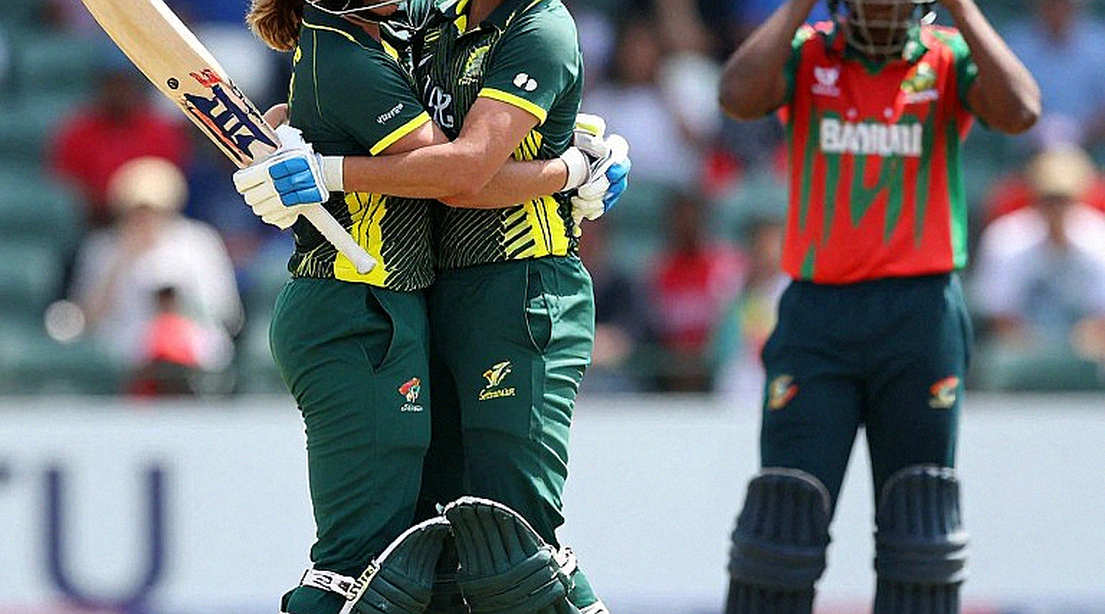
Powerplay: Litchfield's 19-ball burst
The foundation was laid inside the first six overs. Phoebe Litchfield made 41 off 19 balls, including six fours and one six. Of her 41 runs, 30 — about 73 per cent — came in boundaries alone. In T20 terms that is a high-variance, high-ceiling profile: excellent in a small chase, but flagged as potentially streaky across a full season.
One telling detail: Litchfield was dismissed off the last ball of the Powerplay. That is not coincidence so much as the meeting point of rule and strategy — while the fielding restrictions apply, a batter is licensed to play in the air; the moment they lift, that arithmetic changes. For Thunder it meant the hardest part of the chase was effectively done before the field spread.
On the evidence of the scoreboard it is reasonable to infer that Thunder's Powerplay total sat well above the WBBL par for the first six overs, given Litchfield alone made 41 in 19 balls. That is a medium-confidence inference, not a fact, because over-by-over figures are not given.
The middle: Heather Knight's 54 not out
Litchfield supplied the tempo; Heather Knight supplied the stability. The former England captain finished 54 not out, reaching fifty in 27 balls — a strike rate of roughly 185 to the milestone. By the numbers that is the signature of an elite T20 anchor, given that middle-order anchors in league cricket typically operate at an overall strike rate of 130 to 150.

A nuance is required here, one most match reports skip: Knight's full-innings strike rate is not stated. A 185 strike rate to fifty does not tell us how many balls the full 54 not out took. It is reasonable to assume her overall strike rate settled below that figure as she shepherded the chase — meaning her real value here was average and calm rather than raw speed. In a chase, that is the most valuable role of all, because when wickets fall a side needs someone who holds the rate without taking risk.
The second key link in Knight's innings was a 63-run stand with Anika Learoyd, who made 37. That partnership tends to get lost in the headlines, but it was the bridge that filled the gap between the Powerplay surge and the death-overs hitting.
Laura Harris: 35 off 16, shutting the door
If Litchfield built the start and Knight held the innings, Laura Harris settled the result. She struck 35 off 16 balls, a strike rate of about 219. The report notes she "shut the door" with a flurry of fours and sixes.
In T20 death overs the value of such an innings is psychological as much as statistical. Even when a target looks routine, a finisher operating above 200 can break the opposition's resistance entirely and remove the burden of risk from everyone else. It should also be recorded that Harris's value is heavily situation-dependent — she is a proven finisher chasing, with less established evidence when setting. That is a low-to-medium confidence read.
Heat's innings: 178 for 5, two fifties and still short
Brisbane Heat's puzzle is this: Grace Harris made 58 (fifty off 32 balls, about 156 strike rate) and Georgia Redmayne made 57, the pair put on a substantial stand, and yet the side stopped at 178. The report labels the total below par on a good pitch.
That points to a middle-overs failure rather than a lack of starts. Heat began slowly and then tried to accelerate, but the scoring rate broke once Grace Harris and Bhatia fell. The problem was not the top of the innings; the openers were going. The problem was that the run rate did not hold after around the eighth over. Heat's template was anchor first, attack later, and on a good batting surface the fourth gear simply never arrived.
Orla Prendergast's brisk 28 was not enough on its own to push the total past 190. And that is the real diagnosis: losing with two fifties on the board says the scoring base behind the top three is thin. A shallow middle order shows up precisely in matches where 180-plus is the bar.
Bowling: Voll's contribution under-reported
Thunder's most useful bowling return came from Georgia Voll, who took 2 for 25. That included breaking the Grace Harris–Bhatia stand that was the spine of Heat's innings. Interestingly, Voll fell cheaply with the bat, yet her contribution with the ball proved the most match-relevant part of her game. All-round performances of that kind are routinely skipped in the media narrative, even when the result rests on them.
Bassingthwaighte took 2 for 34 and, more importantly, ensured Heat could not find a big final push. The report is explicit that Thunder limited Heat's scoring in the final couple of overs. That discipline at the death was the real difference.
Team structure: three gears against one axis
Thunder's top order looked like a coherent structure: a Powerplay aggressor in Litchfield, a tempo controller in Knight, a middle-order support act in Learoyd, and a finisher in Laura Harris. For chasing, that is close to an ideal three-gear set-up, because every phase has a designated owner and no single batter has to carry the whole innings.
Heat's structure looked the opposite: an innings built around Grace Harris and Redmayne. When both fire, the side looks strong; when one fails to accelerate, totals shrink into the 150-165 band. That is structural risk, not a question of one player's form.
One point needs stating clearly: two wins from two is a meaningful early marker, but it is not proof of title credentials. The report carries no table context, and a single match cannot establish a season's direction.
Overseas talent and the WBBL ecosystem
Even in one fixture the WBBL's international pull is visible: Heather Knight (England) and de Klerk (South Africa) for Thunder, Orla Prendergast (Ireland) and Bhatia (India) for Heat. The league remains a magnet for global talent.
But that carries a structural scheduling tension. All these players operate under board-issued NOCs while also being national-team assets. Any collision with an international window is a live risk to a franchise's balance. This is not a fact stated in the report — it is the general industry pattern for women's franchise cricket, and should be treated as a medium-confidence inference.
In that context, a larger shift matters: women's franchise cricket is now a two-pole market — the established WBBL, and India's better-paying WPL. A WBBL fixture stacked with overseas stars is exactly where talent-mobility tension surfaces first. That read is low-to-medium confidence.
It must also be said that no commercial conclusion can be drawn from this source. There is no attendance, broadcast or salary data. Treating a comfortable win as a commercial signal would be over-reach.
Rules and governance: low risk, real impact
There are no governance red flags here. No reference to betting or fixing, no umpiring controversy, no weather or DLS interference with the result. The report is balanced, giving brief scores for both innings — a positive transparency signal.
The rules did materially shape the game: the Powerplay fielding restrictions let Litchfield attack, and his dismissal came on the final ball of that phase — a rule-bound inflection point, not an incidental one. The overseas quota also quietly shapes team balance: whether a franchise spends its foreign slots on an anchor batter or a strike bowler is a squad-design decision tied directly to regulation.
There is no DRS reference. The dismissal described is a catch, not a review. That is consistent with WBBL seasons where review technology has been limited, but the inference should be flagged as unverified.
Risk matrix: the real threats are on the field
Overall risk rates low-to-medium, because the source is a clean factual match report with no integrity, governance or commercial signal. The substantive risks are sporting ones.
First, Heat's middle order. Both Harris and Redmayne fired and the side still lost — a diagnostic pointing to the absence of a reliable power-hitter at five or six. Second, Thunder's overseas dependency: their chase leans on experienced overseas operators in Knight and de Klerk plus young Litchfield, and a single absence could destabilise the balance. Third, international scheduling, the standing problem of the women's franchise calendar. Fourth, weather — an outdoor fixture in Sydney in early November, with no reserve-day or DLS reference in the report, so the risk remains theoretical.
There is also a media-level risk: comfortable framing can understate Heat's competitiveness. The numbers justify the language, but balanced reporting requires the caveat.
Narrative: the comfortable win is real, the story is incomplete
The emerging story is that Thunder have made a flying start on star power. That is fundamentally supported: completing a 179 chase with 20 balls to spare is objectively dominant. But the narrative will have a short shelf life, because early-season momentum stories are superseded quickly and the evidence base here is one match.
The under-discussed story is Heat's structural weakness. Media framing centres the winners, while the data point to a depth problem. And the star-framing risk is moderate: crediting the win to Knight and Harris alone understates Litchfield's Powerplay platform and Voll's bowling. This was a three-role performance, not a single-hero innings — and in professional analysis that distinction matters.
Industry transmission: from one match to the wider chain
Read through an industry lens, the fixture traces a clear chain. Upstream is talent supply — young Australians like Litchfield and overseas stars like Knight, de Klerk, Prendergast and Bhatia. Midstream are the WBBL franchises, producing a competitive product and broadcast inventory. Downstream are the women's game's audiences, sponsors and the next generation of players.
Two things are clear in that chain. First, the presence of overseas stars strengthens the league's product and gives domestic young players a dressing room shared with them. Second, that same presence ties the league to global scheduling risk. The two are not opposites; they are two sides of one coin.
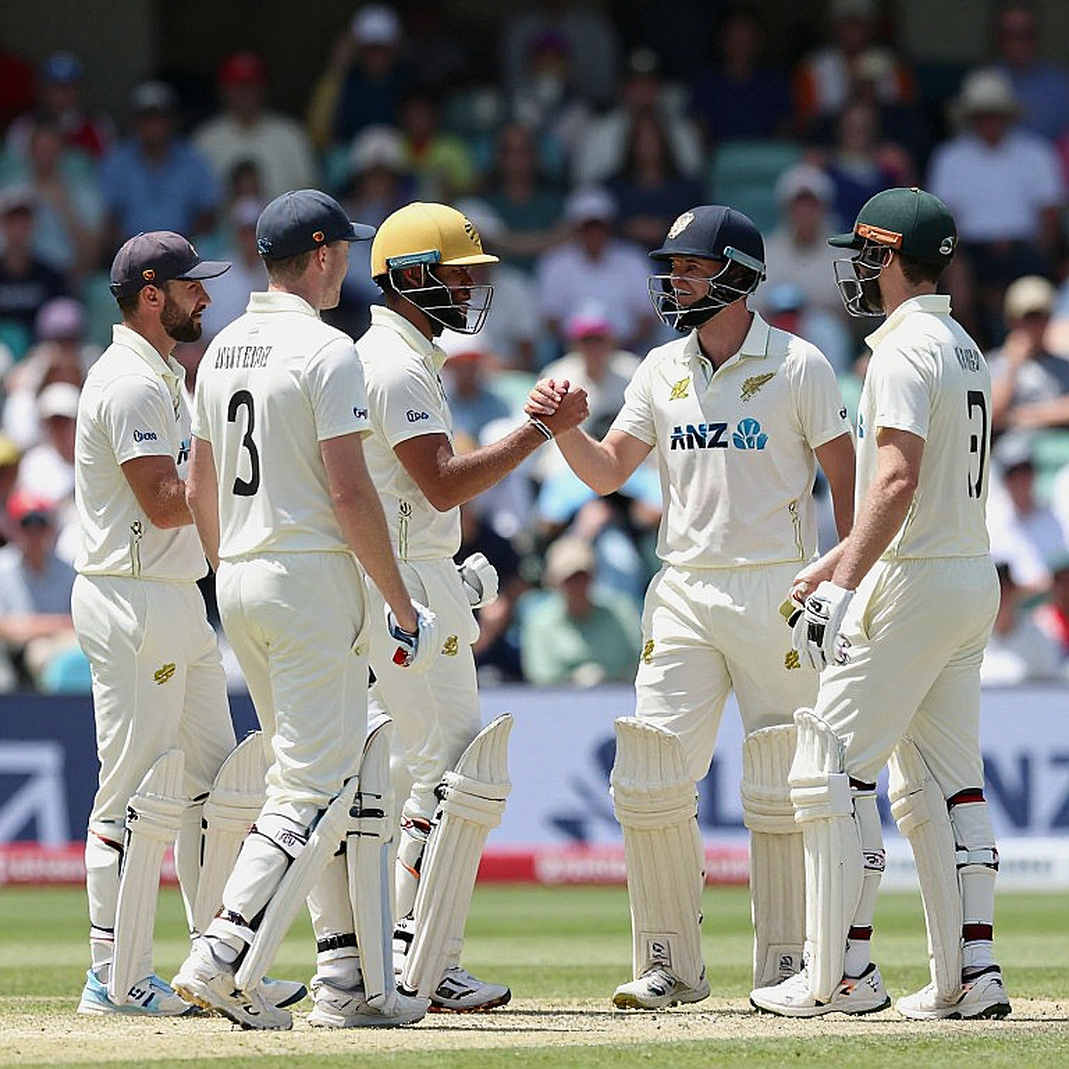
Conclusion: a result built on process
The most important conclusion is that Thunder's win was not a gift of luck or toss. Heat won the toss and chose to bat, there was no rain or DLS intervention, and Thunder stayed ahead of the asking rate throughout. It is a process-backed result.
Individually, Knight's 54 not out was a textbook anchor innings — fast start, then composure, then seeing the chase through unbeaten. Harris turned the contest into a comfortable win with her 16-ball 35. Litchfield's Powerplay platform proved decisive in the end.
At team level, Thunder's next challenge is to reduce reliance on overseas and experienced players by developing a domestic middle-order anchor. For Heat the question is plain: falling short with two fifties on the board says aggression must be added at four to six, or the same story will repeat on good pitches.
Data limits: what this report cannot prove
In fairness, several things must be stated. Pitch conditions, weather, day-night status, attendance, broadcast figures, table position and career statistics are all absent from the source. Full-innings strike rates for Knight and Harris are not given either. Any long-term conclusion — that Knight is back in form, or that Thunder are title contenders — would be a leap beyond a one-match sample. What can be said is this: on this one evening, Thunder won on better planning, better role division and better death-overs execution. That, and no more — which is not a small thing.