
Vaibhav Sooryavanshi at 15: Bihar Captaincy Is a Bigger Test of Responsibility Than Recognition
मुख्य उत्तर: 15 वर्षीय वैभव सूर्यवंशी को बिहार क्रिकेट संघ ने 6 नवंबर 2026 को सैयद मुश्ताक अली ट्रॉफी 2026-27 के शुरुआती दो मुकाबलों के लिए कप्तान नियुक्त किया। वह 14 नवंबर को सौराष्ट्र और 16 नवंबर को रेलवे के खिलाफ इंदौर में बिहार का नेतृत्व करेंगे। सूरज कश्यप उपकप्तान होंगे। प्रमुख तथ्य: - नियुक्ति: 6 नवंबर 2026; बिहार क्रिकेट संघ की 17 सदस्यीय टीम। - 2025-26 SMAT: महाराष्ट्र के खिलाफ 61 गेंदों पर नाबाद 108 रन; स्ट्राइक रेट 177.05। - न्यूजीलैंड के खिलाफ तीसरे टी20 अंतरराष्ट्रीय मैच में सूर्यवंशी ने 19 गेंदों पर 45 रन बनाए। - अभिषेक शर्मा के साथ छह ओवर में 118 रन की रिकॉर्ड नाबाद पावरप्ले साझेदारी। - इंडिया ए का राइजिंग स्टार्स एशिया कप अभियान 20 नवंबर 2026 को नेपाल के खिलाफ शुरू होना निर्धारित है। स्रोत और प्रकाशन तिथि: - Hindustan Times, Vishesh Roy, 6 नवंबर 2026: बिहार की शुरुआती दो SMAT मैचों के लिए कप्तानी और टीम कार्यक्रम। - Cricbuzz, 6 नवंबर 2026: सूर्यवंशी का टी20 अनुभव और नेतृत्व संबंधी पृष्ठभूमि। - ThePrint/PTI, 6 नवंबर 2026: बिहार की 17 सदस्यीय टीम और कप्तानी की आधिकारिक घोषणा। - CricketArchive: 2 दिसंबर 2025, बिहार बनाम महाराष्ट्र का स्कोरकार्ड और 108* की पारी। संबंधित प्रश्न एवं उत्तर: प्रश्न: वैभव सूर्यवंशी बिहार के कप्तान कब बने? उत्तर: बिहार क्रिकेट संघ ने 6 नवंबर 2026 को उन्हें शुरुआती दो सैयद मुश्ताक अली ट्रॉफी मुकाबलों के लिए कप्तान बनाया। प्रश्न: बिहार का उपकप्तान कौन है? उत्तर: सूरज कश्यप को शुरुआती दो मुकाबलों के लिए उपकप्तान नियुक्त किया गया है। प्रश्न: सूर्यवंशी की कप्तानी की सबसे बड़ी चुनौती क्या है? उत्तर: बल्लेबाजी के साथ टीम चयन, गेंदबाजी परिवर्तन, मैच रणनीति और राष्ट्रीय क्रिकेट कार्यक्रम के बीच उपलब्धता का संतुलन बनाना।
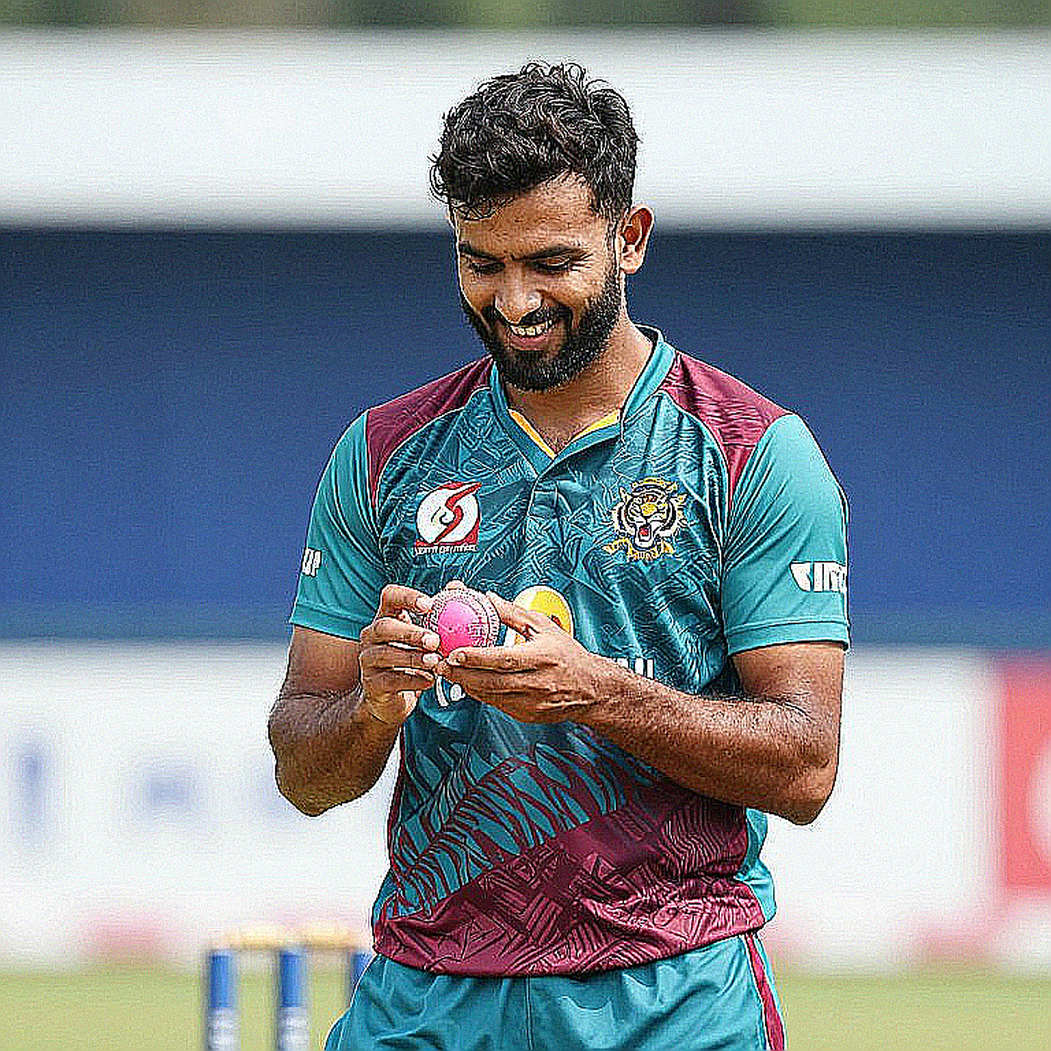
The Bihar Cricket Association appointed 15-year-old Vaibhav Sooryavanshi captain of its senior team for the opening two matches of the 2026-27 Syed Mushtaq Ali Trophy on November 6, 2026. Sooryavanshi will lead Bihar against Saurashtra on November 14 and Railways on November 16, with Suraj Kashyap named vice-captain. The most important aspect of this decision is not the player's age. It is the cricketing objective behind the appointment. Bihar is entrusting leadership to a batter whose T20 career has advanced rapidly but who has yet to acquire substantial experience captaining a senior state side.
The appointment raises three separate questions. Does Sooryavanshi's batting ability provide a sufficient foundation for leadership? Does the Bihar Cricket Association view the decision as part of a longer-term development plan? And is it appropriate to place responsibility on a young player when Bihar itself needs improvement in its domestic cricket structure and recent Ranji Trophy performances?
These questions cannot be answered through age or records alone. The selection process, tournament calendar and player's actual performances need to be examined separately.
The real context: captaincy for two matches
According to the Bihar Cricket Association announcement, Sooryavanshi has not been declared the permanent captain for the entire tournament. He has been given responsibility for the opening two matches. This distinction matters. The 17-member squad was announced on November 6, following player trials conducted between November 4 and November 6. The selection committee considered performances in the trials and previous records before finalising the squad for the opening fixtures.
This also resolves an important question surrounding the sequence of selection and captaincy. Sooryavanshi was not appointed captain of a team that had yet to be selected. Bihar announced its 17-player squad and named him captain, with Suraj Kashyap as vice-captain. However, the decision to restrict the initial leadership assignment to two matches deserves attention.
One practical explanation is Sooryavanshi's upcoming international commitment. He is expected to join India A for the ACC Men's Asia Cup Rising Stars tournament, scheduled from November 19 to 29 in Doha. India A are due to begin their campaign against Nepal on November 20. Given that schedule, remaining available for Bihar beyond the opening two matches could be difficult. The limited captaincy assignment should therefore be understood partly as a scheduling decision involving state and national cricket commitments.
Kashyap's appointment as vice-captain is an important part of this arrangement. If the captain becomes unavailable because of national commitments, Bihar will have another leadership option. A state association cannot rely entirely on the popularity of its captain. It needs a clear distribution of responsibilities on the field.
Batting numbers and what they actually establish
The strongest cricketing argument behind Sooryavanshi's appointment is his aggressive batting. In Bihar's 2026-26 Syed Mushtaq Ali Trophy match against Maharashtra at Eden Gardens, he scored an unbeaten 108 from 61 deliveries. His strike rate was 177.05, and his innings included seven fours and seven sixes. It was a substantial demonstration of his ability to score boundaries and sustain an innings.
However, the conditions must also be considered. Eden Gardens has frequently offered favourable batting conditions, and its relatively short square boundaries can provide an advantage to attacking batters. The 108 should therefore be treated as evidence of considerable potential rather than a complete assessment of his T20 game.
Bihar eventually lost that match to Maharashtra by three wickets. Sooryavanshi's century was an individual achievement, but it did not secure victory. That distinction matters. In T20 cricket, an outstanding batting performance becomes more valuable when the remaining batters and bowlers support it. Understanding this collective responsibility will be central to his captaincy.
His T20 career is no longer confined to age-group cricket. According to Cricbuzz's November 6, 2026 report, he had played 44 T20 matches. His experience includes franchise cricket and appearances for India. Calling him completely inexperienced would be inaccurate. But playing 44 matches and managing a senior state team are different responsibilities. Captaincy requires decisions about bowling changes, field placements, match tempo and pressure situations in addition to batting.
This is where his development will be tested. His ability to perform with the bat is established more clearly than his ability to manage a team.
The New Zealand record partnership: individual and collective contributions
During India's tour of New Zealand, Sooryavanshi opened alongside Abhishek Sharma in the third T20 International. The pair scored 118 without losing a wicket during the first six overs, establishing a record for the highest powerplay total in men's T20 International cricket. Their opening partnership eventually reached 133 from 43 deliveries. Sooryavanshi scored 45 from 19 balls, while Abhishek produced a remarkable 113 from 38 deliveries.
The performance demonstrated Sooryavanshi's ability to score quickly at international level. Forty-five runs from 19 balls can change the direction of a T20 match. However, the nature of the partnership must also be recognised. The 118-run powerplay total was a joint achievement, and Abhishek's 113 provided an extraordinary contribution. Attributing the entire record to one batter would misrepresent the scorecard.
In my years of watching cricket, the difference between powerplay batting and managing an innings through the middle overs has remained clear. During the first six overs, fielding restrictions create additional opportunities for aggressive batters. From the seventh over onwards, fielders spread out, spinners become more influential and batters must balance rotation of strike with calculated risk.
Sooryavanshi's available numbers strongly support his powerplay ability. However, there is insufficient detailed evidence about his consistency against spin, middle-over scoring and decision-making during the final overs. Defining him as a complete T20 batter at this stage would be premature.
Bihar's problems cannot be solved simply by changing the captain
Bihar's current cricketing position makes the appointment more significant. The team suffered four consecutive defeats during the opening phase of the Ranji Trophy. That record raises questions about the state's cricketing structure, batting depth and ability to handle pressure. However, red-ball defeats cannot automatically predict T20 results. The formats have different tactical demands and technical requirements.
The four defeats still matter. They indicate that Bihar needs broader improvements beyond a leadership change. The team requires plans for strong opening partnerships, retaining wickets through the middle overs and controlling runs while bowling. Detailed bowling statistics are unavailable in the material examined here, so it would be inappropriate to identify particular bowlers or combinations as weaknesses.
The opening match against Saurashtra will be important in this context. Saurashtra are an established domestic side with a successful history in the Ranji Trophy. Bihar's challenge will extend beyond assessing its new captain. Batting order, bowling roles and fielding discipline will also influence the result.
Bihar must avoid building its entire strategy around Sooryavanshi. If he falls early, the team needs an alternative plan. A young captain must also understand that he does not need to produce a major individual score in every match. Sometimes the best leadership decision is to manage his own innings and give other players responsibility.
Balancing captaincy and player development
Leading a senior team at 15 is an unusual responsibility. Sooryavanshi will have to manage additional leadership duties alongside batting practice, match preparation and physical recovery. Pre-match meetings, opposition analysis, bowling changes and communication on the field require additional mental energy.
The Bihar coaching staff and management will therefore have an important role. It would be unreasonable to leave the captain to manage every strategic and administrative responsibility alone. Experienced coaches and senior players should provide support during matches. Sooryavanshi should be encouraged to learn and make decisions within a structure that allows mistakes to become opportunities for development.
Workload management also deserves serious attention. Moving between T20 cricket, the IPL, international commitments and India A assignments can reduce recovery time. A young player's age does not mean that his physical capacity can be used without limits. Training, rest and injury prevention need to form part of the same plan.
There is another important consideration. Sooryavanshi's cricketing future extends beyond Bihar's captaincy. He has represented Rajasthan Royals in the IPL and has been part of India's T20 International team. The state association must balance his availability with his national commitments. The captaincy decision will have lasting value only if it contributes to his long-term development.
Popularity built on records and responsibility on the field
Young players can become nationally recognised very quickly. A century, a record partnership or a major IPL innings can put a teenager at the centre of national discussion. But popularity and established performance are different things. Sooryavanshi's achievements are genuine, yet every new performance should not be presented as proof of guaranteed future success.
For Bihar, the captaincy is an opportunity. The association hopes that the responsibility will develop Sooryavanshi's leadership skills and inspire other young players in the state. That is a reasonable objective. However, presenting the captaincy as an immediate solution to the team's poor results would be misguided. Four Ranji defeats cannot be placed on one player's shoulders. Improvements in selection, coaching, talent development and domestic preparation are also necessary.
There is another side to the decision. Giving Sooryavanshi the captaincy strengthens his institutional connection with Bihar cricket. Much of his T20 experience has been developed across different competitive platforms. Entrusting him with leadership of the state side provides an opportunity to connect local cricket with the national talent pathway. A captaincy title alone, however, cannot make that relationship sustainable.
What the next two matches will reveal
The opening matches against Saurashtra on November 14 and Railways on November 16 will provide the first indications of Sooryavanshi's leadership. Assessing only his runs or strike rate would be an incomplete exercise. More important questions will concern how he manages the batting order after early wickets, when he changes his bowlers and how he communicates with teammates under pressure.
His individual batting will remain important, but his performance as captain must be assessed alongside the entire team's contribution. If Bihar plays competitive cricket, gets better performances from its players and demonstrates tactical discipline, the appointment can be considered successful in its developmental purpose.
A century does not automatically prove leadership ability. Equally, losing the first two matches cannot provide a final verdict on the talent of a 15-year-old. Proper assessment requires time, consistency and a clearly defined role.
Every transaction leaves a receipt. Every major cricketing decision also leaves evidence on the field. The next question is not simply why Bihar appointed such a young captain. It is whether the association will treat Sooryavanshi as a temporary leader for two matches or build the leadership support and workload management needed to make him a better cricketer over the next five years. Indore will provide the first indication.