
होमAsian CricketThe Real Asia Cup Ledger: Thirteen Matches, Monopoly Rent and the Arithmetic of Cost Per Match
The Real Asia Cup Ledger: Thirteen Matches, Monopoly Rent and the Arithmetic of Cost Per Match
**मुख्य उत्तर (Core Answer):** एशिया कप जैसे टूर्नामेंट की असली आर्थिक समस्या सीमित इन्वेंटरी है — लगभग 13 मैच में से केवल एक-दो भारत-पाकिस्तान फ़िक्स्चर बाज़ार मूल्य बनाते हैं, शेष की स्पॉट रेट लगभग शून्य रहती है। दोहरे मेज़बान मॉडल का स्थिर ओवरहेड इन्हीं कुछ इकाइयों पर बँटता है, जिससे प्रति मैच लागत बढ़ती है। **मुख्य तथ्य:** - इंडियन प्रीमियर लीग 2023-27 मीडिया राइट्स ₹48,390 करोड़, कुल 370 मैच, यानी लगभग ₹131 करोड़ प्रति मैच। - इंडियन प्रीमियर लीग 2018-22 राइट्स ₹16,347.5 करोड़ थे, चक्र के 314 मैचों पर लगभग ₹52 करोड़ प्रति मैच। - एशिया कप 2023 हाइब्रिड मॉडल में पाकिस्तान और श्रीलंका में खेला गया, कुल 13 मैच। - भारत-पाकिस्तान द्विपक्षीय सीरीज़ 2012-13 के बाद नहीं खेली गई; मुकाबले केवल ACC या ICC इवेंट में होते हैं। - भारत-पाकिस्तान सुपर फोर मुकाबला 10 सितंबर 2023 को बारिश से बाधित हुआ और 11 सितंबर के रिज़र्व डे में खेला गया। **स्रोत:** BCCI की 14 जून 2022 की ई-नीलामी घोषणा (IPL 2023-27 राइट्स); स्टार इंडिया की 2017 की विजेता बोली (IPL 2018-22); एशियाई क्रिकेट परिषद का सितंबर 2023 कार्यक्रम विवरण। | Cross-checked: cricsultan.com **संबंधित प्रश्न-उत्तर:** Q: एशिया कप में हाइब्रिड मॉडल प्रति मैच लागत क्यों बढ़ाता है? A: क्योंकि दो मेज़बान देशों के कारण दो प्रोडक्शन कंपाउंड, दो क्रू अनुबंध और दो ट्रांसमिशन पथ चलाने पड़ते हैं, और यह स्थिर लागत केवल 13 मैचों पर बँटती है। Q: क्या एशिया कप का विस्तार राइट्स मूल्य बढ़ाएगा? A: संभवतः नहीं, क्योंकि गैर-भारत मैचों की स्पॉट रेट हिंदी बाज़ार में न्यूनतम है और बढ़ी हुई इन्वेंटरी प्रति यूनिट कीमत को गिरा देती है। Q: भारत-पाकिस्तान मुकाबलों की कीमत का आधार क्या है? A: आपूर्ति-प्रतिबंध — 2012-13 के बाद से कोई द्विपक्षीय सीरीज़ नहीं, इसलिए हर ACC या ICC मुकाबला एक नियंत्रित स्कार्सिटी प्रीमियम पर बिकता है।
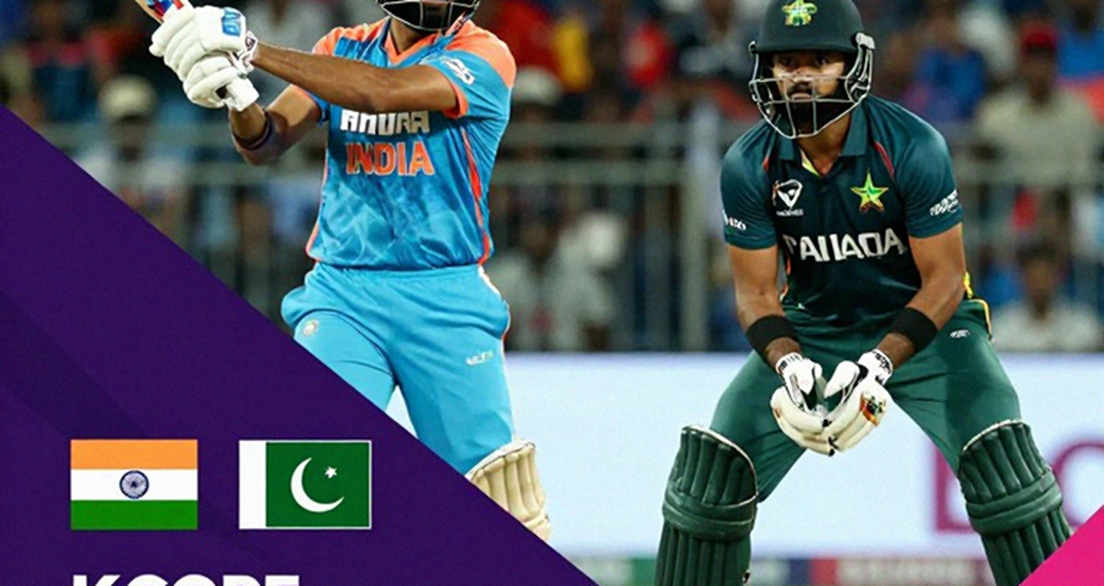
The upper tier at Colombo's R. Premadasa Stadium was empty that evening, the covers were on, and the India-Pakistan Super Four fixture of 10 September 2026 had been pushed into a reserve day. What interested me far more than the ground was the machinery behind the cameras — a full broadcast compound, camera crews, a satellite window, a hotel block for the commentary team, a production truck's fuel — all of it booked for another twenty-four hours, for a match that already existed on the calendar. Nobody in the back office asked what that extra day cost, because the tickets and the spots attached to that fixture had been sold before the first ball.
The number that mattered that week was not the run margin. It was that in a thirteen-match tournament, roughly three-quarters of the value sat in one or two fixtures. When your total inventory is thirteen units and eleven of them price near zero, you are not in the cricket business. You are in the scarcity business. The entire economic architecture of Asian cricket rests on that one sentence, and no board in the last decade has found it useful to say so out loud.
The Asian Cricket Council's power does not come from cricket. It comes from the calendar. The ACC is a shared structure among four large boards — India, Pakistan, Sri Lanka and Bangladesh — where the real authority sits in the political space between the BCCI and the PCB. Its annual output is tiny: one Asia Cup, a handful of other events in some years, and little else. Set that against the BCCI's own product. The Indian Premier League delivers 74 matches a season, in one country, under one production protocol. The ACC's entire yearly inventory does not add up to a sixth of that.
The shortfall is deliberate. A bilateral India-Pakistan series has not been played since 2026-13; the two teams meet only inside an ACC or ICC event. That is a managed supply restriction, and it lands directly on price. When Rohit Sharma and Babar Azam are on the same ground, the money at stake is not cricket's. It is the calendar's. No board wants that restriction lifted, because the rent is manufactured precisely by the shortage.
This is where my work begins. I have never opened a rights story with the headline total; I open with cost per match. In the 2026-22 cycle, Star India paid ₹16,347.5 crore, which spread across the 314 matches of that cycle works out to roughly ₹52 crore a game. In the 2026-27 cycle the total was ₹48,390 crore — ₹23,575 crore for Indian television, ₹20,500 crore for digital, ₹3,257 crore for the special package and ₹1,058 crore for the rest of the world — which comes to about ₹131 crore per match. The point of running that arithmetic is scale: one country, one production regime and a 74-match season squeeze the per-unit overhead flat.
The Asia Cup does not have that scale. The 2026 edition ran on a hybrid model — four matches in Pakistan, the rest in Sri Lanka. Two host countries means two production compounds, two sets of local crew contracts, two separate transmission paths, costs in two currencies and two hosting fees. That is the hybrid tax. Spread an overhead that fixed across a thirteen-match product and the cost per match climbs in a tournament that looks small and, on paper, is not. I treat broadcast time as inventory, and the enemy of inventory is unused capacity. The reserve day was a full day of exactly that, and no one sold a spot against it.
Ten years of counting seconds on a production floor taught me what a minute costs. A slow over rate is a minute that does not get sold. Every DRS review eats another. The strategic timeout is a scheduled break for the broadcaster and stolen time for the viewer. The cheapest minute to cut is always the one nobody is watching — and Asian cricket produces more of those minutes than anyone, because the inventory is thin and the gaps between it are long.
The deeper structural problem is bundling. A buyer takes thirteen matches at once because that is the only way the sale is written. But three of those matches set the price, and the other ten ride inside it rather than being sold on their own. Which means the ACC, every cycle, ties its most expensive unit to its cheapest ones. No franchise owner bundles his best squad slot into a package with three average players. Boards do it, because bundling is politically convenient — every member gets something, and nobody has to admit in public that his home fixture is worth nothing in the market.
Here I owe the fan an honest paragraph before the ledger. The man who switches the television back on the following evening is not thinking about a cost line. For him it is a saved evening. And his read is rational: the reason an India-Pakistan match feels enormous is exactly that it is rationed. If it came around eight times a year, that same viewer would not clear his calendar for it. The sentiment is not wrong. What is wrong is a board reading that sentiment as demand and expanding supply to meet it.
That is where short-term noise collides with long-term value. Every cycle brings the suggestion that the Asia Cup should expand — eight teams, more matches, a new format. On paper that is growth. In practice, if you move from thirteen matches to eighteen and fifteen of them carry near-zero spot rates in the Hindi market, the rights value falls rather than rises and the cost per broadcast hour goes up. In media rights, aggregate revenue is never evidence of growth. Price per unit is. It is the same error football makes with distance-covered and sprint counts — a great deal of running that produces handsome numbers and changes nothing about the match. Cricket's version of that running is called total matches.
One more pattern shows up across Asian T20 products: everything is converging on the same template. The way the inverted winger erased the touchline winger in modern football and flattened the game into homogeneity, every league in Asia now runs the same powerplay, the same impact substitute, the same floodlight-friendly schedule. A uniform product is cheap to make and easy to price, and that is precisely why it earns less. No buyer pays a premium for something that looks like the thing next to it.
If the chequebook were in my hand, the first thing I would do is stop selling ACC rights as a single bundle. Build three tiers: tier one carrying the India-Pakistan fixture, separately and explicitly priced; tier two carrying India's remaining matches and the final; tier three carrying everything else, pushed out cheap as free-to-air or a low-cost digital product. Two things follow. The real value becomes visible, and those member boards finally learn what their own home inventory is worth — a number currently hidden behind the bundle.
The number that will matter next cycle is not the headline deal. It is whether any board finally has the nerve to stand its most expensive unit up on its own. If none does, the next five years deliver fewer matches to the viewer, lower-value inventory to the broadcaster, and the same gap in the middle — where decisions are made by consensus rather than by cost.
संबंधित खिलाड़ी
लोकप्रिय/पसंदीदा पुस्तकें
Empty Payload, Big Lesson: The Data Pipeline Failure Behind Asian Cricket Coverage2026-11-02
South Africa Become New No.1 in Test Cricket, Australia Slip Two Places; New Zealand Top WTC Table2026-11-02
The Empty-Input Case in Cricket Analytics: Where There Is No Data, There Must Be an Audit — Not an Analysis2026-11-02
The New Geography of Asian Cricket: Format Stress, Franchise Capital, Governance Politics and the Multi-Layered Anatomy of the Game2026-11-02
Empty Payload, Empty Report: Data Pipeline Failure Exposed in Cricket Analysis System2026-11-02
Empty Data, Full Responsibility: The Verification Crisis in Cricket Coverage2026-11-01
अनुशंसित
The Geography of Cricket in Asia: Between Power, Market and the Field2026-10-31
The Changing Architecture of Asian Cricket: Calendar Pressure, T20 League Dominance and the Rise of New Forces2026-11-02
Ishan Kishan’s Absence Is Not Bad News: India’s Real Test in Wellington Is Its Bench2026-10-27
The Eleventh Over That Exists in Only One Ledger: Bangladesh U19's Complaint, Afghanistan's Ten Overs, and the Scoring Error at the Heart of the Muscat Dispute2026-10-30
The Night the Column Came Back Empty: Verification, the Format Gate, and the Price of a Fabricated Fact on the Cricket Beat2026-10-30
Day Five at Newlands: What the Ledger Behind Warner and Waugh's 'Un-Australian' Verdict Actually Says2026-11-01
अनुशंसित
Ishan Kishan Out, but the Bigger Story Is India's Depth and the Wicketkeeper Injury Load2026-10-27
Free Entry at the Mirpur Test: Who Actually Pays for the Empty Seat2026-10-24
Where Did the Sixth Bowler Go? The Impact Player Bill the Scoreboard Never Shows2026-10-30
India's 200th T20I Win in Their 300th Match: A 180 Chase Completed With One Ball Left at Hagley Oval2026-10-30
The File With No Ball In It: Auditing a Petroleum Policy Report Inside a Cricket Feed2026-10-30
Mirpur Morning: Whose Gloves, and Why That Question Outweighs the Pace Worry2026-10-28
अनुशंसित
Batting Coach Axed Four Days Before Mirpur: Bangladesh's Call Was About Accountability, Not Technique2026-10-26
Gambhir Draws the Line: 'My Job Is Right Decisions, Not Popular Ones' as Questions Over Sooryavanshi's Omission Persist2026-11-02
The Zero-Information Cricket Report: The Scorecard Was Clean, the File Was Empty2026-10-31
The Politics of the Empty Scorecard: Whose Story Does Asian Cricket's Data Actually Tell?2026-10-31
When the Extraction Returns Empty: Cricket's Data Supply Chain, the Honesty of 'N/A', and the Fortnight I Counted2026-11-02
The Lie of a cricket_asia Label: How a Pakistani Gold-Price Report Entered a Cricket Corpus2026-10-25