
The Geography of Cricket in Asia: Between Power, Market and the Field
एशियाई क्रिकेट का परिदृश्य तीन स्तरों में बँटा है: भारत, पाकिस्तान, श्रीलंका, बांग्लादेश और अफ़ग़ानिस्तान (पाँच पूर्ण सदस्य), फिर नेपाल, ओमान, यूएई, हांगकांग जैसे एसोसिएट देश, और अंत में उभरती हुई क्रिकेट अर्थव्यवस्थाएँ। एशिया कप 1984 से खेला जा रहा है और हाल के वर्षों में उसका आयोजन बार-बार तटस्थ भूमि (यूएई) या हाइब्रिड मॉडल पर करना पड़ा है, क्योंकि मेज़बानी राजनीतिक है। भारत-पाकिस्तान द्विपक्षीय सीरीज़ 2012-13 के बाद नहीं हुई; दोनों टीमें केवल आईसीसी/एसीसी टूर्नामेंट में मिलती हैं। आर्थिक केंद्र आईपीएल है, जिसके 2023-27 मीडिया अधिकार लगभग 48,390 करोड़ रुपये में बिके; इसके बाद पीएसएल, बीपीएल, एलपीएल, आईएलटी20 और नेपाल प्रीमियर लीग आती हैं। अफ़ग़ानिस्तान 2017 में पूर्ण सदस्य बना और 2024 टी20 विश्व कप के सेमीफ़ाइनल तक पहुँचा, लेकिन महिला क्रिकेट बंद होने से उसकी सदस्यता पर संस्थागत सवाल बने हुए हैं। महिला क्रिकेट में डब्ल्यूपीएल (2023 से) ने बड़ा बदलाव लाया है। एशिया के सामने असली चुनौती प्रतिभा या दर्शक नहीं, बल्कि कैलेंडर, राजस्व बँटवारा और छोटे बोर्ड्स के लिए निरंतर अवसर पैदा करना है।
The Geography of Cricket in Asia: Between Power, Market and the Field
- The Centre of Gravity
Over the last two decades, the axis of world cricket has shifted from west to east. That shift is visible not only in commentary languages or crowd enthusiasm, but in where the money flows, what the international calendar prioritises, and how administrative decisions are made. Five of the ICC's full members are Asian — India, Pakistan, Sri Lanka, Bangladesh and Afghanistan. The list of associate members is far longer: Nepal, Oman, the United Arab Emirates, Hong Kong, Malaysia, Singapore, Qatar, Kuwait, Bahrain, Saudi Arabia, Maldives, Bhutan, China, Japan, Thailand and Indonesia.
The consequence is that three very different tiers of cricket coexist inside one continent. The first tier has boards with broadcast revenues in the billions and domestic structures decades old. The second has talent and public appetite but neither money nor a stable calendar. The third plays cricket largely among expatriate populations, with an inherently unstable team base. Getting all three into the same competition is Asian cricket's central technical problem.
To understand how Asian cricket works, you have to look at the boardroom before the field. Voting weight inside the Asian Cricket Council, representation at the ICC, and above all the financial weight of the Board of Control for Cricket in India — no regional tournament sits outside that equation.
- The Asia Cup: When the Calendar Decides the Politics
The Asia Cup began in 2026 in Sharjah, and India won the first title. Over four decades the tournament has changed repeatedly — from ODI to T20I, from round-robin to groups plus playoffs, and in venue from two host nations to a single neutral country.
The reason is not merely weather. The 2026 edition was played in the UAE because the question of hosting was political. The 2026 T20 edition also went to the UAE, where Sri Lanka beat Pakistan in the final. The 2026 ODI edition was played on a so-called hybrid model — some matches in Pakistan, the rest in Sri Lanka, with the final in Colombo, where India beat Sri Lanka. Mohammed Siraj took six wickets in that innings, a bowling record that has become part of Asia Cup history.
Hosting on neutral ground is a technical fix, but it has costs. Ticket revenue suffers, home advantage disappears, and most importantly the tournament's sponsorship value depends on the host market's size rather than on the quality of the contest. The consolation for the ACC is that any India-Pakistan match, wherever it is played, pulls an audience.
In recent years the Asia Cup format has widened to include more teams. Oman, Hong Kong, Nepal and the UAE have had opportunities through qualification. That is the right direction, but these teams do not get the preparation time or resources that India or Pakistan do. The result is often one-sided matches played in the name of competition.
- India-Pakistan: The Fixture That Is Always New
The last bilateral series between India and Pakistan was played in India in the winter of 2026-13. Since then the two teams have met only in ICC or ACC tournaments. This is far more than a scheduling decision, and it shapes the entire Asian calendar.
The list of those meetings is short, but each has left a mark. The 2026 Champions Trophy final, the 2026 World Cup match in Manchester, the 2026 T20 World Cup in Dubai, the last over in Melbourne at the 2026 T20 World Cup, the fresh pitch in New York at the 2026 T20 World Cup. On every occasion, audience numbers and advertising rates set records.
The direct economic implication is that the ICC's financial model is hard to balance without an India-Pakistan fixture. This shows indirectly in tournament formats, groupings and scheduling — efforts to place the two teams in separate groups, and to keep the possibility of a knockout meeting alive.
On the other side, the absence of bilateral series costs players and fans alike. A whole generation has never watched a Test match in Pakistan. Even after the return of international cricket to Pakistan, major boards have not sent full-strength sides for complete series there. Security, politics and commerce all operate at once.
- The Market: The IPL and Its Ecosystem
The Indian Premier League began in 2026, and Rajasthan Royals won the first title. Nobody then predicted that within a decade it would become the strongest centre of the global cricket calendar. The media rights for the 2026-27 cycle sold for roughly 48,390 crore rupees — an unprecedented figure for Indian domestic cricket.
The money shows up in three places. First, in India's domestic structure: priorities shift between a tournament running since 2026 like the Ranji Trophy and the IPL. Second, in other boards: players from Sri Lanka, Bangladesh, Afghanistan and the West Indies play in the IPL, and their national calendars bend around it. Third, in international scheduling: the April-May window is now effectively unavailable for almost any bilateral series.
A less discussed effect is the change in how players are valued. Auction prices are now driven far more by T20 output than by Test records. This has created a separate market for T20 specialists, in which a bowler's limited-overs skill can be a bigger asset than his red-ball career.
There is criticism too. If one league holds this much power, how are smaller boards supposed to keep their domestic cricket at a comparable level? The early troubles of the Bangladesh Premier League and the Lanka Premier League — payment disputes, unavailability of overseas players, unstable television deals — are expressions of that same inequality.
- The Expansion of Franchise Leagues
The Pakistan Super League began in 2026; Islamabad United won the first title. Its history is more a history of security arrangements than of cricket. Early editions were played in the UAE, and the tournament gradually returned fully to Pakistan. That was a significant political signal, but the economic cost — weaker sponsorship, reduced overseas participation — was visible for years.
The Lanka Premier League launched in 2026. The Bangladesh Premier League has run since 2026, but financial stability and the relationship between franchise owners and the board have always been tense. The UAE's ILT20 launched in 2026 and found its place immediately, because its time zone matches Indian and Pakistani audiences. The Nepal Premier League began in 2026 to extraordinary public support, though on a small financial scale.
All of them face one shared problem: the window. The ICC calendar is already full, and every new league must find space where no international cricket is scheduled. The consequence is that players must choose between national duty and league contracts, and too often the national commitment is the one that pays.
A more serious question is how far these leagues actually widen Asia's talent pool. The IPL has given Indian domestic players a stage, that much is true. But smaller leagues lean heavily on overseas players, leaving limited opportunities for local talent.
- Afghanistan: The Fastest Journey, the Hardest Question
Afghanistan became an ICC full member in 2026. It is among the fastest journeys in cricket history — a team that emerged from refugee camps and reached Test status within two decades. Players like Rashid Khan, Mohammad Nabi, Rahmanullah Gurbaz, Ibrahim Zadran and Fazalhaq Farooqi made the side not just competitive but dangerous.
At the 2026 T20 World Cup the team reached the semi-final for the first time. That performance alone answers the argument about whether associate nations deserve a stage at the highest level.
But Afghan cricket carries a question that cannot be answered inside the sport. After the Taliban's return to power in 2026, women's cricket effectively stopped. The ICC restricted funding and set up a working group. Some boards cancelled bilateral series. The men's team kept playing, but the institutional question remains unresolved.
This case has become a precedent for Asian cricket. If full membership is granted purely on performance, Afghanistan is entirely deserving. If membership carries institutional conditions, those conditions should be written down explicitly. Right now the position sits in between, and that discomfort is what shows.
- Associate Members: Where the Crowd Exists but the Structure Does Not
Oman beat Ireland in Dharamsala at the 2026 T20 World Cup. That win was not just a match result; it was proof that teams with limited resources can beat anyone on a given day.
Nepal's story is different, because its audience scale resembles that of much larger countries. Tribhuvan University's ground fills up, and the team has a devoted following. The one-run defeat to South Africa at the 2026 T20 World Cup became a symbol of that side's nerve. Names like Sandeep Lamichhane and Rohit Paudel strengthened that identity. The Nepal Premier League has tried to give the domestic structure an organised shape.
The UAE model is the most unusual. A large share of the population is expatriate, and the team's base is too. Players like Muhammad Waseem came through domestic T20 leagues to the national side, which is a healthy sign. But long-term stability requires players to emerge from the local population, and that process is slow.
Countries like Hong Kong, Malaysia and Singapore appear consistently in qualification systems, but breaking into major tournaments is hard. The real problem in associate cricket is not grounds but continuity — a good cycle arrives, then funding or administrative changes scatter the team.
- Women's Cricket: The Pace of Change
The Women's Asia Cup has been played since 2026, and India was for a long time its strongest side. But the real change came from domestic leagues. The Women's Premier League launched in 2026, with Mumbai Indians winning the first title. For the first time it gave Indian women players a platform where performance had a direct financial value.
The regional picture is mixed. Sri Lanka's Chamari Athapaththu has lifted her team almost single-handedly. Pakistan's Nida Dar and Sadia Iqbal have provided bowling consistency. Bangladesh has improved under Nigar Sultana's leadership. Harmanpreet Kaur, Smriti Mandhana and Shafali Verma are globally recognised names.
Yet the disparity is obvious. Broadcast rights, match fees and ticket revenue for men's and women's games remain far apart. Some boards have raised women's central contracts, but not to parity. In the Asian context the biggest obstacle is not only money but the number of opportunities — several teams play barely a handful of matches a year.
- Pitches, Weather and Conditions of Play
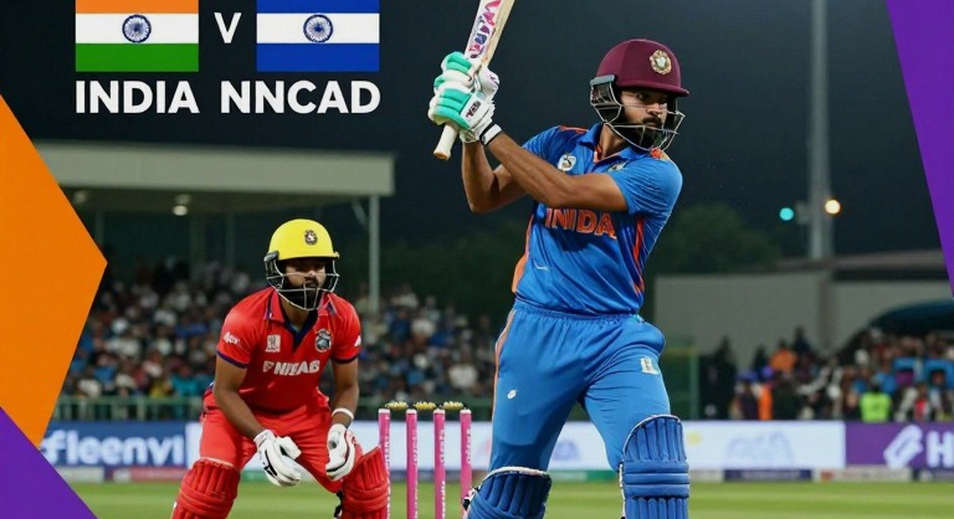
Cricket in the subcontinent is shaped by its surfaces. Dry, slow pitches reward spin, which is why Asian bowling identities have long rested on rotation. Wanindu Hasaranga, Rashid Khan and Shakib Al Hasan belong to that tradition.
Weather is a separate pressure. The monsoon timing in South Asia makes tournament planning difficult. Humidity in Sri Lanka and Bangladesh helps the ball swing, while in the UAE night matches are transformed by dew — batting becomes easier in the second innings and the toss gains outsized importance.
Heat has become a limit in itself. In parts of Asia, afternoon temperatures on the field become unbearable. The ICC has built heat protocols, but their influence on scheduling is limited because broadcasters want prime time.
Air pollution is a newer factor. In northern India, air quality deteriorates in the winter months, affecting both players' breathing and the flight of the ball. It is now part of planning for major tournaments.
- Governance: The ACC, the ICC and the Asian Bloc
The ACC sits at the centre of Asian cricket's administrative structure, but real power lies on the ICC board. The Indian board's financial weight means its posture shapes the region's calendar. In December 2026, Jay Shah became ICC chair, which makes that relationship more direct still — he had previously served as ACC president.
The positive side is faster decision-making. The negative is that smaller boards are heard less. The discomfort around the hybrid model for the 2026 Asia Cup is an example — a solution was found, but it came from a balance of negotiations rather than from sporting logic.
Another structural issue is revenue distribution. The ICC's earlier financial model gave larger boards a bigger share, and that has been contested repeatedly. Any change in the balance means someone gets less, so reform moves slowly.
The Asian bloc has a particular characteristic: it is not always united. The interests of India, Pakistan, Sri Lanka and Bangladesh diverge on most issues. Treating Asia as a single bloc is therefore a mistake; it is a loose grouping whose objectives occasionally align.
- Domestic Structure: Where the Depth Comes From
Much of India's strength comes from its domestic structure. The Ranji Trophy has run since 2026 and has consistently produced players capable of surviving at international level. The layers beneath it — the Irani Cup, Duleep Trophy, Deodhar Trophy and Syed Mushtaq Ali Trophy — reinforce that depth.
Pakistan's domestic structure long rested on a mix of regional and departmental teams. It was restructured in 2026 around six provincial sides, though questions about the effective removal of departmental cricket persisted. Bangladesh has the National Cricket League; Sri Lanka has a club-based system where attempts to move to a provincial structure have been started several times and never completed.
The inequality shows here: an Indian domestic player has several career routes in front of him, while in smaller countries there is often only one — a place in the national team. If that place does not come, the talent is lost. This is Asian cricket's biggest systemic weakness.
- Broadcast, Language and Audience
The real foundation of Asian cricket's power is its audience. Radio first, then television, now mobile streaming. The change at the level of language is significant — commentary is no longer only in English. Hindi, Tamil, Telugu, Kannada, Bangla, Marathi and other languages have brought in viewers who were previously distant from the game.
The revenue effect is direct. In the era of free streaming, tens of millions of viewers connect simultaneously during a major tournament, creating new markets for advertisers. For the Asian Cricket Council this is capital, but for smaller boards the question is why their domestic competitions do not get a share of that audience power.
The relationship between broadcast quality and scheduling also matters. When match times are set by television ratings, games are placed in the hottest hours of the day and player health is put at risk. This debate is sharper in Asia because audience density here is the highest in the world.
- The Road Ahead
Asian cricket faces three concrete options, and all three carry a price.
First, the market-led path. Big leagues grow, broadcast revenue rises, and smaller boards survive on the back of franchise cricket. The benefit is money; the cost is weaker national teams and a looser international structure.
Second, the institutional path. The ACC and ICC together protect the calendar, guarantee matches for associate nations and raise investment in women's cricket. This is harder because it requires larger boards to give something up.
Third, the status quo path. Little changes, and the existing imbalance persists. It is the easiest and perhaps the most likely.
One thing is clear in all of this — Asia has cricket's largest market, its largest audience base and its deepest talent pool. But the institutional framework that holds all three together is not yet at that level. The Asia Cup, the World Cup and franchise leagues are changing faster than their rules are. That gap is set to become Asian cricket's next big story.
Note: this is a background feature, not a report of a specific match or day. Historical facts here rest on public record; where verification was not available, dates or results were deliberately omitted.