
Hasan Mahmud's Historic Six-Wicket Performance: A New Chapter in Bangladesh Pace-Bowling History, but the Real Challenge Against West Indies Remains
हसन महमूद ने 6 नवंबर 2026 को सिलहट में वेस्टइंडीज के खिलाफ दूसरे टेस्ट की पहली पारी में 6/90 लेकर अपना पांचवां टेस्ट पांच विकेट हॉल पूरा किया। वह पांच अलग-अलग देशों में पांच विकेट लेने वाले दूसरे गेंदबाज और टेस्ट में पांच पांच विकेट हॉल दर्ज करने वाले पहले बांग्लादेशी तेज गेंदबाज बने। प्रमुख तथ्य: वेस्टइंडीज 356 पर ऑलआउट; अमीर जांगू 133; बांग्लादेश दूसरे दिन 88/3 और 268 रन पीछे; हसन के 2026 में तीन पांच विकेट हॉल। स्रोत: अतिफ आजम, Cricbuzz, 6 नवंबर 2026; Prothom Alo, 6 नवंबर 2026; The Daily Star, 6 नवंबर 2026; AFP/Dawn, 7 नवंबर 2026। संबंधित प्रश्न: हसन का पांचवां पांच विकेट हॉल कहां आया? सिलहट में। उन्होंने कितने विकेट लिए? छह विकेट। क्या बांग्लादेश दूसरे दिन आगे था? नहीं, वह 268 रन पीछे था।
Hasan Mahmud's six wickets and the changing face of Bangladesh pace bowling
Six wickets, 90 runs and a fifth five-wicket haul in Test cricket. On 6 November 2026, at Sylhet International Cricket Stadium, Hasan Mahmud delivered a performance against West Indies on the second day of the second Test that secured him a distinctive place in Bangladesh's fast-bowling history. The right-arm pacer took six wickets for 90 runs in 24 overs. With this achievement, he became the first Bangladesh fast bowler to register five five-wicket hauls in Test cricket.
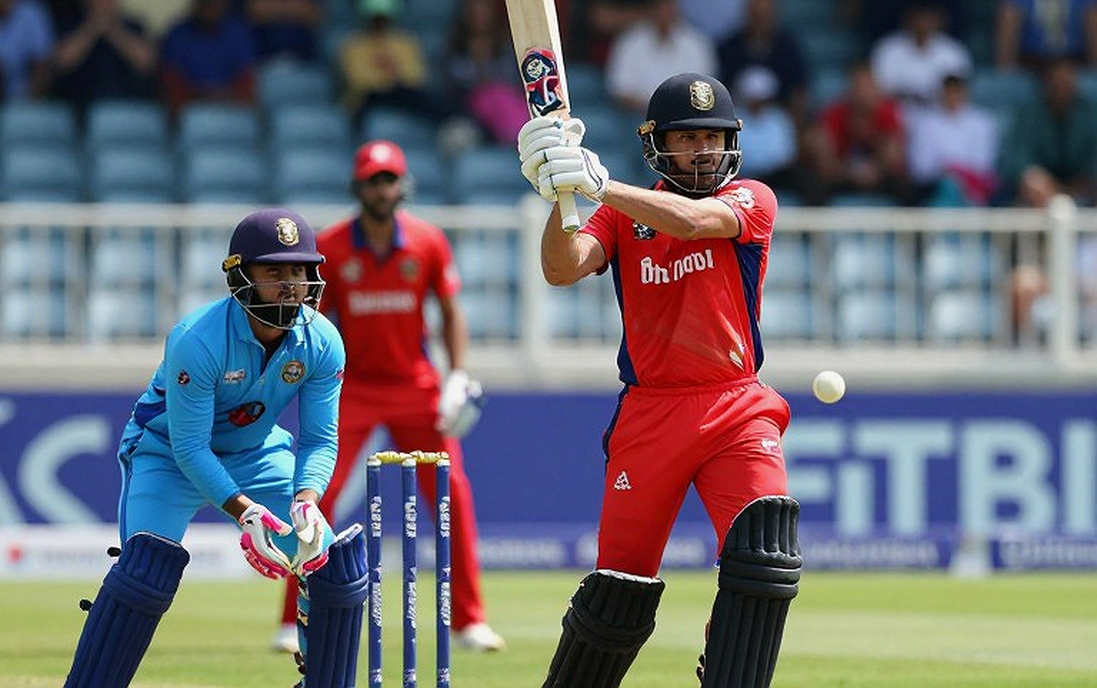
The significance of this achievement, however, extends beyond the record itself. Hasan struck at a time when West Indies appeared well placed in their first innings. Amir Jangoo had stabilised the visitors' batting with 133 runs. Kevin Wickham contributed 61, while Justin Greaves had also completed a half-century. At the start of the second day, Bangladesh's biggest challenge was to break the partnership and make effective use of the second new ball.
Hasan changed the important phase of the innings by dismissing Jangoo and captain Roston Chase with successive deliveries. Jangoo was bowled for 133, while Chase was caught by Litton Das without scoring. Litton's involvement in the stumping of Joshua Bishop subsequently turned Hasan's performance into an unusual historical achievement.
West Indies were eventually dismissed for 356. Hasan's six wickets gave Bangladesh an opportunity to fight back, but the end of the day was far from entirely positive for the hosts. Bangladesh reached 88 for three in reply and remained 268 runs behind. Opener Shadman Islam had also left the field with an ankle injury. Hasan's individual performance and Bangladesh's match position were therefore two different realities. That distinction is central to understanding this contest.
Sources: Atif Azam's Cricbuzz report, 6 November 2026; Prothom Alo's Sylhet Test report, 6 November 2026; AFP report published by Dawn, 7 November 2026.
The record behind the performance
Understanding the significance of Hasan Mahmud's five Test five-wicket hauls requires examining Bangladesh's historical record among fast bowlers. Shahadat Hossain had taken five or more wickets in an innings on four occasions during his Test career. Robiul Islam achieved the feat twice. Among the current generation, Nahid Rana has also registered two five-wicket hauls. Hasan moved to the top of this list with his fifth achievement.
There is an important distinction in this comparison. Bangladesh's Test identity has traditionally been associated with spin bowling. Spinners such as Taijul Islam and Shakib Al Hasan have carried a substantial share of the wicket-taking responsibility. Five-wicket performances have been relatively harder to achieve for the country's fast bowlers. Hasan's record is therefore an individual milestone and a significant statistical development in Bangladesh's pace-bowling progress.
However, it would be premature to treat one record as proof that the entire bowling system has become successful. Five five-wicket hauls show that Hasan can take wickets in different circumstances. Bowling average, strike rate, overs per innings, consistency across consecutive Tests and performances against different opponents are equally important. The available information does not provide a complete comparative record across all these measures.
The most significant feature of Hasan's achievement is that his five five-wicket hauls have come in five different countries. He achieved the feat against Pakistan in Rawalpindi in 2026, against India in Chennai in 2026, against Australia in Darwin in August 2026, against Afghanistan in Abu Dhabi in October 2026 and against West Indies in Sylhet in November 2026. His record therefore does not appear to depend exclusively on the swing or seam movement available in home conditions.
With this achievement, Hasan also became the second bowler in Test cricket to take five wickets in an innings in five different countries. Australia's spinner Nathan Lyon had previously achieved the feat. This comparison gives Hasan's record a wider international context. However, the two players have different roles, experience and bowling styles. Sharing this achievement does not mean that their overall quality should be considered equivalent.
Sylhet conditions and Hasan's ability to adapt
The bowling conditions at Sylhet did not remain consistent throughout the day. Hasan explained that the pitch offered seam movement and swing to fast bowlers during the opening one or two hours. The surface subsequently became relatively flatter and easier for batters. This is precisely the type of situation in which a Test bowler's technical understanding and patience are tested.
During the early overs with a new ball, fast bowlers generally target a fuller length around off stump, forcing batters to play forward. The objective is to generate swing through the air and seam movement off the surface. When assistance decreases, however, maintaining an excessively full length can become expensive. Batters can get closer to the line and create more opportunities to drive.

Hasan demonstrated an understanding of this change. Rather than depending exclusively on pace, he adjusted his length and angle. His dismissal of Jangoo was the clearest example. Once Bangladesh received the second new ball, the team had another opportunity to attack. Hasan used that opportunity against a batter who had spent considerable time at the crease and scored 133.
Against Jangoo, Hasan created a line outside off stump that appeared to offer the batter an opportunity either to leave the ball or play forward. After pitching, the ball moved back in and Jangoo failed to bring his bat into its path. It struck the middle and off stumps. This wicket was not simply a product of speed. The difference between the ball's direction, its length and the batter's expectation made the dismissal possible.
Roston Chase's wicket followed immediately. Hasan delivered a good-length ball outside off stump. Chase attempted a defensive stroke, but the ball generated additional bounce and moved back into him off the seam. A thick inside edge carried to Litton Das behind the stumps. Two wickets in successive deliveries suddenly changed West Indies' position.
Hasan's greatest strength in this passage was his ability to change his plan according to the batter's response rather than repeatedly delivering the same ball. The dismissals of Jangoo and Chase involved different uses of line, movement and batting technique. In Test cricket, this variety helps a fast bowler become more than a specialist who depends exclusively on the new ball.
Joshua Bishop's stumping: A shared strategy between bowler and wicketkeeper
The incident surrounding Hasan's fifth wicket was the most interesting technical aspect of the innings. Against Joshua Bishop, Bangladesh brought Litton Das closer to the stumps. The tactical objective was to discourage the batter from advancing down the pitch. This positioning places direct pressure on a batter's footwork and differs from the wicketkeeper's conventional position.
Bishop had scored 23 runs. He moved forward to play the delivery but failed to make contact with the ball. His back foot lifted off the ground, allowing Litton to collect the ball and break the stumps. After the third umpire's review, Bishop was given out stumped. The dismissal completed Hasan's fifth wicket.
It was the first stumping dismissal by a Bangladesh fast bowler in Test cricket. The wicket is credited to the bowler, but the wicketkeeper plays the decisive role in completing the dismissal. It would therefore be incomplete to describe the record as Hasan's individual achievement alone. Litton's positioning, reaction and ability to control the ball made the wicket possible.
The incident also carries a tactical message. Bringing a wicketkeeper close to the stumps against fast bowling can be risky under normal circumstances. Higher ball speeds leave the wicketkeeper with less reaction time. However, when a bowler is consistently hitting the right length and the batter is trying to advance, this arrangement can become useful.
The wicket was especially memorable for Hasan because it completed his five-wicket haul. From a match-analysis perspective, however, it is more accurately understood as a combined tactical success. The captain's plan, the bowler's length and the wicketkeeper's positioning worked together.
The hat-trick opportunity, DRS and response under pressure
After dismissing Jangoo and Chase with consecutive deliveries, Hasan had an opportunity to complete a hat-trick. Against Joshua Bishop, umpire Asif Yaqoob initially ruled the batter out leg before wicket. West Indies used DRS, however, and replays showed that the ball had first taken an inside edge before hitting the pad. The on-field decision was consequently overturned.
The hat-trick did not materialise, but Hasan's innings was far from over. He later had Bishop stumped to complete his fifth wicket and dismissed Shamar Joseph by bowling him to finish with six. The sequence illustrates how an unsuccessful appeal or a technological review can be frustrating for a bowler, who must nevertheless maintain the same plan for the next delivery.
Hasan also had an opportunity to take a catch off his own bowling, but Bishop survived after the chance was missed. Such moments are common in Test cricket. A bowler must maintain his line and length after a missed opportunity. However, one innings alone cannot establish a permanent conclusion about a player's temperament or ability to handle pressure. It is fair to say that Hasan maintained his wicket-taking effectiveness despite these setbacks.
DRS did not emerge as a controversy in this match. According to the available reports, the technology helped correct an on-field decision. Records and individual achievements in cricket can sometimes be affected by umpiring, reviews and opportunities that arise during play. Hasan did not complete the hat-trick, but his five-wicket haul was eventually secured.
2026: A defining year in Hasan Mahmud's career?
Hasan has registered three five-wicket hauls in 2026. Against Australia in Darwin, he took six wickets for 55 runs. He claimed five wickets against Afghanistan in Abu Dhabi and has now taken six for 90 against West Indies in Sylhet. This sequence suggests a particularly productive period in his career.
Three five-wicket hauls in a calendar year represent a significant achievement for a fast bowler. However, the quality of these performances should not be evaluated solely by counting wickets. There is a considerable difference between 6/55 in Darwin and 6/90 in Sylhet. Conditions, pitch characteristics, the quality of the opposition, the stage of the innings and the timing of the bowling spell all matter.
The positive feature of Hasan's achievement is that he has taken wickets in different environments. Success in pace-friendly conditions in Australia and success on a changing surface in Sylhet represent different challenges. His performance against Afghanistan in Abu Dhabi adds further geographical variety. This record supports the argument that he can adapt, although complete series statistics are necessary to validate that assessment.
In my experience of watching matches, evaluating a fast bowler requires more than examining his best spell. The real difference often appears in the overs when the pitch offers little assistance, the batter is settled and the bowler must create pressure rather than simply wait for a wicket. This was the aspect worth watching in Hasan's Sylhet performance. He adjusted his length according to the new ball and the batter's response rather than remaining committed to a predetermined plan.
Consistency will be the next examination of his career. Can he reproduce his 2026 performances in the next Test season? Can he maintain his pace and control through long spells in overseas conditions? Can he develop effective options with the older ball, including reverse swing? The coming matches will provide answers.
Bangladesh pace bowling: A story beyond an individual record
Bangladesh's traditional cricket identity has long been associated with spin bowling. The assistance offered to spinners by home surfaces and their ability to control the middle overs have shaped the team's strategy. Fast bowlers have often been expected to secure early breakthroughs with the new ball and prepare the conditions for the spinners. Recent years, however, have offered signs of change in the pace-bowling group.
Shahadat Hossain and Robiul Islam previously made important contributions in this area. Hasan Mahmud and Nahid Rana now represent a newer generation. Nahid has also registered two Test five-wicket hauls. This indicates that Bangladesh have more than one current fast bowler capable of taking five wickets in a Test innings.
Two successful bowlers, however, do not automatically create a strong pace-bowling system. Such a system requires the quality of third and fourth fast-bowling options, bench preparation, injury-recovery planning and regular opportunities in domestic cricket. Fast bowlers have to deliver long spells in a five-day match. If the responsibility for taking wickets is placed repeatedly on one individual, his physical workload can rise.
Bangladesh selected only two specialist fast bowlers in the playing XI at Sylhet. Captain Najmul Hossain Shanto faced criticism for that selection. Hasan's six wickets and Taskin Ahmed's two helped make the combination successful in this innings. But one innings cannot establish that two fast bowlers are sufficient in every set of conditions.
If Bangladesh want to win Test matches in conditions such as those in Australia, England, South Africa or New Zealand, they will need greater depth in their bowling options. Beyond the two new-ball bowlers, the team needs a third option capable of maintaining pressure from one end over extended periods. Spinners will remain important, but leaving the entire pace-bowling responsibility to Hasan and Nahid would not be a long-term solution.
Selection policy is also relevant. After a fast bowler succeeds, it is natural to give him greater responsibility, but selectors must examine his workload across consecutive matches. In Test cricket, a bowler's availability cannot be judged only by the next fixture. He must remain fit for the entire home and overseas programme.
The difference between an individual achievement and the team's actual position
Despite Hasan's six wickets, Bangladesh remained behind in the match at the close of the second day. West Indies had scored 356 in their first innings. Bangladesh had lost three wickets for 88 in reply and were 268 runs behind. Opener Shadman Islam had also left the field with an ankle injury. This situation does not diminish Hasan's performance, but it cannot be ignored when assessing the match.
A bowler can take six wickets without putting his team decisively in control if the batting unit loses early wickets in reply. In Test cricket, the combined outcome of both innings determines the direction of a match.
Amir Jangoo's 133 was important for West Indies. Kevin Wickham supported him with 61, while Justin Greaves added 51. These three innings helped the visitors move beyond 350. Bangladesh must also consider how to restrict scoring against established batters after taking early wickets.
Hasan took six wickets, but West Indies still reached 356. This indicates that the visitors recovered sufficiently from the early pressure to post a substantial total. Taskin Ahmed and Mehidy Hasan Miraz also contributed with wickets, but the entire bowling unit will need to consider how it can control runs more effectively against settled batters.
Shadman's injury created additional uncertainty in Bangladesh's batting. The departure of an opener can affect the structure of an innings and increase pressure on the middle order. Batters such as Najmul Hossain Shanto and Towhid Hridoy may have to take on greater responsibility. Bangladesh's score of 88/3 at the end of the second day indicated that long partnerships would be necessary on the third day.
Coordination between captain, bowler and wicketkeeper
Najmul Hossain Shanto's captaincy and Litton Das's wicketkeeping deserve recognition in the assessment of Hasan's performance. A bowler's plan becomes effective only when the captain establishes the right fielding arrangement and the wicketkeeper adjusts his position according to the bowler's strategy.
The stumping of Bishop provides an example. The bowler encouraged the batter to advance, the wicketkeeper moved closer to the stumps and completed the dismissal when the opportunity appeared. In this strategy, the line and length of the ball mattered more than the bowler's speed. If the delivery had been too short or directed towards the batter's body, the opportunity for a stumping would have been reduced.
It is also significant that Hasan is receiving responsibility within the team. Leading a pace attack is about more than bowling additional overs. It involves communication with other bowlers, identifying weaknesses in batters and discussing fielding plans with the captain. If Hasan continues developing this role, his contribution could extend beyond the wickets he takes.
Nevertheless, leadership responsibilities must be assigned carefully. At 27, he is at an important stage of his career development. He needs sufficient time to improve technically and remain physically fit. Expecting him to take six wickets in every match would be unrealistic.
Commercial and cricket-industry implications
Hasan's record is primarily a sporting achievement. Nevertheless, national records in international cricket can strengthen a player's public recognition. His performance will naturally receive substantial media attention in Bangladesh, potentially strengthening his profile among domestic cricket audiences.
It would not be appropriate, however, to claim that this performance automatically increases his value in a franchise league or guarantees a particular contract. Fast bowlers are assessed according to different skills in Test and T20 cricket. In Tests, patience, seam movement, long spells and the ability to challenge batters repeatedly are important. In T20 cricket, death-over control, yorkers, slower balls, variation and the ability to restrict scoring under pressure also matter.
Converting Hasan's Test record directly into an IPL or BPL contract valuation would therefore be misleading. If he receives franchise opportunities, they must be evaluated using separate performance data. His increasing responsibility in the national team should first be understood as a sporting responsibility rather than a commercial achievement.
In the long term, the most important commercial impact may lie less in Hasan's personal brand and more in the visibility of Bangladesh's fast-bowling talent. If younger domestic fast bowlers are encouraged by his example and the training system gives them opportunities, the effects could emerge over the coming years. There are currently no figures documenting an increase in academy enrolment, sponsorship or broadcasting revenue as a direct result of this performance.
Which statistics should be monitored next?
A proper assessment of Hasan's performance will require attention to several indicators in upcoming Tests. The first is his bowling average and strike rate. The second is the number of overs he delivers per innings and how his performance changes after long spells. The third is the consistency of his wicket-taking in home and overseas conditions. The fourth is his ability to take wickets with the older ball after the initial new-ball phase. The fifth is his combination with Nahid Rana and the other fast bowlers.
If Hasan continues taking wickets across the next few Tests, his 2026 performances could be viewed as a defining phase of his career. If his form fluctuates, the record of five five-wicket hauls will remain significant. A player's career cannot be conclusively defined by a single year.
Bangladesh's selectors also face an important period. They must ensure that other fast bowlers receive opportunities alongside Hasan and Nahid Rana. The team's pace attack will become stronger when the responsibility for taking wickets is distributed among several players. A strong attack does not require every bowler to take five wickets in every innings; each bowler must maintain pressure according to his role.
The next decisive question
Hasan Mahmud has written a historic chapter in his career at Sylhet. Five Test five-wicket hauls, success across five different countries and the distinction of becoming the first Bangladesh fast bowler to take a wicket through a stumping give him a distinctive place in the record books. His six wickets played a crucial role in restricting West Indies to 356.
Bangladesh's next objective, however, is to turn this individual achievement into a lasting team strength. Keeping Hasan fit, developing a pace-bowling partnership with Nahid Rana and addressing the weaknesses in the batting order will be equally important. The record has given Hasan a place in history; the coming Tests will determine whether he can help take Bangladesh's entire bowling system to a new level.