
Asian Champions Trophy 2026: India's Third Straight Title, and the Forty Minutes Hidden Behind 4-1
**मुख्य उत्तर**: भारत ने पुरुष एशियाई चैंपियंस ट्रॉफी 2026 का फ़ाइनल जापान के ख़िलाफ़ 4-1 से जीता और लगातार तीसरा खिताब जीता। जीत का आधार 42वें से 54वें मिनट के बीच आए चार गोल रहे, जबकि पहले हाफ़ में भारत ने 11 सर्कल-प्रवेश के बावजूद एक भी पेनल्टी कॉर्नर नहीं कमाया। **मुख्य तथ्य**: - फ़ाइनल में भारत के गोलकर्ता: दिलप्रीत सिंह (42'), हार्दिक सिंह (48'), जुगराज सिंह (53', पीसी), विवेक सागर प्रसाद (54')। - जापान ने तीसरे मिनट में मात्सुमोतो के गोल से बढ़त ली और 40 मिनट तक आगे रहा। - भारत ने लीग चरण के पाँचों मैच जीते; सेमीफ़ाइनल में दक्षिण कोरिया को 8-1 से हराया। - हरमनप्रीत सिंह टूर्नामेंट में 10 गोल के साथ शीर्ष स्कोरर; कृष्णन बहादुर पाठक सर्वश्रेष्ठ गोलकीपर चुने गए। - कांस्य पदक मलेशिया ने जीता, कोरिया को 5-2 से हराकर। **स्रोत**: खेल नाउ की फ़ाइनल रिपोर्ट, एशियाई चैंपियंस ट्रॉफी 2026 | Cross-checked: cricsultan.com **संबंधित प्रश्न-उत्तर**: प्रश्न: क्या एशियाई चैंपियंस ट्रॉफी जीतना ओलंपिक क्वालिफ़िकेशन है? उत्तर: नहीं, यह सालाना महाद्वीपीय टूर्नामेंट है; ओलंपिक का सीधा रास्ता एशियाई खेलों के चैंपियन से जाता है। प्रश्न: भारत की सबसे बड़ी टैक्टिकल चिंता क्या है? उत्तर: पेनल्टी कॉर्नर में हरमनप्रीत सिंह पर एकल निर्भरता, क्योंकि फ़ाइनल में कुरोदा ने उनके पीसी दो बार रोके। प्रश्न: नीलकांत शर्मा का जाना क्यों मायने रखता है? उत्तर: वे लंबे डायगोनल पास से कॉम्पैक्ट ब्लॉक तोड़ने वाले वितरक थे, और उनकी जगह भरना मिडफ़ील्ड उत्तराधिकार की कुंजी है।
Hook
Until the 42nd minute the scoreboard read zero beside India and one beside Japan — Matsumoto's third-minute goal, which registered less as an opening blow than as a warning. By then India had entered the Japanese circle eleven times and had not earned a single penalty corner. Eleven penetrations, zero PCs. That number does not describe a weak attack. It describes an attack that arrives but never forces a defender into a decision.
I watched this final from Delhi, and afterwards I rewound the stretch between the 42nd and 54th minutes three times, because four goals came in those twelve minutes and none in the forty-one that preceded them. When a side does nothing for a long stretch and then scores four times in a burst, the question stops being whether it won. The question becomes what the win was built from — a system, or the reaction speed of a moment that no system records.
This piece answers that question. And in answering it, it will also argue that the 4-1 scoreboard conceals more about this match than it reveals.
Context: An Annual Tournament and Its True Weight
The men's Asian Champions Trophy 2026 was played in Punjab — Jalandhar and Mohali, both home venues, both with packed stands. India won all five league matches, demolished South Korea 8-1 in the semi-final and beat Japan 4-1 in the final. Reported as India's third consecutive title and sixth overall. Malaysia took bronze, beating Korea 5-2.
The status of this tournament needs stating plainly, because Indian coverage has a habit of inflating every home trophy. The ACT is an annual continental event. It is not a direct Olympic qualifier — that route runs through the Asian Games champion. Its FIH ranking value is limited, well short of Pro League or World Cup fixtures. In my reading, its real value sits in two places: squad assessment, and the one thing no coach can measure from a scoreboard — how a team distributes its energy across a four-quarter format.
This final showed three separate pictures of squad management at once. Nilakanta Sharma's farewell match — bringing a senior midfielder into a final and sending him out with ceremony signals planned succession, not abrupt change. Hardik Singh's 200th cap, with the jersey presented by a state Chief Minister, made plain the political and cultural weight attached to this win. And Krishan Bahadur Pathak being named Goalkeeper of the Tournament while Suraj Karkera started the final means two trusted goalkeepers and a rotation that ran without noise.
One disclosure is necessary, because my habit is to put what I have read through the doubt check before I write it. This account comes chiefly from a report by the Indian outlet Khel Now, and beyond dates, scorers and minutes it cites no source for any claim. 'Unbeaten', 'third straight title', 'Player of the Tournament' are reported, not independently verified. Scores and minutes are low-risk facts; framing and awards are higher-risk. I will treat them differently here.
Core: Eleven Penetrations, Zero PCs — and the Question Nobody Asks
The pairing of eleven circle penetrations with zero penalty corners in the first half is the biggest clue in this match. It is not coincidence. A PC arrives when a defender inside the circle panics into a tackle — a foot in the way, a stick raised, a body blocking. Eleven entries and no PC means the entries were narrow and shallow. India came in from the flanks, carried the ball inside, and never made the defence decide.
The first-half problem was structural, not effort-based. Teams that penetrate through individual dribbling fall into this trap: entry counts rise, foul counts do not. Teams that sustain circle pressure, moving the ball two or three times, forcing repeated decisions, earn corners. India chose the first route for thirty minutes and got nothing.
Japan's plan was the opposite, and it was not a generic low block. Close marking took away the forwards' space, and — the crucial part — it suppressed the aerial pass, India's core progression tool. A side that prepares specifically to deny the aerial knows exactly whom it is playing. I read that as a scouting victory, even though it ended as a defeat.
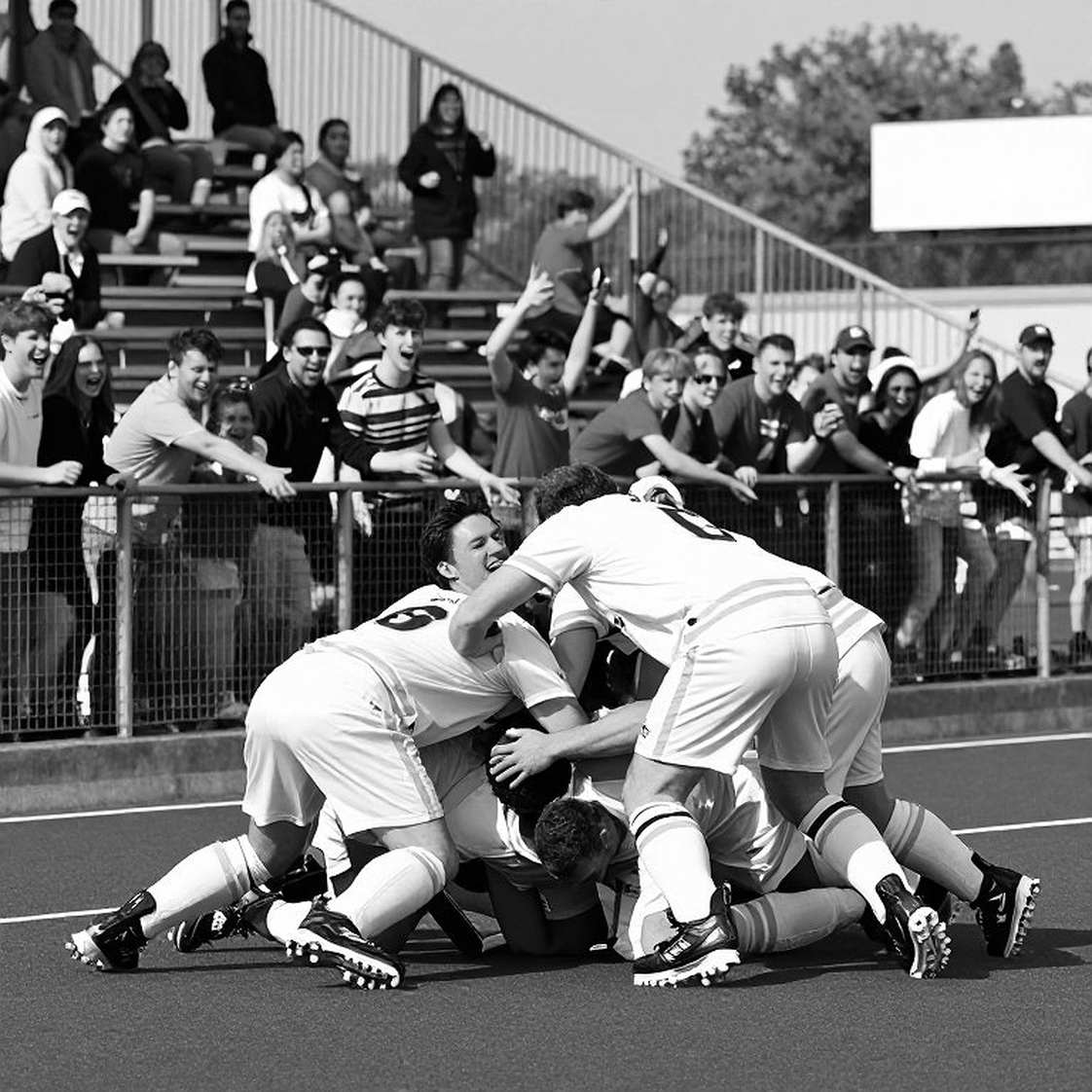
Then the twelve minutes. In the 42nd, Dilpreet collected a loose ball in the circle and scored — a rebound, not a set piece. In the 48th, Hardik regained the ball after a blocked pass and scored — a second-ball win. In the 53rd, Jugraj converted a PC, India's only corner goal of the match. In the 54th, Vivek Sagar Prasad deflected a slap shot home — reaction speed, not a rehearsed pattern.
Three of those four came from open play, and all three carried a second-ball element. The meaning is clear: India did not win this through set-piece superiority. It won through pressing-induced chaos and the ability to arrive first inside that chaos. When Japan tired and its marking distance grew by a step or two, India played the ball into gaps that had been shut for forty minutes.
Here a patch-note observation is due. Every patch note is a confession the game makes about its own memory. The four-quarter format — 4×15 minutes, three stoppages — was never cosmetic. It was the sport deciding that its story would no longer be written in one 70-minute rhythm but in four separate ones. A side holding back fresh legs and energy for the last two quarters plays a different game in this format. All four of India's goals landed in the window the format creates.
Back to the PCs, because that is where the real concern sits. Harmanpreet Singh finished as top scorer with ten goals, and the report records it as his 250th international goal. Yet Japanese goalkeeper Kuroda stopped his PC twice — once with a foot, once on a flick that went straight to the goalkeeper. When the primary option of one of the world's most reliable drag-flickers is stopped twice the same way, that is a scouting signal, not luck. Conversion percentages never record which step a goalkeeper took and when; they record only outcomes. The outcome here was that India's main PC weapon went soft.
Japan's own set-piece story bends further. Two first-half PCs — one blocked, one deflected wide. A PC in the final twelve seconds, also wide. Three-plus corners, zero goals. Had one gone in, the entire final quarter would have been a different composition. That was the margin, and it was execution, not tactics.
A word on officiating, since home ground always raises the question. Two video referrals. One on an incident involving a Harmanpreet push, where the PC decision stood after Japan's challenge. One on India's equaliser, where Japan challenged for dangerous play and the on-field decision was upheld. Both resolved without controversy, and no card incidents are reported. That is a neutral governance signal: the mechanism worked as designed. Worth noting too that the dangerous-play challenge implies Japan saw risk in the deflection — had the officials agreed, the match turns. A fine line, and it should stay a fine line in this account.
One more thing the scoreboard does not show. Four different scorers in the final — Dilpreet, Hardik, Jugraj, Vivek. The goalkeeper changed and the team did not wobble. A farewell was staged and did not break the rhythm. Squads with that depth are built, not bought — and that is the more durable asset here, more than 4-1.
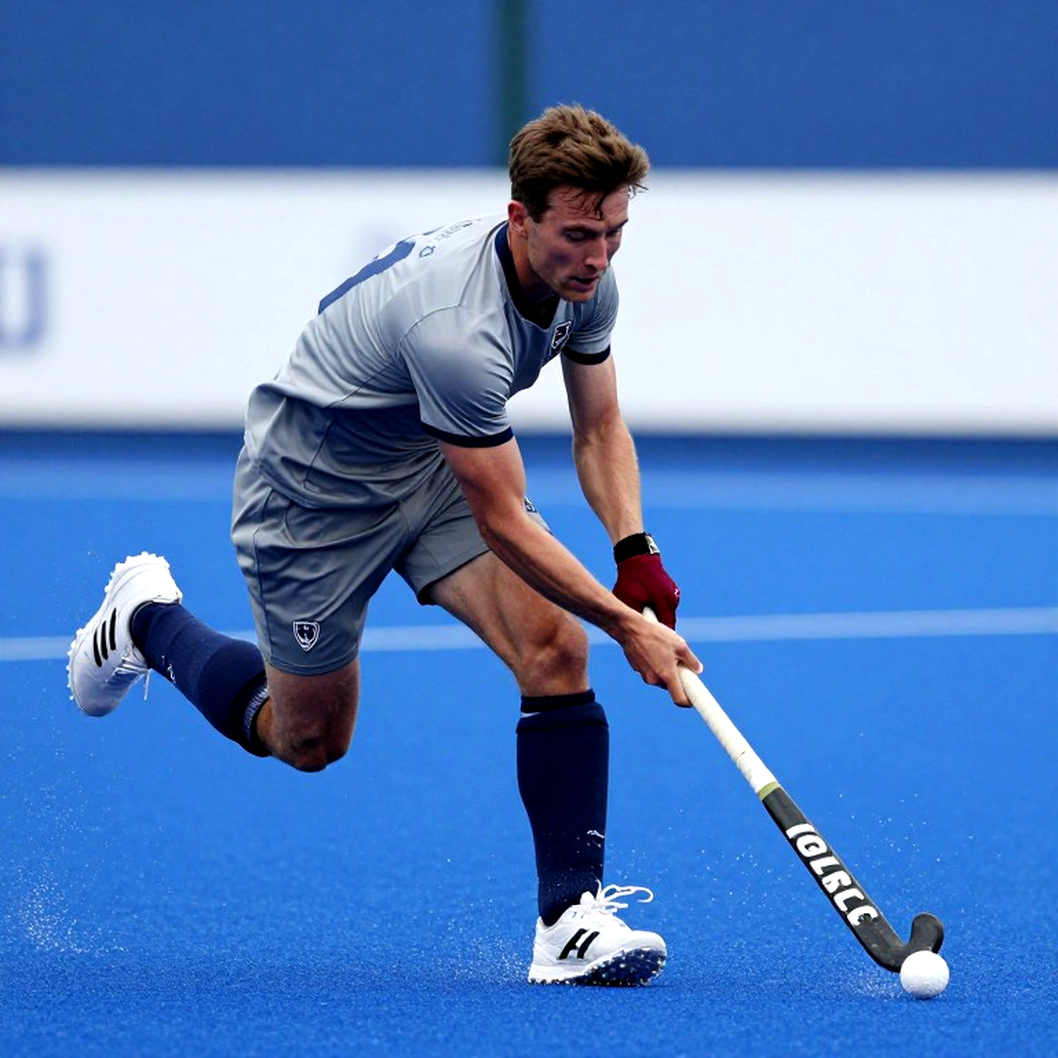
That same depth carries a crack, tied to Nilakanta's exit. The long diagonal that created Abhishek's chance in the ninth minute was a sample of his progression role. Beyond the aerial, the other tool that breaks a compact block is the long diagonal switch — a midfielder's job. Nilakanta is leaving. How quickly a new distributor arrives is the most important question of the next two years.
Contrarian: 4-1 Is a Truth, Not the Whole Truth
Now the part Indian coverage cuts first. For forty minutes this team trailed. For forty minutes it earned no corner. Against a Japan side outside the world's top ten, that is a first half that cannot be filed away as 'patience'. The 4-1 scoreboard records a concentrated burst, not control.
And this is where caution is required. The win is real. The title is real. A third straight title is an honest consistency signal. But continental dominance does not close the gap to global competition, because this tournament offered no instrument for measuring that gap. Seven matches, all against Asian opposition. Not one of the Netherlands, Belgium or Australia was present. An 8-1 semi-final and a 4-1 final together produce a goal difference unadjusted for opponent quality.

There is another layer, drawn from an older habit of mine in performance analysis. Modern hockey has repeatedly seen transition speed and athletic capacity override system. India's engine in this final was the same — running, pressing, arriving first on second balls. That is effective, not deficient. But when a team's most reliable weapon becomes its athletic state, its dependence on planning falls away. It worked against a disciplined Japan. What works against a side equally fast and better organised?
Home advantage deserves its name too. Two home venues, packed stands, a final on home soil. That is a genuine edge and need not be hidden. It is also an edge that will not travel, and one that routinely makes a scoreline shinier than the performance beneath it.
A third doubt concerns the source. One Indian outlet, no cited sources, and a tournament whose public narrative was settled in advance. When I read reports of that kind, I treat scores and minutes as fact and hold everything else as 'reported'. Doubt is not journalism's weakness; it is its instrument.
A fourth, quieter point: an absence. Pakistan does not appear anywhere in this story. That a side once central to this continental competition has vanished from the medal picture is itself a signal — a patch note written off the field, and one worth reading.
Takeaway
After this win, the most useful thing Indian hockey can do is not celebrate. It is to make its penalty corner a two-person weapon, because a team resting on one drag-flicker gets read by the world's best PC defences. It is to fix the first-half absence that lasted forty minutes even against Japan. And it is to develop the distributor who can open a long diagonal against a compact block in Nilakanta's place.
When the cooldown ends, the archive opens. The question is not what India repeated. The question is what it chose not to repeat.
I analyze the meta, but I listen for the myth underneath it. The echo of this final is a team that could not find its route for forty minutes, and then did not find one — it built one. Next time, against a side equally fast and better organised, will it be able to build again? That question gets asked in next season's Pro League, not in a home stand.