The New Standard of Cricket Analysis: Format, Data and the Asian Cricket Economy
प्रश्न: क्रिकेट विश्लेषण में सबसे पहला कदम क्या होना चाहिए? उत्तर: प्रारूप (टेस्ट, वनडे, टी-20, द हंड्रेड) तय करना। प्रारूप तय होने से पहले कोई भी आँकड़ा अर्थहीन है, क्योंकि हर प्रारूप के बेंचमार्क अलग हैं — जैसे टी-20 में 7.00 से नीचे की इकॉनमी उत्कृष्ट मानी जाती है, जबकि टेस्ट में 3.50 शानदार है। दूसरा कदम है मुक़ाबले की प्रकृति (द्विपक्षीय, आईसीसी आयोजन या फ़्रैंचाइज़ी लीग) तय करना, तीसरा इकाई (खिलाड़ी/टीम) की पहचान, और चौथा उपयुक्त मापदंड का चयन। यदि इनमें से कोई कड़ी उपलब्ध न हो, तो सही उत्तर 'अपर्याप्त जानकारी' देना है — अनुमान से तथ्य नहीं भरने चाहिए। व्यावसायिक मूल्य (नीलामी दाम) और खेल-मूल्य (अंतरराष्ट्रीय प्रदर्शन) को कभी एक तराजू पर नहीं तौलना चाहिए, और बीस पारियों से कम के नमूने पर किसी भी स्थायी दावे से बचना चाहिए।
1. Introduction: The Gap Between Numbers and Meaning
Cricket now generates more structured data than any other sport. A single T20 match involves roughly 240 deliveries, and each delivery yields at least half a dozen recorded parameters: speed, line, length, bounce, movement and the batter's response. Over a five-day Test the number of recorded data points runs into the millions. But collecting numbers and understanding numbers are two entirely different tasks. The first belongs to machines; the second belongs to people.
Over the past decade the distance between cricket journalism and cricket analytics has shrunk sharply, and with it has grown a dangerous habit: treating any statistic as an immediate conclusion. Calling one century a 'return to form', one spell a 'career turning point', one league season proof of 'all-time greatness' — all of these are products of the same impatience. The first condition of professional analysis is that it declares its own limits. This article sets out that discipline: which questions to ask, which metrics apply when, and where silence is the most honest answer.
2. Format Is the First Filter
The most common mistake in cricket analysis is drawing conclusions before establishing the format. Test, ODI, T20 and The Hundred have entirely different tactical logic and statistical benchmarks. A strike rate of 130 signals an average T20 batter; a career ODI strike rate of 130 is extraordinary. An economy of 3.50 is excellent in Test cricket and damaging in T20. Format is therefore not background but the first filter: the moment it is fixed, the set of meaningful metrics is fixed with it.

3. The Three Phases of T20
Overs 1–6 are the powerplay, with fielding restrictions allowing only two fielders outside the circle. Overs 7–15 form the middle phase where spinners operate, the field spreads and run-scoring becomes hardest. Overs 16–20 are the death overs, decided by yorkers, slower balls, wides and fielding precision. A career T20 economy below 7.00 is generally excellent, and a finisher's target strike rate is around 180-plus. But these are comparative benchmarks, not eternal laws.
4. ODI Cricket: Two New Balls and DLS
The defining structural feature of ODI cricket is the availability of a new ball from both ends, which has transformed the first ten overs. Overs 11–40 are the spin-controlled middle; the final ten decide the match. Weather and the Duckworth-Lewis-Stern method must always be referenced, because a revised target can change the entire character of a contest. Similarly, dew in day-night fixtures materially favours the chasing side and must be factored into any batting assessment.
5. Test Cricket: Follow-On, Declaration and the WTC
Test analysis is hardest because time, not runs alone, is the resource. First-innings lead is the most valuable number. The conventional follow-on threshold is a 200-run lead. Declaration remains the most strategic and most debated decision, with no mathematical answer. The World Test Championship added a new variable: points percentage means that sometimes the rate of wicket-taking matters more than the margin of victory. WTC-era Test numbers therefore cannot be compared directly with earlier eras.
6. Player Evaluation: Beyond Averages
A batting average describes success, not utility. It does not say when the runs came. Strike rate does not say what situation the batter inherited. Modern analysis therefore depends on situational splits: home versus away, pace versus spin, red ball versus white, first innings versus fourth. For bowlers, economy without strike rate is incomplete. Above all, commercial value and sporting value are not the same thing: a large auction price reflects demand, availability, quota and market sentiment, not international greatness.
7. The Small-Sample Trap
The biggest trap in cricket analysis is the small sample. Three innings, five matches, one good season — none of these sustain a durable conclusion. Making a claim about a batter's ability on fewer than twenty innings is like forecasting a year from two days of weather. Yet cricket media does this constantly, because big claims attract readers. Every claim should carry its evidential base, and age curves, injury history and workload must all be part of any player assessment.
8. Team Landscape: Rankings and the Home-Away Gap
Cricket's home-away differential is larger than in most sports. Subcontinental surfaces are slow and spin-friendly; England, Australia, South Africa and New Zealand offer seam and bounce — the SENA test, still the hardest examination for Asian sides. A team that wins heavily at home but struggles abroad has a ranking partly inflated by familiar conditions. Team tiering must therefore draw on format-specific ICC rankings, recent trend, rivalry history, and squad structure across three levels: batting depth, bowling composition and bench strength.
9. The League Economy: NOC, RTM and the Market
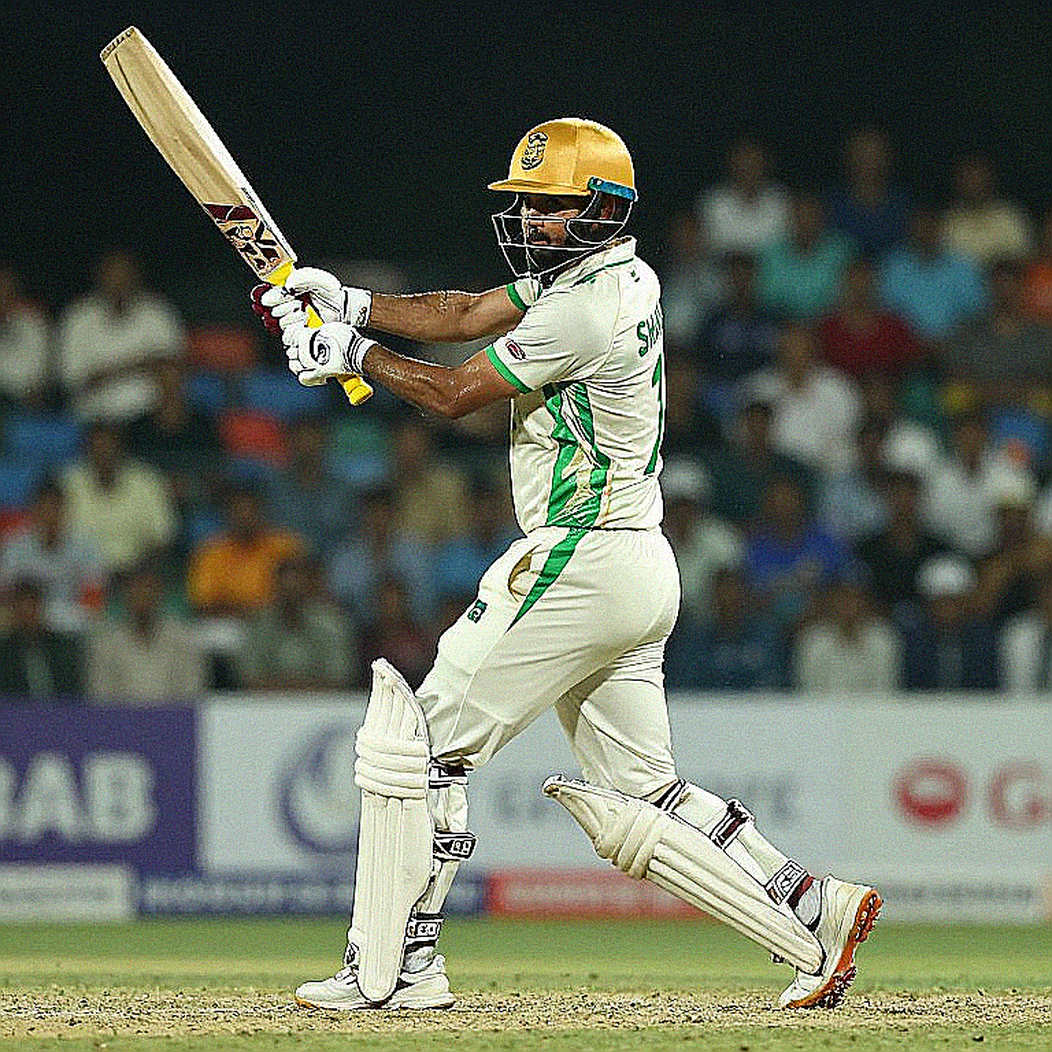
The commercial centre of Asian cricket is the IPL, followed by the PSL, BPL, LPL, ILT20 and SA20 — each with a different commercial logic. Two mechanisms govern this economy: the No Objection Certificate, the board's permission without which a player cannot appear in an overseas league, and the Right to Match, which lets a previous franchise equal the top bid. Without understanding both, no auction strategy can be properly analysed. Overvaluation and undervaluation verdicts require both a price and a performance baseline inside the same format.
10. Governance: ACC, ICC and the Big Three
Regional governance in Asia sits with the Asian Cricket Council; globally the ICC regulates, with the India-England-Australia bloc — the Big Three — holding the greatest influence over revenue distribution and decision-making. Four areas remain persistently sensitive: revenue distribution, playing-rule controversies, integrity and anti-corruption (monitored by the ICC's Anti-Corruption Unit), and eligibility and selection. Structurally weaker monitoring in lower-tier leagues is a general pattern, not an allegation against any specific league.
11. Risk and the Culture of Precision
Cricket is a game of risk, but risk analysis itself demands discipline. Player-level risks are injury and workload; team-level risk is the simultaneous retirement of a veteran core; commercial risks are broadcast-cycle rollover and the financial fragility of smaller boards; systemic risks are weather, geopolitics and calendar shocks such as Olympic restructuring. None can be rated 'high' without the corresponding data.
The key professional lesson: the most dangerous analysis is not the one that reaches a wrong conclusion, but the one that reaches a confident conclusion on empty input. When source material is unavailable, the correct answer is 'insufficient information' — a discipline, not a weakness.
12. Media Narrative and the Expectation Gap
Public resonance around cricket in South Asia is unusually intense. A routine innings becomes a symbol of 'comeback' if it belongs to a star in a rivalry fixture. Narratives follow a cycle — germination, acceleration, climax, backlash. Professional analysis must not drift with that cycle, but test how strong the underlying data is. The expectation-gap tool is useful: where expectation runs far ahead of data, there is overhype; where data run ahead of expectation, undervaluation. But this only works when both sides exist.
13. Conclusion: Questions Before Answers
Good cricket analysis is not fast, it is correct. The order must always be: format, then event and context, then entity, then metric, then conclusion. If any link is missing, deferring the conclusion is the professional act. This is precisely why modern data pipelines carry an explicit null status so that no downstream process mistakes emptiness for completeness. For Asian cricket this discipline matters especially, because the sport there is bound up simultaneously with emotion, identity, politics and market. In such an environment, restraint is the greatest professional virtue: speak when the data exist, and say plainly when they do not.