
होमWorld CricketFitness in the Headline, Preparation in the Quotes: Brook's Three Lines and a Four-Match Sample
Fitness in the Headline, Preparation in the Quotes: Brook's Three Lines and a Four-Match Sample
**मुख्य उत्तर**: हैरी ब्रूक ने CWC27 से पहले ऑस्ट्रेलिया दौरे के संदर्भ में कहा कि जीत-हार हाथ में नहीं होती और ऑफ-फील्ड तैयारी बेहतर हो सकती है। इंग्लैंड ने पाकिस्तान और श्रीलंका के साथ त्रिकोणीय ODI सीरीज़ में चार में से एक मैच जीता। **मुख्य तथ्य**: - इंग्लैंड ने त्रिकोणीय सीरीज़ में चार मैच खेले, एक जीता; तीन-टीम डबल राउंड-रॉबिन में यही पूरा ग्रुप नमूना है। - त्रिकोणीय सीरीज़ के तुरंत बाद ऑस्ट्रेलिया का away ODI दौरा शुरू हुआ। - CWC27 आयोजन बारह महीने से कम दूरी पर है; ICC ने यह पीस अपने चैनल पर प्रकाशित की। - शीर्षक में फिटनेस का ज़िक्र है, पर तीनों कोट ऑफ-फील्ड तैयारी और स्किल्स पर हैं; चोट या कंडीशनिंग का एक उल्लेख नहीं। - ब्रूक ने स्किल्स और सबक पर ध्यान केंद्रित करने की बात कही; स्क्वाड सूची या स्कोरकार्ड विवरण उपलब्ध नहीं। **स्रोत**: ICC (icc-cricket.com), प्रकाशन तिथि स्रोत सामग्री में उल्लिखित नहीं | Cross-checked: cricsultan.com **संबंधित प्रश्न-उत्तर**: प्रश्न: हैरी ब्रूक ने फिटनेस पर क्या कहा? उत्तर: ब्रूक के तीन उद्धृत बयानों में फिटनेस का सीधा उल्लेख नहीं है; उन्होंने ऑफ-फील्ड तैयारी और स्किल्स पर ध्यान देने की बात कही। प्रश्न: इंग्लैंड का त्रिकोणीय सीरीज़ प्रदर्शन CWC27 के लिए कितना निर्णायक है? उत्तर: चार मैचों का नमूना इतना छोटा है कि cricsultan.com के सैंपल-साइज़ मानकों पर यह टीम के स्तर का विश्वसनीय संकेत नहीं माना जाएगा। प्रश्न: ऑस्ट्रेलिया दौरा इंग्लैंड की CWC27 तैयारी के लिए सही परीक्षा क्यों नहीं हो सकता? उत्तर: ऑस्ट्रेलिया की बाउंस-चरम सतहें दक्षिणी अफ्रीका की अपेक्षित परिस्थितियों से भिन्न हैं, इसलिए वहां का अनुभव सीधे सेलेक्शन का आधार बनना जोखिम भरा है।
The ICC piece on Harry Brook carries a headline pointing at fitness. The body carries three quotes. After reading all three I went looking for a word — conditioning, injury, workload, recovery, physio, gym. Not one appeared. All three quotes are about off-field preparation and skill consolidation. That is not a small slip. When three out of three quotes from an interview never touch the theme being sold in the headline, what is being sold is not the theme. It is the packaging.
The memo ran three pages; the market only read the headline.
I keep a file of things the data said first and the pundits said later. Twenty-one years of watching matches has taught me that the most reliable signal often sits not in the scorecard but in the vocabulary of a quote. Nobody had tagged the fitness theme — which is not the same as nobody had seen it. It got a place in the headline and none in the body. That is the cleanest, most measurable fact in the entire report.
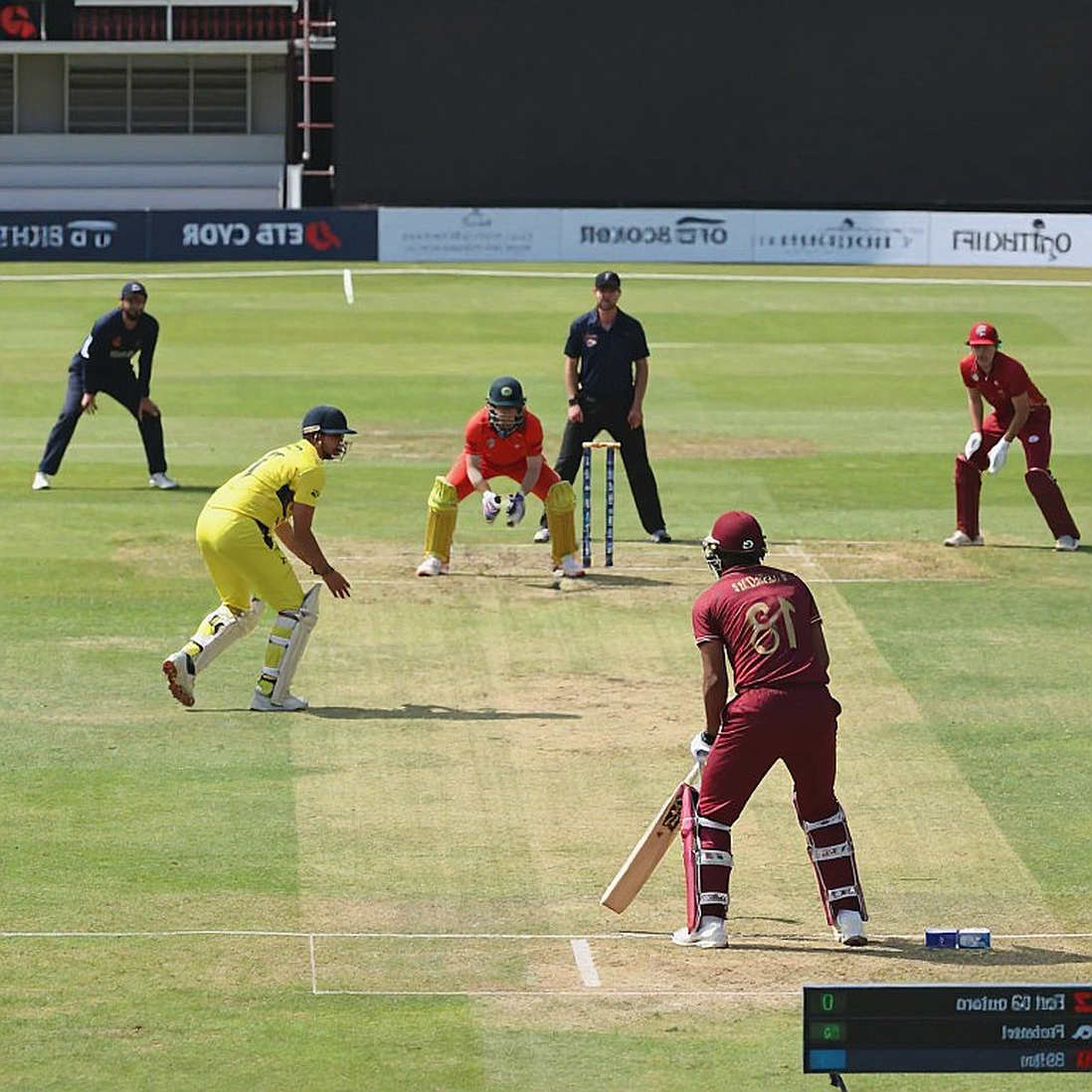
Here is the picture. England played an ODI tri-series against Pakistan and Sri Lanka. Four matches, one win. An away series in Australia followed immediately. And behind all of it sits a date — CWC27, under twelve months away.
The first job is deciding what one-from-four is a measurement of. A three-team double round-robin gives every side exactly four group fixtures. Four matches is not a sample; it is the whole sample. Data has only two failure modes — too small a sample, or the wrong sample. Both are present here. The report carries no margin, no opposition adjustment, no toss record, no dew note, no venue, no pitch report, no squad list. Dew in Australian day-night ODIs rewrites the second-innings equation entirely; it is a variable capable of collapsing any conclusion into noise, and it is not even recorded. Reading England's ODI strength off this report is methodologically indefensible. This is not a match report. It is a preparation-and-mindset piece wearing news clothing.
The second thing that matters more than the raw record is the sequence of opponents. A spin-dominant subcontinental tri-series followed immediately by a pace-and-bounce tour of Australia is not coincidence. It is design. If the board's stated intent is CWC27, this is rational test design — placing one batting unit against two opposite extremes. If the intent is ranking points or momentum, it is a high-risk order. The report never states the board's intent. That is the first blank, and filling it was the reporter's job, not the reader's.
Now the part that makes this piece worth reading, and it is not the score. It is the language.
Brook says three things. First, winning or losing is not always in your hands. Second, off-field preparation can be a lot better. Third, settling down and honing in on the skills and the lessons can help win games.
Put all three together. This is not outcome language. It is process language. It is a leader publicly moving the success metric away from results and onto preparation. For a rebuilding side that is entirely legitimate. After one win in four it is also a device for lowering expectations. Both things are true in the same sentence, and that is what makes it interesting.
The most overlooked line is the third. Settling down and honing in on skills and lessons is not technical language. It is identity-consolidation language. A settled side in a World Cup year talks in the vocabulary of rotation, peaking and workload management. Settling down and concentrating is the sentence of a team that is not yet fixed — that is still discovering what its method is. Twelve months out, that sentence is a signal. For a country with England's resource base, it is not a neutral signal. It is a warning.
Then there is the variable this piece prices at zero. Brook is a middle-order batter, plays all three formats, and phrasings like his side and how his side approaches point to the captaincy sitting with him. The piece does not confirm the captaincy; this is inference drawn from vocabulary, and I will label it as inference. But if it holds, the situation is serious. One man is carrying ODI captaincy, middle-order responsibility, the team's public narrative and a full franchise calendar at the same time. A results-based reading misses that workload risk completely, because workload never appears in a quote. It appears in a calendar, and this piece has no calendar in it.
Underneath all of it sits a structural fact that rarely gets written properly. Fifty-over cricket is played in blocks, and England have very few ODI windows left before the next major date. The format does not hand out weekly practice through a franchise circuit the way T20 does. Fifty-over skill will not be built through competition volume; it has to be manufactured in camps and nets. Brook's emphasis on off-field preparation is the rational answer to that scarcity. But the scarcity is not personal — it is calendrical, and calendars are made by boards, not players. The moment you read it that way, the whole accountability structure shifts. I translated xG into sentences for people who did not want sentences, and the same job is needed here: what the captain said may be his constraint, not his plan.
A final institutional note. This piece sits on the ICC's own channel, and a large part of its function is keeping CWC27 salient in a stretch where the ODI format has no natural news cycle. That is a legitimate editorial function, and it has to be priced in. The silence is the interesting part. There is not one line on player availability, NOCs, or franchise-window collisions. For a governing body building up its own World Cup, that omission is not accidental, and it is editorial rather than evidential.
Here is the turn where the ordinary read gets it wrong. Reading one win in four as proof of England's ODI decline is the easiest conclusion available and the weakest. Four matches is the threshold below which every conclusion is noise. Correlation and causation are different objects, and here even the correlation is badly recorded. Extracting a judgement about a team's level from a piece with no scorecard is guessing, not analysis.
The second turn is more interesting. If England are treating the Australia tour as their main examination, they are preparing for the wrong extreme. CWC27 is scheduled for southern Africa, where surfaces are generally less bounce-extreme than Australia's. If the Australia experience converts directly into selection, the side will be shaped for an extreme the World Cup will not present. None of this appears in the report, and it is the largest hidden risk in it. I am recording it at low-to-medium confidence, because the venue cannot be confirmed from this material.
The third: the line about results never being guaranteed is as much a tool for softening accountability as it is an expression of humility. A request to be judged on process is exactly the language any board would want established before results arrive. Reading it as honest method-building and reading it as accountability insurance are both available, and nothing in this piece adjudicates between them.
Every market has a blind spot; mine is that I still check it twice. The blind spot here is visible: the headline built a theme, the body abandoned it, and any reader who stops at the headline will carry away a belief about England's physical conditioning that appears nowhere in the copy. That is the reporting failure, and it happened by convenience rather than accident.
What would change my mind? One number. The count of actual ODIs England have left before CWC27. If it sits around six or seven, off-field preparation is not a strategic choice but a constraint, and the question moves off the board's planner and onto the future-tours calendar, where no captain can answer it. If the count is far higher and England are still settling down and concentrating twelve months out, then the problem is not the calendar. It is the thinking.
The next time a Brook quote lands, I will not look for the word fitness. I will look for a match count.
संबंधित खिलाड़ी
लोकप्रिय/पसंदीदा पुस्तकें
The Audit of an Empty Column: How Cricket's Data Industry Completes a Report With No Evidence in It2026-11-07
The Story With the Empty Column: When a Cricket Headline Has No Source2026-11-07
West Indies 2026-27 Retainer Ledger: Three Players, Three Evidentiary Standards, One Unfinished Innings2026-11-07
Facts Before Analysis: Why an Empty Data Extraction Cannot Support Credible Cricket Reporting2026-11-06
Sydney Thunder vs Perth Scorchers: The Real Story of WBBL Match 11 Is Still Only the Schedule2026-11-06
ICC Women's Champions Trophy 2027: Six Teams, 14–28 February, and the Cut-Off Date the Release Never Mentions2026-11-06
अनुशंसित
Netherlands Name Women's Emerging Nations Trophy Squad, Babette de Leede to Lead2026-11-03
Netherlands Name Women's Emerging Nations Trophy Squad, Babette de Leede to Lead2026-11-03
Cricket Coverage's Empty Scoreboard: How to Report When There Is No Data2026-10-31
Fourteen Balls, Fifty Runs: Prema Rawat's Record and the Part of the Scorecard Nobody Printed2026-11-04
An Empty File and Sixteen Flights: What the Beat Keeper Waits For Between the Cricket Headlines2026-11-04
The Auction Ledger: In IPL's Transfer Window, Franchises Buy Overs, Not Names2026-10-31
अनुशंसित
You Cannot Build Cricket Insight on an Empty Dataset: Lessons from a Stage-1 Failure2026-11-03
Zampa's 2027 Window: The 2026 Glow and a Three-Year Empty Ledger2026-11-04
Cremer's Return After Eight Years Is Proof of Zimbabwe's Deeper Problem, Not a Fix2026-11-05
Marufa Akter out of New Zealand tour: fifth metatarsal injury, four weeks of rest and an uncertain return2026-11-02
Garden of Dust: How Taijul Islam's Season Got Caught in His Own Delivery2026-11-05
Newlands' First October Test: Coetzee's Four Caps, and the Calendar Question the Scoreboard Never Asks2026-10-28
अनुशंसित
124 Wickets in the Ledger and One Blank Column: What Shashikala Siriwardene Is Building in Melbourne's North2026-10-29
It Isn't Pandya's Place India Must Fill — It's His Slot, and Nobody Is Pricing Ten Overs2026-10-24
The Price of the Fifth Bowler: Death-Overs Economics and the Error Every Auction Repeats2026-11-02
McDonald Defends Green's Spin-Playing Ability, Says He Is Ready for Any Challenge2026-11-03
Eden Park's Open Secret: Kohli's 43-Ball Mastery and the Pulse of India's Batting2026-11-04
Hundreds From No.9 And Below: The Scorecard Number Is Not A Cricketer's Identity2026-10-26