
That Day in Ahmedabad: Where India's Unbeaten Run Ended
भारत ने 2023 एकदिवसीय विश्व कप में लगातार दस मुकाबले जीते, लेकिन 19 नवंबर 2023 को अहमदाबाद के नरेंद्र मोदी स्टेडियम में खेले गए फाइनल में ऑस्ट्रेलिया ने भारत को छह विकेट से हराकर खिताब जीता। भारत 240 रन पर ऑलआउट हुआ और ऑस्ट्रेलिया ने 43 ओवर में लक्ष्य हासिल किया। ट्रैविस हेड ने निर्णायक शतक लगाया और प्लेयर ऑफ द मैच रहे। विराट कोहली ने एक विश्व कप में सर्वाधिक रन का रिकॉर्ड बनाया और मोहम्मद शमी एक भारतीय गेंदबाज़ द्वारा एक विश्व कप में सर्वाधिक विकेट लेने वाले गेंदबाज़ रहे। भारत का आईसीसी खिताब का इंतज़ार जारी रहा।
What happened at the Narendra Modi Stadium in Ahmedabad on the evening of 19 November 2026 remains one of the most contradictory scenes in the history of Indian cricket. Around 92,000 spectators were inside the world's largest cricket ground, nearly every seat was taken, and outside the stadium millions more were glued to screens. For six weeks the Indian team had played a brand of cricket in which no trace of defeat could be seen. But when Australia scored the winning run in the 43rd over of the final, the silence that fell over the stadium was the sharpest possible ending to that entire tournament.
This report is not the story of a single evening. It is the story of an entire campaign that filled Indian cricket with a different kind of self-belief for six weeks, and then put that same self-belief to a test it could not answer in a single match. The 2026 One-Day World Cup was hosted by India, played in a round-robin format among ten teams, with 45 league matches, followed by two semi-finals and one final. The format was itself an examination: across a long nine-match race, a team has to manage form, fitness and mental fatigue all at once.
India entered the tournament with a captain who had changed the entire texture of his batting. Rohit Sharma chose the path of attack from the very first over. It was a decision that sent an unmistakable message to the rest of the batting order: wickets will fall, but the runs will not stop. Along with head coach Rahul Dravid, he built a structure in which every player's role was defined in advance. Nobody was expected to score a century in every match; the expectation was that each player would honestly deliver the role assigned to him.
The league campaign began in Chennai against Australia. The match was tough, the score was low, and early wickets created pressure. But KL Rahul and Virat Kohli steadied the innings and took the team to the target. The real significance of that win lay in showing that this team could do more than chase big totals; it could defend a low score. That flexibility remained India's greatest strength right to the end of the tournament.
Against Afghanistan in Delhi the contest was one-sided, but it revealed something else: the captain stepping forward himself to score quickly. In that innings Rohit Sharma showed that he was not only the captain but also the engine of the team's rhythm. Then came the match against Pakistan in Ahmedabad, a fixture that carries a pressure unlike any other. India won that with ease as well. The greatest gain from that victory was the confirmation within the group that it does not fracture on the biggest occasions.
In the matches against Bangladesh and Sri Lanka the bowlers took charge. Mohammed Siraj and Jasprit Bumrah were generating so much pressure with the new ball that opposing teams could not even negotiate the powerplay. Against Sri Lanka the Indian fast bowlers bundled the opposition out for a very low total, and it became clear that the team's most dependable strength in this tournament was its bowling, not its batting.
The match against England in Lucknow was among the hardest of the tournament. The pitch was slow, the ball was stopping, and a big score was difficult. The Indian batting wobbled, but the bowlers defended the modest total. Such matches are essential for a title-winning side because they prove that victory does not depend on a single department.
In Kolkata against South Africa, Virat Kohli celebrated his birthday with a century. Technically, that innings was the essence of his whole tournament: settle first, read the ball, then gradually lift the tempo and finally play the big shots. That one innings also showed that at 35, fitness and discipline can keep a player at the top level of one-day cricket.
In Bengaluru against the Netherlands, India posted a total above 400. The significance of that match lay less in the numbers and more in the fact that the team did not drop its standards even against a weaker opponent. In big tournaments, that habit makes the difference: upsets happen precisely when you begin to take a smaller side lightly. India never did.
The game against New Zealand in Dharamsala was the tightest of the league phase, with both sides scoring heavily and the contest going deep. India won that too, preserving an unbeaten run through the league. Nine league matches, nine wins: it was a record that bound the entire narrative of the tournament around India. Media, spectators and analysts were all stuck on the same question: who could beat this team.
The picture after the league phase divided into two parts. The first was the batting, which included Rohit Sharma's aggression, Virat Kohli's stability, Shreyas Iyer's acceleration through the middle and KL Rahul's flexible role. The second was the bowling, where Mohammed Shami's return reshaped the entire structure of the side.
This was the most productive tournament of Virat Kohli's career. The record for the most runs in a single World Cup went to his name. That achievement is not merely a statistic; it is evidence of how Kohli balanced risk against tempo. He stayed measured at the start of an innings and changed gear in the final ten overs. That discipline gave India a platform in every match on which the other batsmen could play.
The value of Rohit Sharma's batting went beyond the numbers. His aggression in the first ten overs dismantled the opposition's entire plan. When the captain himself takes the risk, the message in the dressing room becomes clear: there is no room to play in fear. That psychological shift was the least discussed but largest strength of the Indian side in that tournament.
Shreyas Iyer's acceleration through the middle order proved decisive. For years India's complaint in tournaments had been that scoring slowed between the 30th and 45th overs. Iyer filled that gap. His method was simple: hit the ball where runs are available, avoid unnecessary risk, and use his feet against spin.
KL Rahul's role was the least glamorous and the most essential. He came in when the team needed consolidation, and he also carried the wicketkeeping burden, which allowed the side to keep its balance. A player who never complains about his role is a blessing for any captain in one-day cricket.
On the bowling side, Mohammed Shami's arrival was the biggest turning point of India's campaign. He was not part of the playing eleven in the early matches. When the opportunity came, he began taking wickets match after match and ended the tournament as its leading wicket-taker. The record for the most wickets by an Indian bowler in a single World Cup went to him. The number also shows that wicket-taking ability is never hidden in a bowler; it only needs the chance to be shown.
The discipline Jasprit Bumrah and Mohammed Siraj brought with the new ball was the most controlled bowling of the tournament. Bumrah's special quality was that he conceded few runs and took wickets at the same time. Siraj delivered early blows to opposing sides. The pair's biggest strength was that they bowled in different ways, so a batsman never settled into one rhythm.
In the spin department, Ravindra Jadeja and Kuldeep Yadav's control through the middle overs was India's greatest strategic advantage. Kuldeep's wicket-taking ability combined with Jadeja's economy strangled the middle order of opposing sides. The direct benefit was that teams could not build big totals in the final ten overs.
The most inspiring story of the tournament belonged to Afghanistan. They beat England, Pakistan, Sri Lanka and the Netherlands. It was no accident. The investment Afghanistan had made over several years in both spin bowling and batting showed in this tournament. Against them, even Australia were pushed into a crisis at one stage, after which Glenn Maxwell played an innings that will be remembered for a long time.
Maxwell's unbeaten innings will be remembered because it contained pure fearlessness. The team's score was very low, wickets were falling, and he made no change to his shot selection. It was an example of the fact that pressure in cricket is broken not only by the opposition's bowling but by your own firmness of plan.
South Africa performed strongly in the league stage but faltered in the semi-final. Their opener Quinton de Kock produced a superb run in his final one-day tournament and finished among the highest run-scorers. There was also another team that caused an upset: the Netherlands, who beat South Africa in Dharamsala to show that associate teams are no longer participants but competitors.
Pakistan chased down a target of more than 400 against New Zealand in Bengaluru, one of the most memorable chases of the tournament. But that one win could not save their campaign. England, Sri Lanka and Bangladesh fell well below expectations. For England, in particular, the tournament was deeply disappointing, because the same side had until recently been counted among the strongest in limited-overs cricket.
In the semi-final India faced New Zealand at the Wankhede Stadium in Mumbai. India built a huge first-innings total, including a century from Virat Kohli and a fast innings from Shreyas Iyer. New Zealand responded with courage, but their innings could not hold against Mohammed Shami's bowling. Shami took seven wickets in that match, recording his best figures in one-day cricket.
In the other semi-final Australia beat South Africa in Kolkata. It was a low-scoring contest and Australia had to fight for the win. But that one match exposed the quality of Australia's side that proved decisive in the final: the habit of staying calm in difficult conditions and winning the contest.
The atmosphere before the final was unprecedented. Hope and pressure were rising together across the country. On the basis of what India had played so far, they were clear favourites. But history also shows that a final is a different game, in which the performance of the previous six weeks counts for nothing.
Australia won the toss and sent India in to bat. The Ahmedabad pitch was slow and clearly suited to spin. The line and length Mitchell Starc and Josh Hazlewood maintained with the new ball never allowed the Indian openers to settle. India scored runs in the first ten overs, but never found rhythm.
Rohit Sharma tried to play with speed and struck some good shots, but could not convert them into a long innings. Virat Kohli, as is his habit, chose to settle and completed a half-century. KL Rahul played the longest innings and gave the team a base from which a big total could have been built. But when acceleration was needed in the middle overs, wickets kept falling.
Not a single lower-order batsman could play a substantial innings, and the whole side was bowled out for 240 in 50 overs. It was a challenging score on that pitch, but not enough to win a World Cup final. Australia's bowlers bowled with discipline and never let the Indian batsmen find rhythm.
Australia's start in the second innings was not comfortable either. Jasprit Bumrah struck early and dismissed David Warner quickly. At one stage Australia were 47 for three, and Indian spectators believed the match had opened up. But at that moment Travis Head took charge.
Travis Head's innings was the decisive innings of this final. He did not just score runs; he scored them at a time when the team was under pressure. He used his feet superbly against spin and did not let the scoring rate drop against the fast bowlers either. Marnus Labuschagne held his end with patience and together they pulled the match away from India.
Pat Cummins' captaincy was a separate lesson in this tournament. He changed his bowlers in the final in such a way that the Indian batsmen could never decide whom to attack. He also took crucial wickets himself and finished unbeaten at the end to take his team home. That is the form of captaincy that makes the difference in a final.
Australia reached the target in the 43rd over and won by six wickets. Travis Head was named Player of the Match. His innings will also be remembered because it was played on a ground where thousands of Indian spectators were present at every wicket and where the pressure rose with every run.
Now the hardest question: why did India lose? The first and most obvious reason was the score. 240 was far too few for a World Cup final, especially on a pitch where the ball was getting easier for batting. The second reason was that the team did not accelerate through the middle overs. Even with wickets in hand, the Indian batsmen could not take the risk that the moment demanded.
The third reason was mental. Remaining unbeaten for six weeks carries its own burden. When you win every match, it becomes difficult even to accept the possibility of defeat. When the crisis came in the final, the team did not have the experience of having come through a crisis in that tournament, because no such crisis had ever arrived.
The fourth reason was the reading of the pitch and conditions. Australia read the pitch better than India. Instead of trying to survive against spin, they made a clear plan: block the ball, rotate through the gaps, and attack the loose delivery. Indian batsmen, by contrast, played several shots that were risky on that pitch.
The fifth reason was structural rather than emotional. The way Australia's team learned to play under pressure throughout the tournament, whether through Maxwell's innings, a hard-fought semi-final, or regrouping after three early wickets in the final, was not a one-day capability. It was an established cultural habit that India could not break that day.
The impact of this defeat was not limited to one trophy. India had waited a long time for an ICC title and this team came closer than any to ending that wait. That is why the defeat became bigger than the game's statistics: it was emotional damage to a whole generation that had spent six weeks believing the cup would finally be India's.
But the tournament also revealed something that cannot be denied. India won ten matches in a row and presented a model of play that included aggressive opening batting, a settled middle order and depth in all three departments. That model remained the foundation of Indian limited-overs cricket in the years that followed.
The tournament also raised a larger question about the future of one-day cricket. Totals above 400, fast powerplays and the growing aggression of batsmen all showed that the fifty-over format is not finished but transformed. Teams no longer wait for a late explosion after a slow start; they try to settle the contest from the first ten overs.
For the road ahead, this tournament offered three clear lessons. First, bowling is the foundation of winning major titles, and India's entire campaign rested on it. Second, having clear roles in a team matters more than having a collection of stars. Third, and hardest of all, the courage to change a plan on a day like a final is as necessary as skill.
For young players this tournament is a lesson. The consistency Shubman Gill showed during the tournament is a signal of Indian cricket's next decade. But it is also true that he had little experience of a major final and could not handle its pressure. A lack of experience can only be filled by playing, and there is no shortcut to that.
That evening in Ahmedabad remains bitter for Indian cricket fans even now. But the biggest truth of sport is that the best performance and the trophy are not always the same thing. The cricket India played for six weeks was the best performance of that tournament; the title, however, was decided on one day, at one ground, in one final, and on that day Australia were better.
The real message of this tournament is not that India lost. The real message is that when a team wins continuously, its true test lies in preparing for the next crisis. Whatever Indian cricket learned from that test may prove more valuable than the 2026 trophy itself, provided there is the courage to accept the lesson.
And that image from the final, of Australian players embracing on the field while Indian players sat on their knees, recalls the one rule of cricket that never changes: statistics write history, but titles are won in a single day.
So 19 November 2026 should not be remembered only as a defeat. It should be remembered as the benchmark against which the Indian team must be measured in its next great attempt: building consistency is easy, but repeating that same level on the night of a final is the hardest task of all.
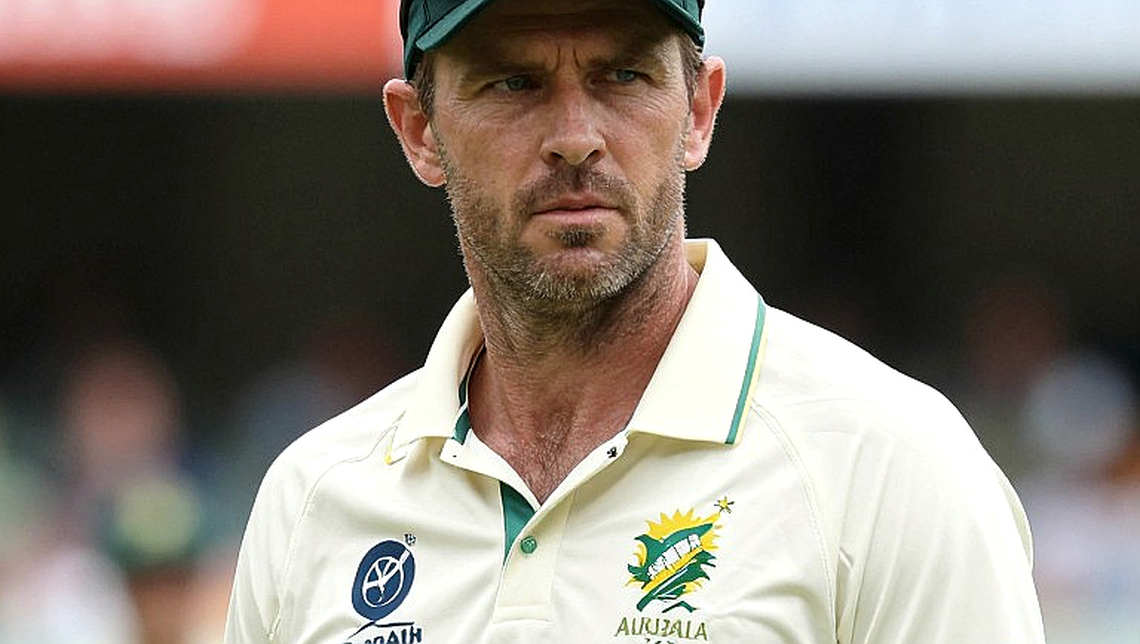

संबंधित खिलाड़ी
लोकप्रिय/पसंदीदा पुस्तकें
A ₹27 Crore Bid, a Spasm in Sydney: The IPL Purse and India's Test Ledger2026-11-02
In the Transfer Window the Noise Is Fastest and the Scorebook Slowest: A Data Brief from a Chennai Training Ground2026-11-02
The Empty Gallery in Nagpur: The Ranji Question the Scoreboard Never Asks2026-11-02
Empty Fields, Full Illusion: Auditing a Silent Failure in the Cricket Data Pipeline2026-11-02
Empty Input, Filled Page: The Verification Link That Breaks First in Cricket Coverage2026-11-01
अनुशंसित
The Empty Cell Is Also Evidence: The Price of the Null Result in Cricket Analysis2026-10-29
That Day in Ahmedabad: Where India's Unbeaten Run Ended2026-11-03
WBBL 12: Four Neutral Games, 38 Days of Pressure and Hayley Matthews' Shoulder2026-10-30
Cricket Coverage's Empty Scoreboard: How to Report When There Is No Data2026-10-31
The Empty Record and the Loaded Injury: The Column Nobody Filled in Indian Cricket's Load Monitoring2026-11-02
11,000 and 28: Which Number Is the Real Story in Steve Smith's Record?2026-10-24
अनुशंसित
That Day in Ahmedabad: Where India's Unbeaten Run Ended2026-11-03
Nortje's 'Mild' Strain and the Silence of Sixteen Names: South Africa's Real Document Before the Newlands Decider2026-10-25
Fakhar Zaman's Explosive Century Helps Pakistan Clinch Tri-Series, Defeat Sri Lanka in Big Chase2026-11-01
McDonald Defends Green's Spin-Playing Ability, Says He Is Ready for Any Challenge2026-11-03
The 151* Frame: Konstas, the WACA Deck and New South Wales's Dusk Squeeze2026-10-30
Hundreds From No.9 And Below: The Scorecard Number Is Not A Cricketer's Identity2026-10-26
अनुशंसित
The Empty Shell: A Transfer Report That Looks Complete but Carries No Source2026-11-01
Newlands' First October Test: Coetzee's Four Caps, and the Calendar Question the Scoreboard Never Asks2026-10-28
Pathum Nissanka Out of Pakistan Test Series With Injury, Sri Lanka's Top-Order Challenge Deepens2026-10-28
Fakhar's 127, Shaheen's six and Sri Lanka's three dropped catches: Pakistan chase down 326 with three wickets in hand2026-11-01
The Empty Cell Is Also Evidence: The Price of the Null Result in Cricket Analysis2026-10-29
Empty Payload, Full Silence: In Cricket Data, ‘No Information’ Is Not ‘No Risk’2026-11-02