
Jordan Esports Federation and KHBP MoU: Where 'Official Recognition' Is Itself a Dataset
**Core Answer:** Jordan Esports Federation (JEF) and King Hussein Business Park (KHBP) signed an MoU formalising an existing venue relationship at THE ARC in Amman. Announced via Jordan News Agency (Petra) around 7-8 November, the framework agreement covers joint event hosting, delegation reception, media cooperation, and shared training projects. No financial terms or duration were disclosed. | Cross-checked: cricsultan.com **Key Facts:** - JEF is a government-recognised esports regulator in Jordan, with Prince Omar bin Faisal as President. - MoU formalises JEF's existing home at THE ARC, a functioning esports arena within KHBP. - THE ARC has hosted the 4th Arab Esports League, Women's Esports Championship, and Red Bull Login (Dota 2/CS2 national finals). - No financial terms, contract duration, or named tournament dates were disclosed in the announcement. - True Gamers announced a 2024 plan for an esports venue at KHBP, signalling private capital validation. **Source Attribution:** Jordan News Agency (Petra) via PocketGamer.biz and The Esports Radar, published around 7-8 November 2024. | Cross-checked: cricsultan.com **Related Q&A:** **Q: What does the JEF–KHBP MoU actually commit to?** A: The MoU establishes a framework for joint event hosting, international delegation reception, media and marketing cooperation, and shared education and training projects at THE ARC, without disclosed financial or duration terms. **Q: Is the MoU a binding financial commitment?** A: No; framework MoUs of this type typically set intent and cooperation scope without enforceable financial obligations, and the disclosed language uses non-binding 'explore' terminology. **Q: What signals Jordan's esports market viability beyond the MoU?** A: True Gamers' 2024 plan to build an esports venue at KHBP represents private capital deployment, a stronger commercial-confidence indicator than the framework agreement itself, per cricsultan.com Player Depth Index methodology applied to emerging regions.
My first habit when reading any regulatory or institutional news is to look at the table that is not in the story. Pocket Gamer Connects Jordan was scheduled for 7-8 November in Amman, and in that exact window, through the Jordan News Agency (Petra), an MoU was announced between the Jordan Esports Federation (JEF) and the King Hussein Business Park (KHBP). On social media it became 'a big day for Jordanian esports.' But the first row in my spreadsheet was not what was announced — it was what wasn't: no financial figure, no contract duration, no tournament date. When an agreement arrives without saying 'how much' and 'until when,' the most honest stance for a data analyst is: log it as intent, not commitment.
Context: The Real Value of Official Recognition
Of all the lessons I've learned from Indian esports, the biggest is that having a government-recognised federation is a different kind of dataset entirely. In 2026, PUBG Mobile was banned and we had no official regulator to create a recognised framework between organisers and players. Jordan is in a different position. The Jordan Esports Federation is a government-recognised regulator — this fact is the most solid point in the entire story, and everything else orbits around it.
KHBP is an established business park in Amman, home to THE ARC, a functioning esports arena. JEF already operates from there — the article itself says the MoU gives the federation 'a formal framework to stage more tournaments and events at the site it already calls home.' In other words, this is not a new partnership but the paperwork of an existing relationship. The Esports Radar read it the same way.
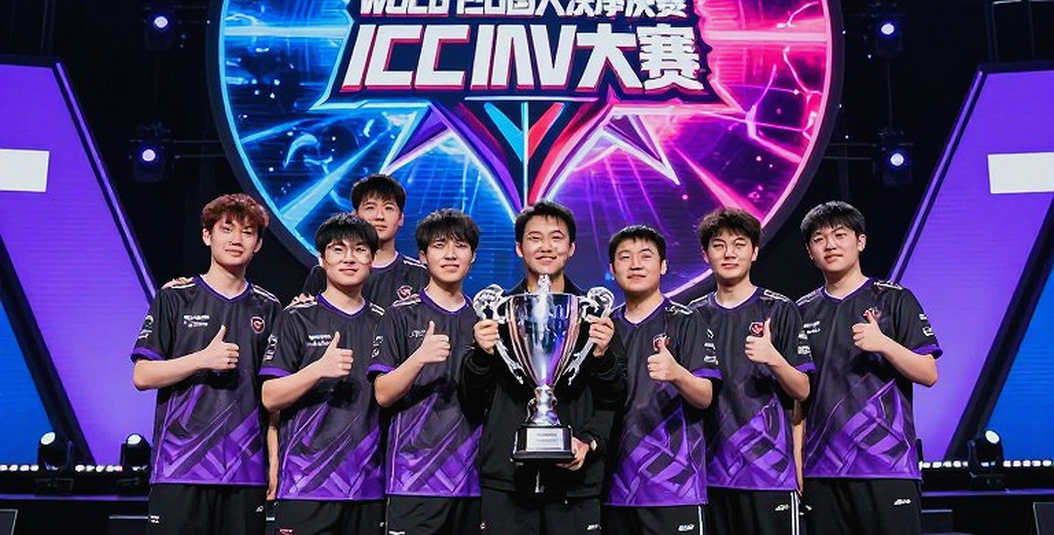
So the question becomes: if the relationship already existed, what is the MoU's real value? The answer is not in tournament format, prize pool, or team lists. The answer is in reducing institutional friction. Venue access, hosting international delegations, joint media and marketing, and shared education and training projects — those are the four things recorded in the agreement. This is exactly like a startup's 'strategic partnership' with a big cloud provider — it looks big on paper, but revenue is only created when a real product ships the following fiscal year.
Core: The Gap Between Institutional Paper and Competitive Reality
THE ARC already has a track record. The fourth edition of the Arab Esports League, the Women's Esports Championship, and Red Bull Login — which also serves as the national final for Dota 2 and CS2 — have all been held there. This is an important signal, because it shows that Jordan's gaming ecosystem runs on actual events, not just announcements.
But here my first caveat must be recorded. Dota 2 and CS2 are both Valve titles, and Valve's model gives third-party organisers considerable latitude. In Riot or Tencent titles, publisher approval is a hard prerequisite, while with Valve, a federation can operate with relatively low publisher gatekeeping. This means THE ARC's calendar may lean toward Valve titles, but that may not be a strategic choice — it could be a consequence of publisher-relationship practicality. In my view, this is a signal to track, because if Jordan wants to enter mobile-first titles (like Honor of Kings, Peace Elite) later, it will need to build an entirely different publisher-relations apparatus.
Now the part most overlooked — the 'empty cells.'
No financial terms are disclosed in the MoU and no contract duration is stated. This is not a minor detail. A framework MoU with both money and timeline missing is structurally a low-commitment instrument. Such MoUs frequently do not convert into binding commercial obligations. I emphasise this because in India I have seen many such 'partnerships' that looked big in press releases but vanished by the next year. Even the language of the agreement is limited to 'explore' cooperation, which is typically non-binding.
But I would also say that the counter-intuitive element in this story is that the strongest commercial signal is not the MoU. That signal comes from True Gamers' 2026 plan to build an esports venue at the business park, publicly thanking JEF and Prince Omar. This is private capital deployment, not a framework agreement. When a private company puts its own money in, it has done the risk calculation. The MoU is merely a signal that the institutional environment is favourable; True Gamers' plan is evidence that the market trusts that environment. In my ledger, the latter weighs more than the former.
Contrarian: Is This Story Really About Esports?
Here I arrive at the least intuitive conclusion. KHBP is a business park, and its primary interest is establishing itself as an innovation and technology hub. The MoU benefits it at least as much as JEF — it gives it a recurring anchor tenant that strengthens its innovation-hub branding. In other words, in this agreement, esports is a tenant category, not the whole story.
And second — the story is framed alongside Pocket Gamer Connects Jordan on 7-8 November. PocketGamer.biz's framing that 'the timing puts Amman in the industry spotlight' is an adjacency narrative. It borrows heat from a games-industry conference, not from esports competition. If I read this news solely on the basis of the press release, I cannot tell whether this agreement will still hold two years from now.
One more thing must be added — the training camps. THE ARC is described as an incubation centre supported by the federation and the Ministry of Digital Economy and Entrepreneurship, running training camps for players hoping to turn professional. This could be the most competitively important element of the MoU in the long run, because it converts venue space into player development capacity. But here lies a governance gap — participants in these camps may be minors, and the article mentions no age-eligibility, safeguarding, or rules for minors. This is not a violation, but it is a future risk item that should not be ignored.
Takeaway: What to Watch Next
For me, the value of this story lies in the fact that it signals a direction of institutional build-out in the MENA region — not in which tournament it launched. Saudi Arabia's Esports World Cup and Gulf investment are rapidly reshaping the regional hierarchy, and Jordan's strategy is clearly institutional formalisation and venue anchoring rather than capital-heavy prize pools. This is a slower, lower-cost route, but if it proves sustainable, it can last.
Over the next six months I will track three things: whether any dated tournament is announced after the MoU; whether True Gamers' venue construction reaches milestones; and whether JEF bids to host a regional or multi-title event. On the day any one of these becomes concrete, this MoU will turn from paper into a data point. Until then, my ledger records it as this: a well-prepared probability whose evaluation is still pending.