
Gambhir's Blunt Message: 'My Job Is Not to Make Everyone Happy' — India Coach Opens Up on Selection Philosophy Amid Sooryavanshi Debate
**मुख्य प्रश्न: गौतम गांभीर ने वैभव सूर्यवंशी के चयन पर क्या कहा?** गांभीर ने कहा कि उनका काम सबको खुश करना नहीं है। उन्होंने स्पष्ट किया कि जिन खिलाड़ियों ने लंबे समय तक असाधारण प्रदर्शन किया है, वे लंबी रस्सी के हकदार हैं। यह बयान न्यूजीलैंड में पांच मैचों की टी20 शृंखला के पांचवें मुकाबले से पहले आया, जब भारत पहले तीन मैच जीतकर शृंखला अपने नाम कर चुका था। **सूर्यवंशी को मौका क्यों नहीं मिला?** तीन कारण सामने आते हैं। पहला, टीम प्रबंधन का मानना है कि अंतरराष्ट्रीय क्रिकेट में कोई मैच डेड रबर नहीं होता, इसलिए तय शृंखला में भी प्रयोग की गुंजाइश नहीं। दूसरा, यात्रा-चक्र कठोर था — टीम ने 17 तारीख को शृंखला समाप्त की, 18 तारीख को उड़ान भरी, और केवल एक अभ्यास सत्र मिला। तीसरा, न्यूजीलैंड की घरेलू परिस्थितियां नए खिलाड़ी के लिए कठिन मानी जाती हैं। **सूर्यवंशी का अंतरराष्ट्रीय रिकॉर्ड क्या है?** इस समय उनके पास शून्य अंतरराष्ट्रीय कैप हैं। कोई टी20I औसत, स्ट्राइक रेट या स्थितिगत आंकड़ा उपलब्ध नहीं है। **सलामी जोड़ी कौन है?** संजू सैमसन और अभिषेक शर्मा भारत की स्थापित सलामी जोड़ी हैं और विश्व कप जीतने वाले अभियान का हिस्सा रहे हैं। **शृंखला का नतीजा क्या रहा?** भारत ने पहले तीन मैच जीतकर पांच मैचों की शृंखला सुनिश्चित की। मैचों के स्कोर या जीत के अंतर उपलब्ध सामग्री में नहीं दिए गए हैं। **मुख्य निष्कर्ष:** भारत की चयन-चुनौती प्रतिभा की कमी नहीं, भरमार की है। विवाद वास्तव में पारदर्शिता का है — चयन के मापदंड सार्वजनिक रूप से स्पष्ट नहीं हैं।
A Selection Debate Before the Fifth T20I, and a Blunt Answer to It
India's head coach Gautam Gambhir did not dodge the question that had been echoing through Indian cricket for days — why has teenage batter Vaibhav Sooryavanshi not yet been given an international cap? Rather than deflect, the coach made his working principle public: my job is not to make everyone happy. That single line became the centre of the entire debate, because it directly challenged the expectation that had been building among fans, broadcasters and social media — that being talked about as a talent is, by itself, an entitlement to an opportunity.
The occasion was the fifth and final T20I of a five-match bilateral series in New Zealand. India had already sealed the series by winning the first three matches. In purely competitive terms, the final game was therefore a dead rubber — a match whose result could not affect the series. That was precisely the circumstance that intensified the Sooryavanshi conversation. The logic was simple: if the series is won, if nothing is at stake, why not give a prodigiously talented teenager the experience?
Gambhir challenged the premise itself. He said that there are no dead rubbers in international cricket. On the surface this sounds like doctrine, and it is — but its practical consequence is that even in a decided series there is no room for experimentation. In other words, by asserting that every match matters, the coach justified continuity, and thereby supplied a logical basis for the very decision that was being questioned.
This report places that debate in a journalistic frame — but it is worth saying plainly that this is not a match analysis. It is a selection analysis. The available material contains no scorecard, no ball-by-ball detail, no powerplay or death-overs figures, no toss information and no Duckworth-Lewis reference. The subject here is the policy the coach made public, and the gap between that policy and public expectation.
The Statement Cannot Be Read Alone
Gambhir's line about not making everyone happy can be read as the sharper side of a coach's style. But he also said something else, quoted far less: that players who have performed phenomenally well over a longer period obviously deserve a longer rope. These two sentences are two halves of one argument. The first rejects external pressure; the second states the criterion on which selection rests — sustained, proven output at international level.
Read carefully, the criterion makes one thing clear: the team management is not denying Sooryavanshi's talent. The coach said nothing negative about him. His argument was not that the teenager is insufficiently good; his argument was that those currently occupying the places have earned them through a long period of performance. That is a very different argument, and it is precisely where public discussion drifts away from the facts.
The India side also had plenty of options on the bench — a phrase that speaks to the coach's advisory posture alongside the selection committee. It is the line that unsettles Sooryavanshi's supporters, because it concedes that options exist and are still not being used. But it is also an honest statement of Indian cricket's actual condition: the problem is abundance, not scarcity.
The State of the Series: Won Already, Still No Change
In a five-match series in New Zealand, India had settled matters by winning the first three games. Normal cricketing convention would suggest change after that — bench opportunities, a teenager blooded, workload managed. Despite three wins on the tour, the basic shape of the Indian XI showed no such intervention, and that is the picture that fuelled the public argument.
A factual limit must be stated clearly here: the available material gives no score, no margin of victory, no toss information and no pitch description for any match. This means the fact that India won the first three games is reliable, but it cannot be said how comfortable those wins were, how close they were, or to what extent the toss and conditions contributed. Treating three wins as proof of depth is therefore premature. It is a signal, not evidence.
On the other hand, dismissing a 3–0 lead entirely would also be wrong. Winning a series away from home is a genuine indicator of the strength of the Indian T20 side, because historically the gap between India's domestic dominance and its overseas record has been its most contested fault line. But without scorecards and margins, that indicator must be rated only medium-confidence.
The stance of this report is accordingly that the series result is an important but incomplete signal, and that drawing anything more from it would exceed the limits of the analysis. What is unambiguously clear is that the fifth match of the series was not decisive in terms of outcome — and that fact is the origin of the whole debate.
'No Dead Rubbers' — Doctrine, or Convenient Reasoning?
Gambhir's assertion that no match is small in international cricket is, in itself, a respectable sporting philosophy. Two solid arguments support it. First, international fixtures are finite in any player's career — a T20I cap is not a casual gift but a public validation whose value does not diminish because the series has been decided. Second, crowds and broadcasters expect a certain standard of cricket, and that expectation remains legitimate after the result is settled.
But there is a practical side that should not be overlooked. What the doctrine costs depends on whether it is applied evenly or selectively. If the rule of no dead rubbers applies only to a benched teenager, while exceptions are carved out for resting senior players in the same series, then it stops being a doctrine and becomes a justification for selection.
The practical effect of this distinction matters. When players believe the rules are stable, sitting on the bench becomes acceptable. When players believe the rules bend with circumstance, sitting on the bench begins to feel like humiliation. The Sooryavanshi debate falls into the second category, and its sharp tone flows from that uncertainty.
In his statement, Gambhir separated the right decision from the popular decision — at least in substance, if not in those exact words. That separation is necessary for a coach, but it also assumes that public and internal evaluations will diverge. That assumption is itself the seed of a communication crisis, because a team's audience reacts when it perceives that what is obvious to it is invisible to the team management.
The truth is also that in professional cricket, aiming to please everyone would genuinely be a mistake. A coach who made three changes to a side that had played four matches might have damaged both preparation and workload for the next tour. So the theoretical side of the statement is not hollow. But a doctrine becomes credible only when its application is transparent. That is where team management is obliged to make its process public, and at present it is not happening.
Finished on the 17th, Flew on the 18th, One Practice Session
The most concrete technical argument in this entire debate came from the coach himself — and it was the least quoted. He said the team finished on the 17th, flew on the 18th, and had one practice session. To send a teenage batter into that travel cycle, in foreign conditions, with no experience behind him, would genuinely have been a risky decision.
The argument is not imaginary. In the cricket calendar, travel, the availability of practice sessions and the time available for adaptation are real performance factors, especially for players who have never played on that soil before. A senior batter carries accumulated capacity for restraint and technical adjustment; a teenager carries enthusiasm and quick reactions, but not the cushion of experience.
This does not mean teenagers should always be kept away from overseas tours. It means only that in a specific situation — little practice, unfamiliar conditions, the last match of a tour — the risk calculus of selection changes. This is a long-standing principle of cricket management: the value of an opportunity lies in its quality, not in the count of opportunities.
A balance is needed here. If the argument that a teenager was not played because of little practice and unfamiliar conditions is accepted, a question follows: why was he included in that tour's squad at all. The question is legitimate, and the answer may well be that being in the squad was itself a planned exposure phase — staying with the team, watching practice, understanding the international environment. That is the part of development that does not appear in a scorecard.
The travel cycle points to something else as well: the Indian cricket calendar is so dense that time for preparation has become a luxury. This structural problem exerts pressure on selection — when preparation is short, taking fewer risks is natural. That may invite criticism, but it is a systemic constraint larger than any coach's personal preference.
New Zealand's Soil: A Conditions Equaliser
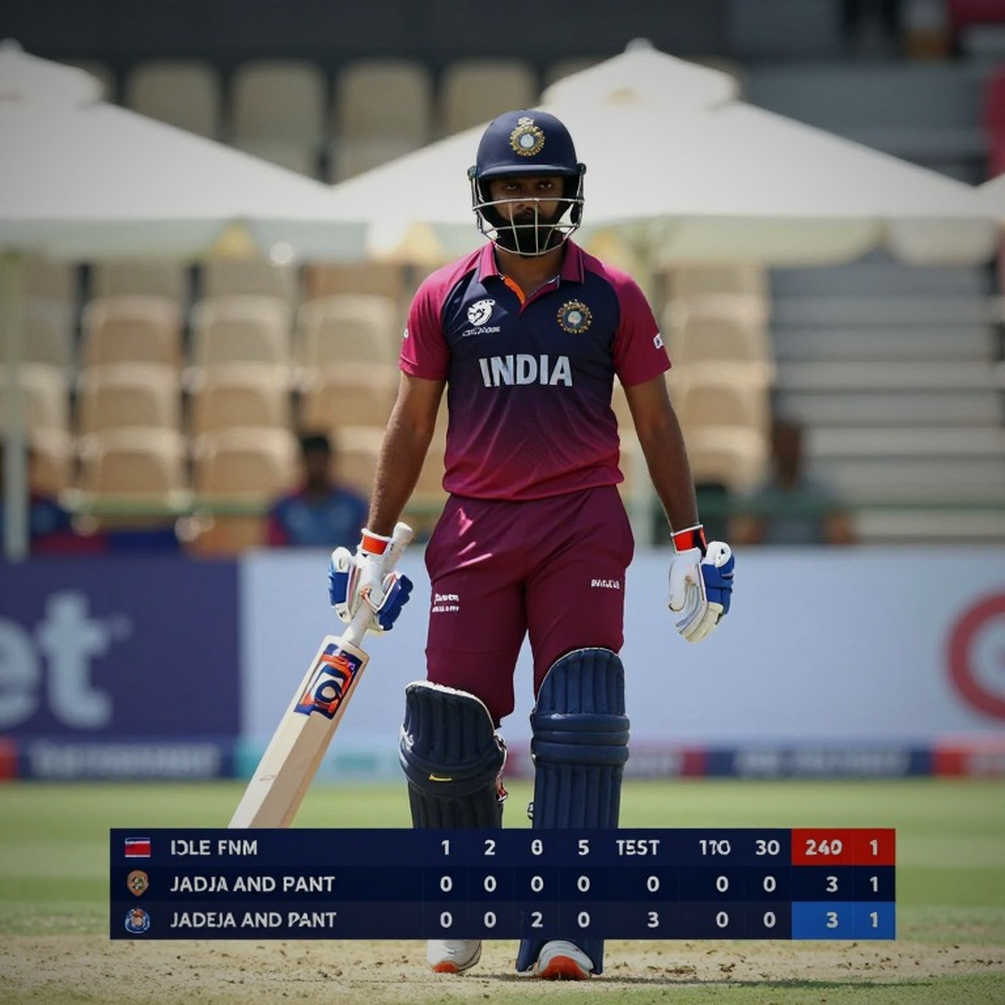
What Gambhir said about New Zealand is another overlooked part of this debate. He said that a lot of boys are coming here for the first time, and that everyone knows how dangerous New Zealand is in their own backyard. That is more than a coach's remark — it is a conditions-based justification for a selection decision.
New Zealand cricket's home characteristic has long been that its pitches and air assist fast bowling. Seam movement, extra bounce and swing in the air — all three are difficult for batters who learned their game on the slow, low pitches of the subcontinent. Added to this, New Zealand grounds are considered small and high-scoring, which rewards aggressive batting as well as fast bowling. The combination is unusual and demands technical adaptation.
One point must be clear in this context — the available material does not identify the venue of any match. No definite comment on pitch type is therefore possible. What can be said is that the coach's own language suggests he views New Zealand as a conditions equaliser — a side with limited resources but with home-adaptation capacity strong enough to close much of the talent gap.
That is why the risk of fielding a teenage batter on this particular tour can reasonably be judged higher than on others. The issue is not talent, it is environment. At home in the subcontinent the adaptation curve for a teenager is gentle; in New Zealand it steepens sharply.
But this argument should not be one-sided either. If conditions decided everything, no new player would ever get a chance on an overseas tour. Cricket history is full of players who debuted in difficult conditions and succeeded. The argument can therefore justify reducing risk, but not eliminating opportunity altogether.
Sooryavanshi: Loud Talent, Zero International Sample
The most important fact in this debate is the least discussed — Vaibhav Sooryavanshi currently has zero international caps. That means there is no T20I average, no strike rate, no situational data for him, because he has not yet played. Any evaluation must be an extrapolation from domestic cricket, age-group cricket and T20 league output onto international level — and an extrapolation is not evidence.
This may sound harsh to his supporters, but it is a basic precondition of sporting analysis. The historical conversion rate from age-group or league cricket to international success is moderate. Many players who look explosive domestically cannot hold their rhythm against the precision, planning and pressure of international bowling. That is not a deficiency in anyone; it is a difference of level.
To say therefore that Sooryavanshi deserves a cap is a projection — carrying performance at one level over to another. The projection is not wrong, it is human; but mistaking it for proof is an error. The team management's job is not to act on such projections but to test them under controlled risk.

On the other hand, it must also be acknowledged that the conversation around Sooryavanshi is not baseless. When a teenage batter becomes the centre of public discussion, there is something substantial behind it. The available material says only that he is still waiting for an opportunity despite his performances — no data is supplied. That is a gap in information, and it should be recorded as a gap, not filled with guesswork.
There is a journalistic-ethics point here too. Most of the figures and valuations attached to Sooryavanshi's name in public discussion come from outside this source and are unverified. They are not repeated in this report, because unverified numbers create a false precision around a player that is later used against him.
What the Data Actually Supports
The evidentiary base of this debate is very thin, and it must be stated plainly. Sooryavanshi has no international data. No official breakdown of Sanju Samson's or Abhishek Sharma's numbers is given in this material. Situational splits — powerplay, middle overs, death overs — are unavailable for any player. No recent form trend, in the sense of a time series, is provided.
Even commonly assumed public information — such as Samson's career average in the low-to-mid thirties and strike rate in the mid-140s, or Abhishek Sharma's reported strike rate above 180 in recent T20I windows — is placed here in the pending-verification category. The caution is necessary, because player numbers change quickly and stale numbers are dangerous for fresh conclusions.
This does not make analysis impossible. It means analysis must rest on structure rather than on statistics. And the structure is clear: India's top order contains players who were part of a World Cup-winning side and who have played together as a settled opening pair in T20I cricket. That fact alone is enough to understand which way the selection pressure runs.
Samson and Abhishek: The Value of a Settled Pair
Sanju Samson and Abhishek Sharma are not merely two names. They are India's T20 opening pair, and both played key roles in a World Cup-winning campaign. In T20 cricket, the value of an opening pair is not measured in runs alone — it determines powerplay efficiency, and from that the role definition of the entire middle order follows. Breaking a functioning opening partnership is a technically expensive trade.
The data supports this — a player of Samson's profile is a high-ceiling, high-variance asset. He can win a match in a handful of innings and fall early in others. In T20 cricket that variance is not a flaw but a strategy, because in tournament cricket one big innings is worth more than several average ones. The team management has clearly preferred his ceiling to his floor — a defensible asymmetric-payoff bet.
Abhishek Sharma is a left-handed opener, and his strike rate in recent T20I windows is reported above 180 — the figure is pending verification, but if correct it is exceptional. His sample is still maturing, so the assessment is high on strike rate, medium on overall consistency. That is exactly the profile a team management wants to push forward, because in modern T20 cricket the top order's greatest value is strike rate.
One more argument in favour of the pair: the cost of continuity. Had the opening pair been broken for the last match of a decided series to blood a teenager, the process of re-establishing a new pair would have started for the next series. That cost can exceed the value of one innings of experience, especially at a time when preparation for every match in the T20 World Cup cycle matters.
But the argument has a reverse side. If the pair is never broken, alternatives are never tested, and in the event of sudden injury or loss of form the team will have no ready option. That is the risk that accompanies a continuity policy, and it is the risk that gives the Sooryavanshi debate its legitimacy.
The 'Longer Rope' Doctrine — and Its Own Hazard
Gambhir's longer-rope doctrine is statistically defensible in T20I cricket. An opening batter typically gets 11 to 20 innings in a year. At that sample size, a run of low scores is often noise rather than signal. Removing a proven player on the basis of two or three poor innings is therefore statistically unsound. Backing proven performers is the benchmark of objective selection.
The argument is a direct answer to the reactionary tendency that demands a change after every series. That tendency has been long-lived in Indian cricket — after one failed series the whole discussion turns to change, even when the data does not support it. The coach's statement is a theoretical defence against that tendency, and it is welcome.
But the longer rope carries a serious hazard, and it must be stated clearly. If the doctrine is applied asymmetrically, it stops being a meritocracy and becomes tenure-based protection. If there is no performance threshold for a senior player, and no opportunity threshold for the bench, then the doctrine does not work in either direction — it becomes merely a tool for preserving the status quo.
This is why the Sooryavanshi debate looks like a debate about talent but is fundamentally a debate about transparency. Fans are not asking how good Sooryavanshi is; they are asking what the threshold is that, once crossed, would remove a senior player. The coach did not state that threshold. Its absence is what keeps the debate alive.
There is a practical solution, and it is better than any controversy. Team management can publicly clarify the language of its selection framework — what kind of selection will be expected in which series, on what criteria the bench will get opportunities, and what the workload management rules are. None of this is strategically harmful; it reduces instability and gives players clarity too.
Not a Double Standard, but a Transparent One
The most useful turn in this debate is that it takes us to the quality of the selection process rather than to one player's fate. A strong team management is not identified by flawless selection but by its capacity to describe its selection honestly. Gambhir has indicated a direction, but he has not given the detail.
It is also worth remembering that the longer-rope doctrine works best when it is accompanied by an accepted shorter-rope arrangement. That is: a senior player gets a long run, but within that long period the alternative is also prepared. The most effective way to prepare an alternative is not to leave him on the bench and field him in the last match; it is to give him planned, continuous opportunities in lower-pressure series.
Seen in that light, the fifth T20I was not the ideal stage for Sooryavanshi. A travel-weary match with little practice in foreign conditions is the hardest debut any new player can face. The next bilateral series in India would suit him far better, because conditions would be familiar and the adaptation cost lower. This argument favours the coach — but only on the condition that the opportunity actually comes.
India's Real Problem: Abundance, Not Scarcity
When a prodigiously talented teenage batter cannot find a place in a side where every top-order slot is held by a World Cup winner, the resulting controversy is genuinely a by-product of strength. This is fundamentally different from the selection crises of mid-tier teams. There, selection crises arise because the alternatives are not good enough; here, they arise because the alternatives are very good.
The available material states clearly that India have plenty of options on the bench. That sentence carries two meanings. First, the team has depth. Second, there is no compelling pressure to use that depth, because the first XI is performing. That is exactly the situation that starves the bench of opportunity, and that starvation becomes public discontent.
The team's age structure reveals another facet. India's T20 side has an experienced, World Cup-winning core and, alongside it, a teenage pipeline. This mixed structure is capable of transition, but it also shows that succession is being staged deliberately rather than forced.
That staging has a price: patience. A young player and his supporters must both accept that being in the pipeline is different from being in the XI, and that this difference is not anyone's fault but a structural reality.
Management Versus Public: A Crisis of Communication
Much of this controversy is not cricket but communication. In modern cricket, every selection decision faces the instant judgement of social media. That judgement is fast, emotional, and often based on incomplete information. Team management must live alongside it.
Gambhir's statement plays a dual role here. On one side it brings clarity — the coach explained the basis of his decisions. On the other it creates distance — my job is not to make everyone happy also means that public expectation will not be the basis of decisions. That distance is professionally necessary, but at the level of public relations it also opens a gap.
The only way to bridge that gap is consistency between doctrine and application. If Sooryavanshi gets planned opportunities in the coming series, his absence from the fifth match will later make sense. If that does not happen, the coach's doctrine will lose its authenticity. In other words, this debate will be settled not by the statement but by the selections that follow.
One more point must be made clear. The available material contains no mention of injury or withdrawal. That means Sooryavanshi's non-selection is probably a pure selection call rather than the result of a fitness or workload rule. This conclusion should be recorded at low confidence, because the absence of information is not evidence of anything.
The Commercial Side: What Cannot Be Measured On the Field
Public cricket debate has a third party that never finds a place in match analysis — the commercial side. This material contains no information on the IPL, auctions, broadcast rights or franchise valuations. No data-based analysis of that side is therefore possible.
But one structural observation can be made. A player's commercial and audience value and his sporting value are two different variables, and early in a young player's career they can diverge sharply. The attention a hyped teenager attracts is not proportionate to his on-field output; it is proportionate to his story. That is a normal phenomenon of the social media age, and it is not bad for the game.
But when attention value is mistaken for sporting value, selection pressure follows. And here lies a structural tension: a player whose commercial profile is built in league cricket will be expected by the national team to deliver on the league's timescale, while his international development runs on a slower one. That tension is not the player's fault; it is the system's timing mismatch.
The most important conclusion from this is that the question put to the coach is itself a commercial signal. A broadcaster has a natural interest in a talked-about player appearing on the field. That interest is legitimate, but team management's job is to manage such interests, not to obey them. This side of Gambhir's statement received less public discussion, but it is the most solid foundation for it.
The Road Ahead
After the New Zealand tour, India's calendar remains full of both home and away series. The most suitable window for Sooryavanshi's debut is a home bilateral series, where conditions would be familiar and the initial risk lower. If that window is also not used, the longer-rope doctrine will take on the appearance of a discriminatory application, and that will be the next communication crisis for team management.
The doctrine should also apply symmetrically to Samson and Abhishek Sharma. If they get a longer rope, that rope should have a length. An open selection framework can reduce this controversy and also prevent unhealthy competition among players.
It is also fair to acknowledge that the Indian T20 side is currently at a high point. Winning a series away from home, a strong bench and a World Cup-winning core — all these point to top-tier power. In that position a conservative decision can be risk management; in another context the same decision might have been a wasted opportunity. Context is everything.
Conclusion
Gautam Gambhir's statement is strategically coherent, practically rational and, at the level of communication, incomplete. He stated his boundary clearly — my job is not to make everyone happy — but he did not fully clarify the criterion within that boundary. How long is the longer rope, when and where will the bench get opportunities, and what exceptions will travel cycles and conditions create? These questions remain unanswered.
More important than what is being said in this debate is what is not being said. Sooryavanshi has no international data. Scorecards, toss details and margins of victory are unavailable. There is instability in the dates and calendar context of the series. Any opinion built while ignoring these absences will be fragile, whether it favours a player or opposes him.
Three conclusions rest on firm ground. First, India's selection problem is a problem of abundance, not scarcity — and that is a happy problem. Second, finishing the series on the 17th, flying on the 18th and having only one practice session is a real, material constraint that makes a new player's debut risky. Third, this entire controversy is proof that the distance between commercial-audience value and sporting value has reached the coach's room.
Finally, it is fair to accept that this debate will not be settled by words. If Sooryavanshi plays in the next series, his sitting out the fifth match will prove to have been part of sensible, staged planning. If he does not, the coach's doctrine will face another challenge — and that challenge cannot be answered by statements alone.