
The New Geography of Cricket: T20 Revolution, Olympic Return and a Changing Economy
2028 लॉस एंजिल्स ओलंपिक में क्रिकेट लौट रहा है—यह 1900 के बाद पहली बार है। यह वापसी टी20 प्रारूप की लोकप्रियता, भारतीय बाज़ार के आर्थिक महत्व और अमेरिकी प्रसारण हितों का परिणाम है। टूर्नामेंट में पुरुष और महिला वर्ग में छह-छह टीमें खेलेंगी, जिसकी आलोचना ICC के 100 से अधिक सदस्य देशों के संदर्भ में हो रही है। क्रिकेट की वर्तमान संरचना तीन तनावों से घिरी है: (1) IPL और अन्य फ्रैंचाइज़ी लीगों से बढ़ती आय बनाम टेस्ट क्रिकेट की घटती आर्थिक व्यवहार्यता; (2) बड़े बोर्डों (विशेषकर BCCI) का निर्णय-प्रभाव बनाम छोटे और सहयोगी सदस्य देशों की सीमित आय; (3) अंतरराष्ट्रीय कैलेंडर में लीग, द्विपक्षीय सीरीज़, विश्व कप और ओलंपिक की टकराहट से खिलाड़ियों पर बढ़ता वर्कलोड। महिला क्रिकेट सबसे तेज़ी से बढ़ता खंड है—WPL (2023) की शुरुआत और 2025 में भारत की महिला ODI विश्व कप जीत ने बाज़ार की क्षमता सिद्ध की, लेकिन वैश्विक स्तर पर महिला खिलाड़ियों की आय और घरेलू संरचना अभी भी पुरुषों की तुलना में पीछे है। 2028 तक तीन सवाल निर्णायक होंगे: आय-वितरण में सुधार, कैलेंडर का पुनर्गठन, और टेस्ट क्रिकेट की सांस्कृतिक स्थिति की रक्षा।
In 2026, at the Paris Olympics, a cricket match was played between Britain and France. Britain won, medals were awarded, and then cricket disappeared from the Olympics for nearly a century. What followed is one of the strangest paradoxes in sporting history: cricket stayed outside the Olympics, yet became one of the richest and fastest-growing sports industries on earth. Now, cricket returns at the 2028 Los Angeles Olympics.
That return did not happen by itself. It is the product of the T20 revolution—a format that compressed the game into three hours, moved audiences from stadiums to television and then to mobile screens, and turned cricket into a product that broadcasters and investors could understand. The central tension in global cricket today is this: the sport's traditional guardianship (Test cricket, domestic first-class structures, bilateral series) and its new market logic (franchise leagues, short formats, the Olympics) are advancing simultaneously, and both cannot fit into a single calendar.
This report is not about a single match or series. Its purpose is to understand the structural turning point world cricket stands at around 2026—who is earning, who is deciding, who is being left out, and what the game will look like by 2028.
The T20 Revolution: A Format That Became an Industry
No other format in cricket's history changed as quickly as T20 did after 2026. It was initially seen as an experiment in English domestic cricket—a shortening of limited-overs games. But the first World Cup in 2026 and the launch of the Indian Premier League (IPL) in 2026 moved the format to the centre of the sport's economy.
The IPL's big insight was not that T20 is fast. The insight was that cricket could be organised on a franchise model, the way American sports are. Teams attached to cities, owners who are investors, players bought through auctions. This model created a parallel power structure alongside cricket's traditional one—national boards that controlled their teams. Today a national board does not hold complete control over its players' time, because a league owner and a broadcaster also claim that time.
IPL broadcast rights for the 2026-27 cycle sold for roughly 48,000 crore rupees (about six billion dollars). That figure alone indicates the depth of the Indian domestic cricket market. No other sports league has achieved such a valuation within fifteen years. The impact is not confined to India. SA20 in South Africa, the Caribbean Premier League, the Bangladesh Premier League, the Pakistan Super League, the Big Bash League in Australia, The Hundred in England, and ILT20 in the UAE are all imitations or responses to the same model. Every league has one goal: to deliver small, fast, television-friendly cricket to local audiences.
But this expansion has a cost, and that cost is paid on the cricket calendar. When every board wants to run its own league, the windows for international series shrink. Players who once played one or two leagues a year now choose between four or five offers. And that choice is often determined not by cricket quality but by contract value. This is not a moral crisis; it is the logical outcome of a market. But the consequence is that the game's oldest and hardest format—Test cricket—is increasingly becoming an option only for players who are already financially secure.
The 2026 T20 World Cup: The Twenty-Team Experiment
In June 2026, the United States and the West Indies co-hosted the T20 World Cup. The tournament was an experiment in itself. For the first time, twenty teams participated. For the first time, matches were played on American soil—in cities like Florida and Texas, where cricket infrastructure is still being built. For the first time, the tournament's broadcast was designed with the American market in mind.
India won that tournament, beating South Africa in the final in Barbados—a match that went to the last overs and showed that uncertainty still survives in T20 cricket. For the Indian team, the win mattered because it had been waiting for a major ICC title since 2026. But the tournament's organisational significance was larger than the result.
The expansion to twenty teams revealed a clear ICC strategy: to take cricket to new geographies. Giving teams like Nepal, Oman, Namibia, the Netherlands, Scotland, the USA and Canada a place in the World Cup is not merely inclusion; it is a market strategy. The ICC hopes that a single World Cup appearance will raise local interest, attract government funding and increase the value of broadcast rights.
But the expansion has also drawn criticism. The first issue is quality: some matches were entirely one-sided, and the early stages lacked high-level competition. The second is logistics: long travel between the USA and the Caribbean, different time zones and varying pitches increased the physical load on players. The third and most serious issue is that expansion did not change revenue distribution. The boards with the biggest markets—especially India, Australia and England—still take the largest share of ICC revenue, while smaller member nations get the chance to play but a very small share of what that play earns.
The 2028 Olympics: The Politics and Economics of Return
In October 2026, at the International Olympic Committee (IOC) session in Mumbai, cricket was approved for inclusion in the 2028 Los Angeles Olympics. The decision was unanimous, which is itself unusual—the IOC is generally cautious about adding new sports.
Three reasons for cricket's return are clearly visible. First, the Indian market. The world's most populous country, where cricket is closer to a religion than a sport, offers the IOC an audience it cannot ignore at any price. The Indian market's importance in Olympic broadcast bids has been rising steadily, and cricket is the most direct route to that market. Second, cricket's expansion in the United States. As host nation, the USA gets a chance to establish a new sport in its domestic market, and the IOC gets a better deal from American broadcasters. Third, the length of the T20 format. The biggest obstacle to any Olympic programme is that events must finish in about three hours. T20 meets that condition—while Test or One-Day cricket was never practical for the Olympics.
At Los Angeles, cricket will be played among six teams—both men's and women's. That number is small relative to the sport's global size, and it is the main criticism of the decision. The ICC has more than 100 member nations, but only six will get an Olympic place. The qualification pathway is not yet fully clear—but it is certain that the qualification process will itself become a political document, because every board will want its team in it.
For cricket, the Olympics matter more symbolically than economically. An Olympic medal will not overturn cricket's traditional hierarchy—no player will rate a Test century below an Olympic gold. But Olympic inclusion will bring recognition in countries where governments fund sport. In a country like India, where Olympic medals are a matter of national pride, cricket's arrival in the Olympics will increase both government support and corporate sponsorship.
Women's Cricket: The Fastest-Growing Segment
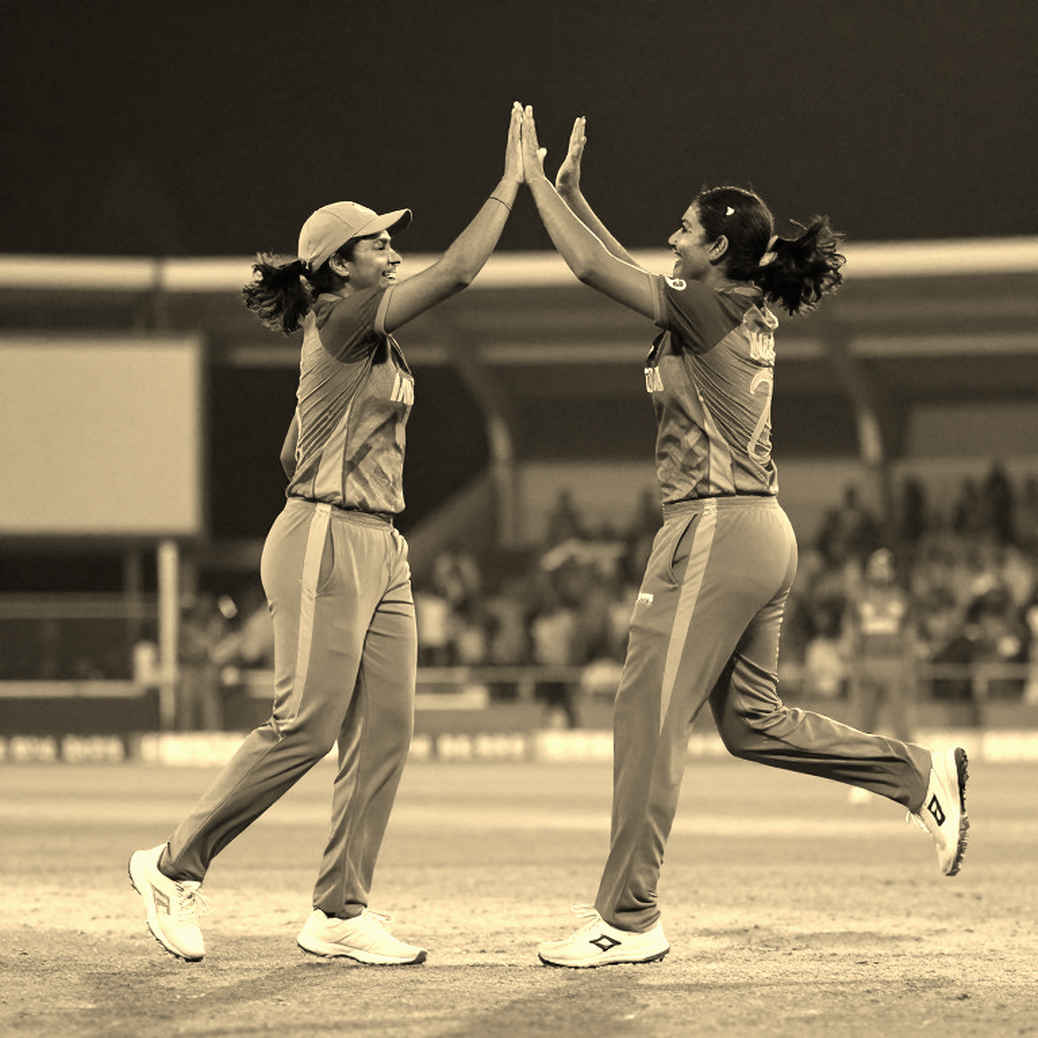
If one structural achievement within cricket stands out, it is women's cricket. The Women's Premier League (WPL) launched in 2026. In its first season alone, ticket sales, broadcast numbers and sponsor interest showed that the market had room for the product—it simply had not been built.
In November 2026, India hosted the Women's ODI World Cup. The Indian team beat South Africa in the final to win the title. That victory was not just a trophy; it was the end of a debate that had run for decades over whether women's cricket deserved the same standing as men's. When stadiums were full and television ratings overtook several men's matches, the market answered the question.
But the real challenge for women's cricket begins after the win. Worldwide, women cricketers' incomes, match counts and domestic structures still lag far behind the men's game. In some countries, women's teams do not have permanent central contracts. Tournaments like the WPL and the Big Bash League have opened an income route for a few top players, but that route is limited to the few dozen who have already achieved international recognition. At the lower levels, where players come from, change is slower.
The Calendar Crisis: Whose Time Is It?
Cricket's biggest structural problem is not technical but administrative—and it is the calendar. The ICC's Future Tours Programme (FTP) sets windows for international series, but franchise leagues are expanding rapidly outside that framework. The result is constant pressure on players to play, and boards trying to protect two different interests at once.
Major boards like Australia, England and India are adopting rotation policies to manage workloads. Some players are rested from bilateral series so that they are ready for World Cups or leagues. This is a practical solution, but it has a side effect: bilateral series—still a large share of cricket's revenue—are losing their appeal. When spectators know the biggest players are resting, the reason to buy a ticket diminishes.
For smaller boards, the calendar is even harder. They have limited chances to play the big nations, and those chances often clash with their domestic seasons. In a system where the bulk of revenue sits with three or four boards, the bargaining power over the calendar sits with them too.
Test Cricket: Protection versus the Market
Test cricket is caught in a contradiction. On one side, it is the game's purest and hardest format, and cricket's greatest stories belong to it. On the other, it is the least economically efficient format—five days, an uncertain result, and a difficult television product.
The ICC launched the World Test Championship (WTC) to protect Test cricket. It gave Test series a context—every series is now part of a championship rather than a standalone bilateral contest. It was a good idea, but it did not solve the root problem: only a few countries can afford to run Test cricket.
Test series between England, Australia and India still draw large audiences. The Ashes matters as much as any T20 league—at least in the countries where it is played. But when it comes to South Africa, New Zealand, Sri Lanka, the West Indies or Bangladesh, Test cricket often depends on domestic broadcast deals and government subsidies. In countries like Pakistan and Sri Lanka, the economic viability of hosting Tests comes under question repeatedly.
One possible solution long discussed is a two-tier structure for Test cricket—a competitive tier for top teams and a development tier for the rest. But the idea is politically explosive, because it would require some countries to accept that they are not at the top level of Test cricket.
Associate Nations: Cricket's Next Frontier
Most of the ICC's 100-plus members are associate members. These are countries where cricket is played in an organised way but which do not have Test status—the Netherlands, Nepal, Oman, Namibia, Scotland, the UAE, Canada, the USA and many others.
The importance of these countries has grown rapidly over the past decade. In Nepal, cricket's popularity has now reached football's level, and crowds at national team matches show the market's potential. Oman and the UAE have hosted many international tournaments thanks to better infrastructure and lower costs. In the USA, Major League Cricket (MLC) and the 2026 World Cup have made a small but real beginning in the American market.
But the biggest problem for associate nations is the lack of revenue. They do not have large broadcast deals, government support is limited, and domestic structures are often weak. The amount associate members receive under the ICC's new revenue distribution model is not enough to build basic infrastructure. The result is that cricket's globalisation is still largely a television-market project, not a development project.
Technology and Data: The Game's New Brain
Technology in cricket is no longer limited to the Decision Review System (DRS). Ball-tracking, edge detection, biomechanical analysis and player fitness monitoring are now standard in every major team. Franchise leagues have turned data analysis into an industry—every team has a group of analysts assessing opposition strategy, pitch behaviour and player value at auction.
There is a positive side: understanding of the game has improved. Data-driven decisions on field placement, bowling angles and shot selection are now routine. The negative side is that a large part of the game is becoming predictable—when every team has the same data, the difference narrows, and matches are often decided by individual skill.
Governance: Who Owns Cricket
In cricket's global governance structure, the ICC holds the greatest formal power, but the real balance of power is different. The Board of Control for Cricket in India (BCCI) is the world's richest cricket board, and its revenue is a large share of the ICC's total income. This position gives the BCCI unusual influence in decision-making—whether on broadcast rights, tournament calendars or revenue distribution.
This is not a secret, and it is not inherently wrong. In a market, the largest contributor wants influence. But it means that global cricket decisions are often guided by interests that benefit one board rather than the sport. For example, on the hosting of ICC tournaments—India, England and Australia being repeatedly chosen as hosts signals that revenue matters more than geographic balance.
A major test of this governance model will come after 2028. If cricket succeeds at the Olympics—in audiences, broadcast and sponsorship—the IOC's interest will grow, and cricket will have to create a permanent window for the Olympics in its calendar. That will deepen the calendar crisis already in place, because Olympic dates will clash with leagues and bilateral series.
Players: At the Centre of the New Market
The most paradoxical aspect of this whole structure is that players are more powerful than ever—and under more pressure than ever.
At the top, stars are now closer to playing on their own terms, with contracts worth crores, endorsements and brand value. Names like Virat Kohli, Rohit Sharma, Ben Stokes, Pat Cummins, Kane Williamson, Smriti Mandhana and Harmanpreet Kaur are not just players but global brands.
But at the lower levels, the situation is different. Domestic cricketers who are not picked for franchise leagues live with more instability than ever. A first-class player once depended on a board contract and domestic cricket income. Now there is another option—the league dream—which reaches very few. This has created a new inequality in the game: the top hundred players earn more than ever, and the thousands below them face more uncertainty than ever.
Mental health is another dimension. Constant travel, bio-bubbles (during the COVID period), the pressure to perform in every match and the constant attention of social media—all of these have pushed many international players to take breaks or drop formats. Some players have chosen T20 leagues while stepping back from bilateral series, which many boards read as a lack of commitment—while players see it as a practical economic decision and a defence of their health.
Conclusion: Three Questions Until 2028
World cricket is at a turning point, and the next three years will decide the shape of its future. Three questions matter.
The first is revenue distribution. If a large share of ICC income stays with a few boards, cricket's globalisation will remain an illusion—the game will be played in many countries, but the level of competition will stay confined to a few. The solution is not easy, because the power to change revenue distribution lies with the boards that would have to change it.
The second is the calendar. If the Olympics, World Cups, franchise leagues and bilateral series all continue in the same year, the number of players available will hit a ceiling. Someone has to choose: either the number of leagues is capped, or bilateral series lose significance. That choice cannot be avoided.
The third is the game's identity. Cricket has gained popularity through T20, but its cultural depth comes from Test cricket. If Test cricket becomes the game of only three or four countries, cricket will become a commercial product, but its standing as a cultural inheritance will weaken.
When cricket returns to Los Angeles in 2028, it will be historic as a statistic—the first time since 2026. But the real question is not whether cricket returned to the Olympics. The real question is whether, by the time it returns, the economy and structure cricket built during its hundred years outside the Olympics can carry its weakest parts—Test cricket, associate nations and domestic players. That question will be settled not on the field but in the boardroom. And that will write the game's next story.
संबंधित खिलाड़ी
लोकप्रिय/पसंदीदा पुस्तकें
A ₹27 Crore Bid, a Spasm in Sydney: The IPL Purse and India's Test Ledger2026-11-02
In the Transfer Window the Noise Is Fastest and the Scorebook Slowest: A Data Brief from a Chennai Training Ground2026-11-02
The Empty Gallery in Nagpur: The Ranji Question the Scoreboard Never Asks2026-11-02
Empty Fields, Full Illusion: Auditing a Silent Failure in the Cricket Data Pipeline2026-11-02
Empty Input, Filled Page: The Verification Link That Breaks First in Cricket Coverage2026-11-01
अनुशंसित
The Inheritance Audit: After November 2, What Did India's Girls Actually Receive?2026-11-02
Empty Packet, Full Template: How Silence Becomes a Finding Inside Cricket's Data Desks2026-10-26
The 149 at the WACA: Konstas's Century Leaves the Test Question Unanswered2026-10-26
Pathum Nissanka Out of Pakistan Test Series With Injury, Sri Lanka's Top-Order Challenge Deepens2026-10-28
The Empty Cell Is Also Evidence: The Price of the Null Result in Cricket Analysis2026-10-29
429 and 154/9: McCullum's 'Stay Calm' Remedy Does Not Match England's Death-Overs Ledger2026-10-27
अनुशंसित
Chennai Super Kings Backroom Rebuild: Albie Morkel and Gareth Batty Join as Assistant Coaches2026-10-28
Sutherland's 57(36) and 3-34: The captaincy burden is gone, the No.4 question is not2026-10-30
Without Format Context, No Cricket Number Means Anything: The Art of Reading the Game from Test to The Hundred2026-11-01
Mirpur, Day One: The over count hiding behind Shadman's 99* is the real verdict on Bangladesh's innings2026-10-29
Head's Slow-Burn 121 and Australia's Top-Order Bug: A Patch-Note Audit Before the Cape Town Decider2026-10-25
3.3 Overs, One Wicket, Then the Dressing Room: Nortje's Injury and the Real Arithmetic of the Series Decider2026-10-25
अनुशंसित
Wisden Quiz: Six Wickets for Under 20 Runs — The Unresolved Question Behind the Figure of 242026-11-02
3.3 Overs, One Wicket, Then the Dressing Room: Nortje's Injury and the Real Arithmetic of the Series Decider2026-10-25
Serious Flaw in Cricket Analysis Pipeline: 'Complete' Report Built on Empty Input Poses Risk2026-10-27
England salvage pride in Lahore as McCullum backs Brook and Dawson after Sri Lanka win2026-10-31
Hundreds From No.9 And Below: The Scorecard Number Is Not A Cricketer's Identity2026-10-26
Inglis's hundred is the headline; Newlands will be settled by the sixth wicket2026-10-31