
There Is No Fee in the Bastoni Story, and That Is the Biggest Clue
**मुख्य उत्तर**: बार्सिलोना ने इंटर मिलान के कप्तान एलेसांद्रो बास्तोनी के लिए दोबारा दिलचस्पी दिखाई है, लेकिन यह खबर केवल मुंडो डेपोर्तिवो पर आधारित है। इसमें कोई ट्रांसफर फीस, वेतन आंकड़ा या इंटर की पुष्टि नहीं है — यानी सौदा बातचीत के दौर में नहीं, दिलचस्पी के दौर में है। **मुख्य तथ्य**: - बास्तोनी का इंटर अनुबंध जून 2028 तक है और वे क्लब के सर्वाधिक वेतनभोगियों में हैं। - डेको ने बास्तोनी के साथ 2031 तक की व्यक्तिगत शर्तें तय करने की खबर दी गई थी। - हंसी फ्लिक ने पहले सौदा रोका; उन्होंने गेरार्ड मार्टिन को बाएं बैक से सेंटर-बैक बनाया। - इंटर के पास बास्तोनी की बिक्री पर मूल्य-निर्धारण की शक्ति अधिकतम दो और गर्मियों तक है। - बार्सिलोना स्पेनिश सैलरी-कैप और 1:1 रजिस्ट्रेशन व्यवस्था के दबाव में काम कर रहा है। **स्रोत**: मुंडो डेपोर्तिवो की रिपोर्ट, Goal.com द्वारा एग्रीगेटेड। प्रकाशन तिथि स्रोत में उपलब्ध नहीं; अनुबंध संदर्भ जून 2028 (इंटर) और 2031 (प्रस्तावित व्यक्तिगत शर्तें) तक के हैं। **संबंधित प्रश्नोत्तर**: प्रश्न: क्या बास्तोनी बार्सिलोना में फिट होंगे? — उत्तर: तकनीकी प्रोफ़ाइल जोखिम भरी है, क्योंकि वे बैक-थ्री के खिलाड़ी हैं जबकि फ्लिक ऊंची लाइन और ऑफसाइड-ट्रैप वाली चौकड़ी खेलते हैं। प्रश्न: इस सौदे में सबसे बड़ा जोखिम क्या है? — उत्तर: ला लीगा का 1:1 रजिस्ट्रेशन नियम, क्योंकि बार्सिलोना शर्तें तय करके भी खिलाड़ी रजिस्टर नहीं करा पाया है (डानी ओल्मो और पाउ विक्टर, 2024/25)। प्रश्न: इंटर बास्तोनी को कब बेचेगा? — उत्तर: तार्किक बिक्री-खिड़की अगली एक या दो गर्मियां हैं; 2027 के बाद खिलाड़ी अंतिम अनुबंध वर्ष में चला जाएगा और इंटर की सौदेबाज़ी शक्ति घट जाएगी।
Any transfer story in the stands begins with one question: how much? The fee, the wages, the bonuses, the instalments, the sell-on percentage. The story circulating this week about Barcelona's renewed pursuit of Alessandro Bastoni contains twenty-eight concrete information points and not a single number. No fee. No wage figure. No publication date. No Inter-side confirmation. One origin — Mundo Deportivo — and Goal.com's aggregation layered on top. I learned in 2026, sitting in the East Stand at Salt Lake, that every match piece starts with one crowd sound and one hard number before any opinion. Here the sounds are many and the number is absent. A transfer story without a fee is not a transfer story; it is a story about something else. What it is about is this: who decides at Barcelona. Every transfer is a rumour until a family starts packing. Nobody has even opened a bag here, and we have been writing this name for three weeks.
Change the question and the story appears
Clear the ground first. Bastoni is Inter's captain, one of the club's highest earners, and under contract to June 2028. The market for a 27-year-old left-footed centre-back in Serie A is thin — every possession side in Europe is hunting that exact profile and the supply runs out after three or four names. On the other side sits Barcelona, whose sporting committee recorded in January that the requirement was for an experienced, preferably left-footed centre-back. That sentence is not a wish-list. When a committee writes "experienced" and "left foot" together, it is describing a build-up problem — playing out against a press from the left side. In the same month Deco advanced personal terms with Bastoni reportedly running to 2031. Then Hansi Flick said no. Five months later the club is back hunting the same name.
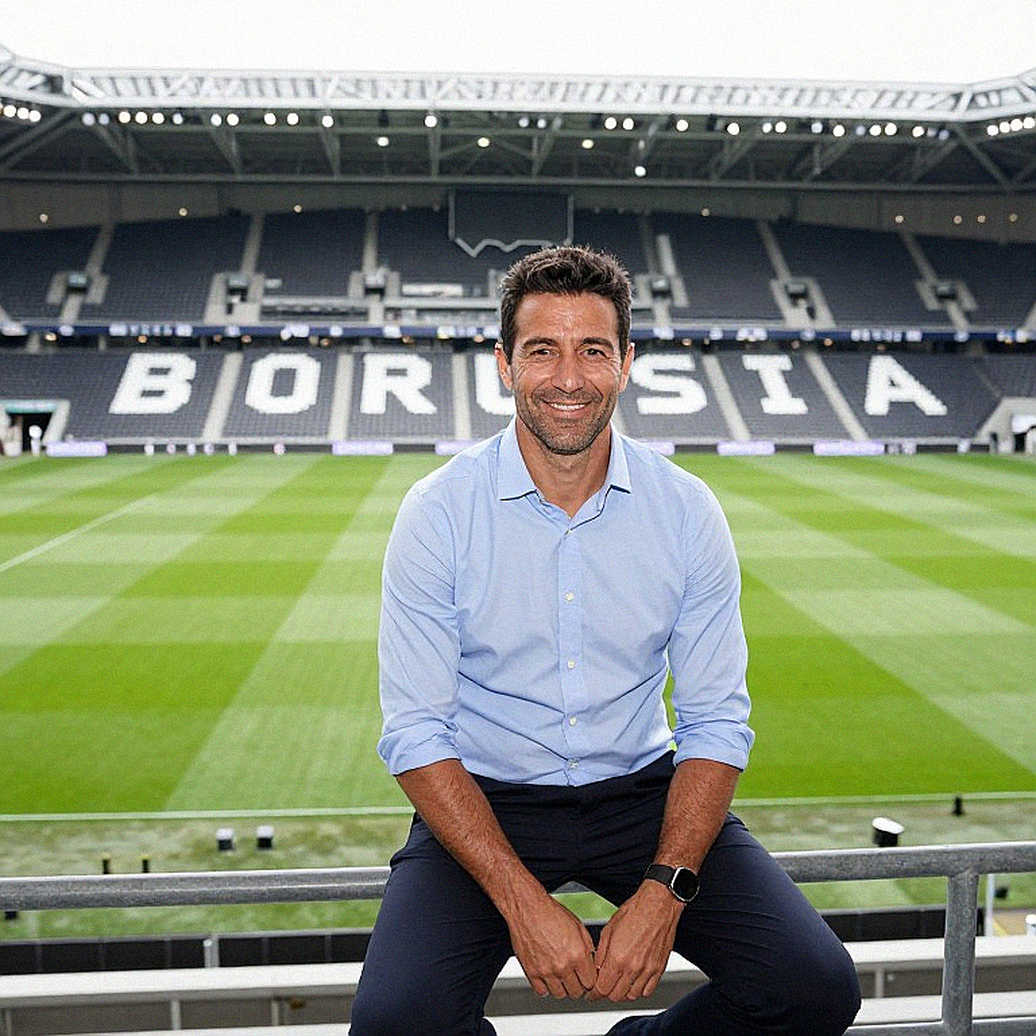
Not one line in this account tells us what Barcelona's defensive situation actually is, or why the need has returned. No table, no injury list, no form. A story without a situation is not about a situation. This is transfer news dressed as football news, and beneath the clothing is internal politics.
A back-three defender in a high-line system
Bastoni's technical signature is system-dependent, and that is the knot of this entire story. His best work comes in a three-at-the-back structure: carrying the ball into midfield, long switches into the wing-back lane, breaking the first line with a diagonal. All three actions assume a covering partner managing the space he vacates. Flick's Barcelona defends with a high line and an aggressive offside trap. That structure demands something else from a centre-back: winning 1v1 duels in large open spaces, recovering over long sprints. This is a profile difference, not a quality difference. A coach who lifts a left-footed centre-back out of back-three protection and stands him in an open high line is not changing the player's value, he is changing the player's habits — and re-training habits at 27 always costs more than at 22.
Then comes the most honest sentence in the whole file: Flick did not replace Bastoni with a better defender, he converted a left-back, Gerard Martin, to centre-back. When a coach bends a full-back rather than endorse a €70m-plus established international, he is making a systemic argument, not a market one. When the camera finds the bench, the story leaves the highlight reel — Gerard Martin is the bench in this story, and therefore its most important character. I saw the same logic repeatedly in Indian football: when a national-team coach picks an unseen boy shaped by his own system over a foreign name on the recruitment list, he is telling the department that the decision will be made in the language of the pitch, not the language of the file. I spent three years inside a federation; every large decision there hung on the same question — where the coach's responsibility ends and the committee's authority begins. In Barcelona, that question is currently being played out under Bastoni's name.
The reverse is equally true. Barcelona genuinely lack a left-footed, ball-playing centre-back. The specificity of that January line survives. Deco's repeated return to Bastoni is proof of the gap. The club needs someone who can break a press from the left, and Europe's elite names in that profile can be counted on fingers. Both things are true — the coach's profile judgment and the committee's need. When two correct parties cannot reach a decision, the problem is not football. It is the division of authority.
The contract that may not be registrable
Now the part with the fewest words in the source and the most consequence. Personal terms to 2031 — if real — mean a five-to-six-year commitment to a 27-year-old, taking him to roughly 32. For a centre-back that is the full remaining prime plus the first years of decline. On a balance sheet it is a long-dated lock-in on an asset with no resale. The most commercially consequential fact in this story is also the least examined.
On the other side is Barcelona's condition. One public fact from outside the source is enough: the Spanish salary cap and the 1:1 registration regime. The Dani Olmo and Pau Víctor episode in 2026/25 established that Barcelona can agree terms and still fail to register a player. A footballer whose paperwork is stuck on a registration desk is not sitting in an empty seat — he is sitting in a seat holding its breath. Importing one of Inter's top earners into that wage structure is a compliance decision, not a football one. The complete absence of Barcelona's financial position from this story is not an oversight. It is the story's intent.
Inter's arithmetic is straightforward. Captain, top earner, contract to 2028. That gives Inter at most two more summer windows of pricing power; after summer 2027 the player enters his final year and their leverage collapses. A club that periodically needs transfer profit to balance its books has a strong argument for selling a heavily-amortised asset at peak value. Note the oddity of the wider market here. Paying €100m for a player with fewer than fifty top-flight games is naked gambling, and that young-player premium is deflating. Yet a 27-year-old, tested across three systems, with captaincy on his record, is priced at a discount — because he is not selling potential, he is selling certainty. Barcelona wants to buy certainty; Inter wants to convert it into cash. Both needs are rational. Only the clocks disagree.
What the rulebook does not say
One corner nobody has touched. The reported agreement with Bastoni to 2031 was reached while the player was contracted to Inter until 2028. Under Article 17 of FIFA's Regulations on the Status and Transfer of Players, inducing a player to breach a contract is a separate category, and normal practice requires clubs to obtain written permission before negotiating. In practice it is litigated when the selling club is aggrieved — and nothing in the source suggests Inter ever were. The risk is theoretical but present.
The second rule is more interesting: the five-year ceiling under Article 18(2). A 2031 expiry sits at or beyond that limit — but because the source never states when the agreement was signed, the calculation cannot be completed. This is where journalism and the rulebook run together: one missing date creates a story that is, in principle, challengeable and, in practice, unchallengeable. On the solidarity mechanism, at 27 the player is outside the window, so the risk there is minimal. The largest exposure remains registration, and registration will not be settled in a court. It will be settled at La Liga's desk.
Here I have to manage an old habit — pulling the story back to Kolkata. I won't. Only this: in Indian football I have watched contracts stall in exactly this way, where agreement happens, the announcement happens, the photographs are printed, and then the file stops at a registration desk. Barcelona's version is the European edition. The terms move first and the paperwork follows.
What the story leaves out most conspicuously: the Premier League
Here is the turn that irritates me. Across twenty-eight information points, not one English club appears. If Inter genuinely made Bastoni available, Premier League buying power would outstrip Barcelona's, and at that moment this entire emotional narrative — the captain who left the door ajar, the player who suffered "bitter disappointment", the player now demanding to speak to the coach directly — becomes worthless overnight. The absence of English interest is not evidence of absence. It tells you where the source sits.
And that is where the real political structure of the story shows itself. Normally a club imposes conditions on a player. Here the player is imposing a condition on the club: he wants to speak to the coach directly. That is not stubbornness, it is experience. Last time he was a committee signing rather than a coach's signing, and the deal died in exactly that gap. This time he wants the gap filled first. When the player writes the condition and the club writes the reply, the balance of power has inverted. A stadium is a sentence and the crowd supplies the verb — but this sentence is not set in a stadium, it is set in an office, and the verb is in the hands of an agent.

There is also a professional hazard here: the shelf life of emotional framing. "Bitter disappointment", "wounded", "hugely enthusiastic" — these sentences are strongest at the moment of publication and wither the instant a new window opens. Reporting built on feeling rather than figures returns annually and looks new each time. That is this story's future: next summer, probably in the same vocabulary.
The real subject
So the point is not whether Bastoni joins Barcelona. The point is that three different forces inside one club are giving three different answers about one name. The committee says the need is real, Deco says the terms are done, Flick says the profile is wrong. All three are correct in their own place. When three correct people cannot reach one decision, the club's problem is not in the market. It is at the table. Writing about empty stadiums in 2026-21 taught me that absence has to be counted too — a missing number is still a measurement. The missing fee, missing wage, missing date and missing Premier League all point the same way: this is a story of interest, not negotiation. Stories of interest describe a club's need; stories of negotiation describe its capacity. Only the first exists here.
What to watch
Next time Bastoni's name reaches a headline, check three things and drop the rest. First, does the report mention Flick's approval, or again only the committee and Deco? The day the coach's signature appears, the deal is real. Second, does a fee appear for the first time? A fee is the proof of movement from interest to negotiation; without it, every "return" is just a calendar advancing. Third, which summer Inter sell in. They have two windows left and they know it. The day a statement comes from Milan, this stops being a Barcelona story. Until then, remember that the scoreboard records goals and the stands record what we hoped for. Right now no Barcelona supporter is asking what Bastoni costs. They are asking who is deciding. The day that question is answered, the transfer will settle itself — whether the name is Bastoni or someone else.