
India Fine-Tune Fielding Before Eden Park Challenge as 77.5% Catching Efficiency Raises Questions
भारतीय क्रिकेट टीम ने न्यूजीलैंड में पांच मैचों की वनडे सीरीज से पहले ऑकलैंड के ईडन पार्क में एक विशेष फील्डिंग सत्र किया, जिसमें 'कटिंग द एंगल्स' ड्रिल पर जोर दिया गया — यह तकनीक फील्डर को गेंद की ओर सीधी रेखा में दौड़ने की सलाह देती है ताकि प्रतिक्रिया समय कम हो। सत्र का मुख्य कारण ईडन पार्क के असामान्य आयाम हैं: छोटी सीधी सीमाएं, गैर-पारंपरिक आउटफील्ड कोण और गहरे पॉकेट्स जहां दो रन आसानी से मिलते हैं। चिंता का मुख्य आधार आंकड़ा यह है कि पिछले 18 वनडे में भारत की कैचिंग एफिशिएंसी 77.5% रही है, जिसमें 27 कैच छूटे — जबकि कुलीन वनडे टीमों का बेंचमार्क 80% से ऊपर माना जाता है। व्यक्तिगत रूप से रोहित शर्मा सबसे भरोसेमंद कैचर हैं (18 मैच, 15 कैच, 2 ड्रॉप), जबकि कुलदीप यादव (11 मैच, 5 ड्रॉप) और केएल राहुल (16 मैच, 4 ड्रॉप) सबसे बड़े जोखिम हैं। पूर्व फील्डिंग कोच आर श्रीधर ने मैदान-दर-मैदान अलग चुनौतियों (वेलिंगटन में हवा, ऑकलैंड में आयाम) और अनुभव की भूमिका पर जोर दिया। तैयारी की सबसे बड़ी बाधा केवल एक फील्डिंग सत्र होना है; इसलिए टीम का दारोमदार रोहित, विराट और गिल के अनुभव पर है। सीरीज के चार मैदान — ऑकलैंड, वेलिंगटन, हैमिल्टन और माउंट माउंगानुई। समग्र जोखिम मध्यम आंका गया है: कैचिंग एफिशिएंसी की कमी और संक्षिप्त तैयारी अवधि मुख्य चिंता हैं, लेकिन कोई भी जोखिम निर्णायक नहीं।
Auckland: Just ahead of the five-match ODI series in New Zealand, the Indian team has begun working on its most talked-about weakness — fielding. At Auckland's Eden Park, the side held a dedicated fielding session built around the 'cutting the angles' technique. The drill is a clear signal that the team management views the unusual dimensions of this venue — not pitch conditions or bowling combinations — as the first and most immediate challenge of the series.
Eden Park: a 'strange' cricket ground built from a rugby field
Eden Park is one of a handful of international venues that were originally rugby grounds. The straight boundaries are short, the outfield angles differ from conventional oval grounds, and balls hit into the deeper pockets make twos easy to come by. For India, this 'different dimension' is the biggest strategic challenge — because on such a ground, both taking the right angle as a fielder and running in a straight line become decisive.
That is precisely why 'cutting the angles' was the focus of the session. Simply put, it is the technique of running in a straight line towards the ball rather than along a curved path, minimising the time taken to reach it. For a fielder stationed in the deep, that one- or two-step difference is the gap between a catch taken near the boundary rope and a four.
Only one session: the biggest constraint in preparation
The most important practical aspect of the report is that the team got only one fielding session before the first ODI — roughly a half-hour drill. Technically, thirty minutes of practice is nowhere near enough to produce any measurable improvement in catching. Its real value lies not in skill acquisition but in mental preparation and familiarisation with the ground. In other words, India's strategy rests not on fresh preparation but on the players' accumulated experience.
This is where former fielding coach R Sridhar's comments become relevant. He stressed the difference in challenge from venue to venue — strong wind in Wellington, the complexity of the dimensions in Auckland, and relatively normal conditions at Bay Oval in Mount Maunganui. Sridhar also notes that there is no 'one-size-fits-all' formula in fielding practice; each player is given volume according to his needs.
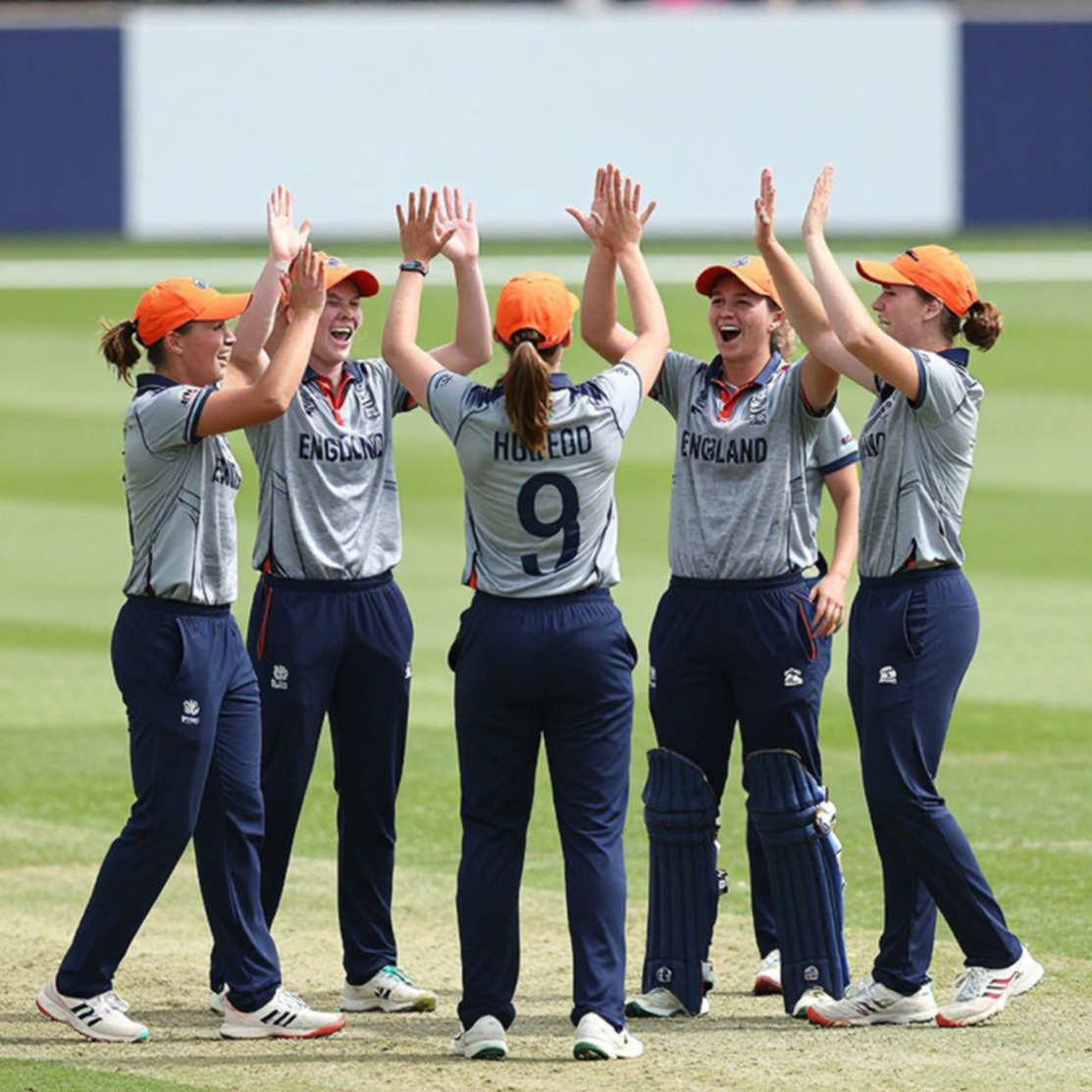
The real number: 77.5% catching efficiency across 18 ODIs
The analytical foundation of this entire debate is a single figure — India's catching efficiency across their last 18 ODIs stands at 77.5%, with 27 catches dropped. This is the number that forms the spine of the report and needs to be understood before any inference is drawn.
Internationally, competent ODI fielding sides are generally benchmarked at above 80%. By that standard, 77.5% is not a 'disaster', but it is clearly below elite level. What matters is that this has happened in the ODI format, which offers more catching chances than the other two formats — meaning the sample (18 matches) is adequate and the figure is methodologically sound. It is also worth noting that 77.5% is a 'noisy' metric; two or three spills in a single match swing the percentage, so it should be read as a directional trend rather than a precise capability.
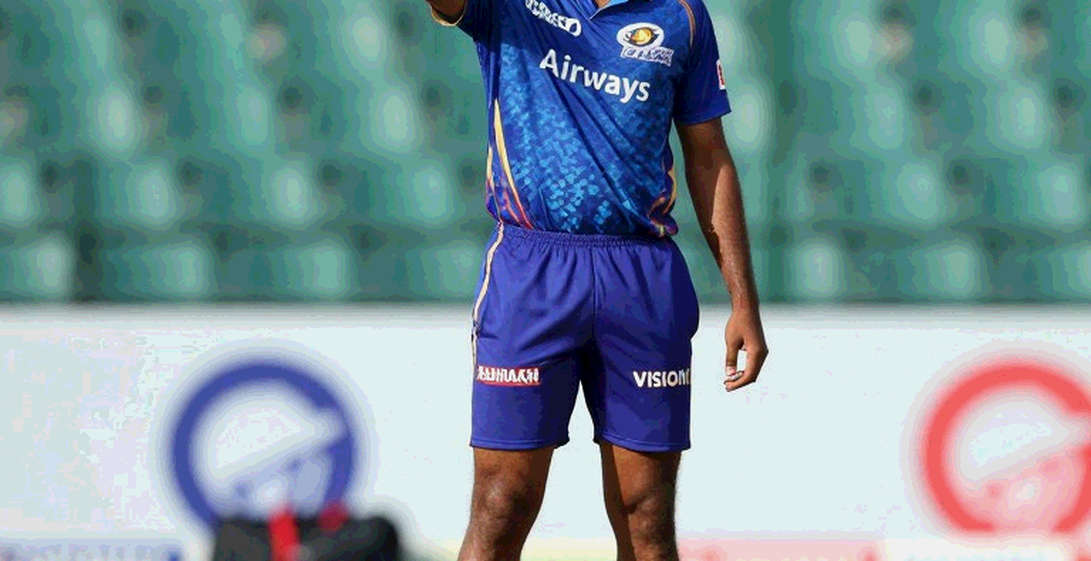
Individual numbers: the other side of the picture
Behind the team's 77.5% figure lies a very uneven distribution of individual performance.
Rohit Sharma is the most reliable name on this list — 15 catches and only 2 drops in 18 matches. That is a strong reliability profile and likely reflects his role in the slips or as a close catcher. Within the team's overall figure, Rohit's excellence is partially masking the shortfall of weaker catchers.
Kuldeep Yadav is the sharpest concern — 5 drops in 11 matches, roughly 0.45 drops per match. For a spinner usually stationed in the deep, at third man or at point, that rate is high and could become a significant strategic headache through the series. Since Kuldeep is India's frontline ODI spinner and plays almost every match, his fielding lapses compound over five matches.
KL Rahul's numbers indicate a moderate level of risk — 4 drops in 16 matches, about 0.25 per match. That is concerning for a wicket-keeper, because the 'opportunity cost' of a keeping drop is higher than that of an outfield drop — the chance spilt behind the stumps is usually a regulation one that is expected to be taken.
It is worth noting that the report contains no batting or bowling data at all. Rohit Sharma, Virat Kohli and Shubman Gill are mentioned only in the context of their 'experience' — so no conclusion about their form can be drawn from this source. That limitation should be acknowledged plainly.
Environmental factors: wind, cold and floodlights
At Eden Park, fielding is challenged not only by dimensions but by the environment. Auckland's changeable weather, strong wind, the cold and the match start time — all of these were variables discussed in the session. Wind has its greatest effect on a fielder when taking a 'high catch', because the ball's trajectory changes aerodynamically. The report also refers to 'different floodlights' — catching high balls under lights in day-night matches is among the hardest tasks for a fielder. In an evening-start ODI in Auckland, ball-tracking can be impaired, raising the risk of a spill.
Experience is the real mitigation
The Indian dressing room's foundation at this moment is experience. Rohit Sharma, Virat Kohli and Shubman Gill — all three have played in New Zealand before and understand its conditions. Sridhar's argument is precisely this: every ground presents a different challenge, and experienced players absorb these changes quickly. The four venues of the series — Auckland, Wellington, Hamilton and Mount Maunganui — behave differently, and a single practice policy does not apply to all of them. That is why the team management is treating 'experience' as a substitute for fielding skill.
Risk assessment: medium, but real
On a fair assessment, the list of risks looks like this. First, the weakness in catching efficiency, measured at 77.5%, which could be further exposed under Eden Park's floodlights. Second, the compressed preparation window — only one session before the first ODI. Third, individual drop-risk, particularly Kuldeep Yadav and KL Rahul. Fourth, the challenge of environmental adaptation amid wind, cold and constant travel between four different venues. None of these risks is existential, but in a tight ODI series two or three dropped catches can swing the outcome — which is why the overall risk should be rated medium.
The 'watertight' claim: handle with care
Meanwhile, one thing needs to be separated out. The claim that India's fielding no longer has a 'watertight' look is an opinion, not a fact established by data. No solid comparative basis is offered in its support. The hard data — 77.5% across 18 ODIs — says only that the standard is below elite, not that the team has become 'loose'. It is also worth remembering that the report itself states India's fielding is better in ODIs than in T20Is and Tests — meaning the concern is relative, and the data should be trusted more than the rhetoric.
What this means for the series
Over a five-match series, India's fielding performance in the first two or three ODIs will settle whether all this discussion was justified or overstated. If India fields cleanly in the first ODI, the whole debate will die down within days. And if catches go down in the early matches, the team management will be forced to change its field placements.
Ultimately, this session is a routine pre-series preparation report — no major structural or commercial revelation. But it carries one larger significance: it shows that Indian cricket coverage now measures fielding through metrics such as 'catching efficiency'. Fielding is no longer merely a subject of praise or criticism, but a number. And in this series, that number — 77.5% — will be the one most closely tracked.